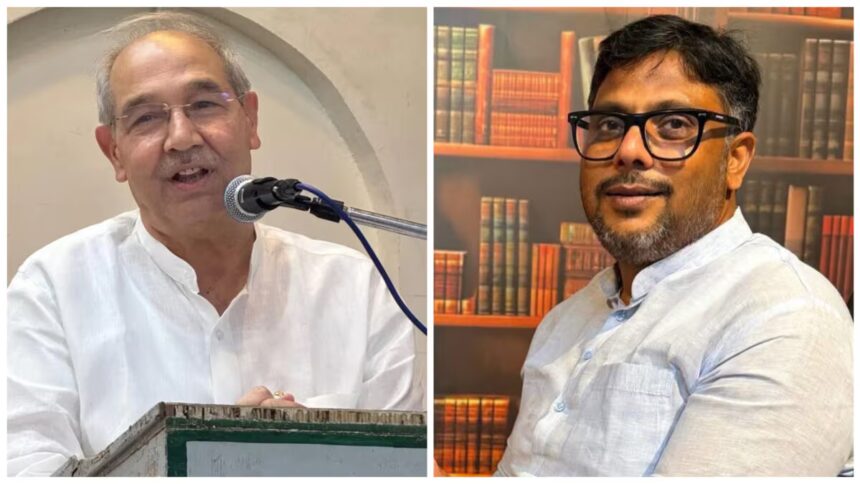

As the 2027 Uttar Pradesh Assembly elections approach, the Bharatiya Janata Party (BJP) is making strategic moves to broaden its appeal among Muslim voters. The appointment of two prominent Muslim leaders, Tariq Mansoor and Kunwar Basit Ali, in the new national team under Nitin Nabin signals an enhanced focus on electoral dynamics within the community, aiming to counter previous setbacks in the region.
Strategic Appointments to Strengthen Outreach
Tariq Mansoor, the former vice-chancellor of Aligarh Muslim University (AMU), has been retained as a BJP national vice-president, while Kunwar Basit Ali has been elevated to the position of national chief of the party’s Minority Morcha. Their roles are crucial as the BJP seeks to engage effectively with the Muslim demographic, which constitutes around 20% of Uttar Pradesh’s population.
Mansoor’s academic background and leadership within the Pasmanda movement provide a unique avenue for the BJP to connect with a previously marginalized segment of the Muslim community. On the other hand, Ali has substantial grassroots experience, having held various leadership roles within the Minority Morcha. This blend of academic and organizational expertise positions the BJP favorably as it prepares for the upcoming electoral contest.
The Political Context: Past Setbacks and Future Prospects
The BJP faced a significant electoral blow in the 2024 Lok Sabha election, where its seats in Uttar Pradesh diminished from 62 to 33. The Samajwadi Party (SP) emerged as the largest faction, underscoring the urgency for the BJP to realign its strategy. Building connections with specific segments of the Muslim community, particularly the Pasmanda Muslims and voters benefiting from government welfare initiatives, is now a pivotal part of the party’s electoral framework.
As the party navigates the complexities of coalition politics, the importance of retaining support across diverse communities has intensified. The BJP is strategically targeting Muslim women through initiatives like the “Shukriya Modi Bhaijaan” campaign, which aims to inform them about welfare benefits, showcasing the party’s commitment to broadening its social coalition.
Grassroots Efforts: Connecting with the Community
Keenly aware of the importance of grassroots outreach, Kunwar Basit Ali has pioneered several campaigns that resonate within the Muslim community. His involvement with initiatives like the Modi Mitra campaign and the Urdu compilation of Modi’s *Mann Ki Baat* broadcasts reflect a calculated effort to foster a relatable image of the BJP among Muslim constituents. Having worked closely with community organizers, Ali’s appointment is indicative of a substantial shift towards a more inclusive party ethos.
Furthermore, the BJP’s focus on outreach aligns with its efforts to counteract the SP’s Pichhda, Dalit, and Alpsankhyak (PDA) strategy that consolidates backward classes, Dalits, and minorities under a shared political banner. By engaging with smaller groups within the Muslim population, the BJP hopes to fragment the historically unified opposition against it.
Why It Matters
The strategic appointments within the BJP signify broader implications for electoral politics in India, particularly in Uttar Pradesh, where communal dynamics play a significant role in shaping political narratives. The consolidation of minority support historically against the BJP has made it imperative for the party to explore new avenues for engagement. This effort not only seeks to enhance the party’s voter base but also highlights the evolving challenges and strategies in Indian electoral politics.
For minority groups, these developments raise questions about inclusivity and representation within a party that has often faced criticism for fostering communal divides. As the BJP enhances its outreach methods, it underscores the critical importance of engaging with diverse voices rather than relying solely on established voter bases, thereby altering the political landscape while addressing issues of social justice.
Frequently Asked Questions
What is the significance of the BJP’s Muslim outreach strategy?
The outreach strategy aims to broaden the BJP’s appeal to the Muslim community, particularly marginalized groups like the Pasmanda Muslims, in a bid to counter the consolidation of opposition votes ahead of the 2027 Uttar Pradesh Assembly elections.
How have the BJP’s electoral fortunes changed recently?
In the 2024 Lok Sabha elections, the BJP’s seat count in Uttar Pradesh dropped significantly from 62 to 33, prompting the need for a reevaluation of its strategies, especially towards minority groups and localized outreach campaigns.
Who are Tariq Mansoor and Kunwar Basit Ali?
Tariq Mansoor is the former vice-chancellor of AMU and serves as a national vice-president of the BJP, focusing on academic and Pasmanda outreach. Kunwar Basit Ali has extensive grassroots experience and is the national chief of the Minority Morcha, emphasizing organizational efforts within the Muslim community.
What campaigns are being launched to reach Muslim voters?
Initiatives like the “Shukriya Modi Bhaijaan” campaign target Muslim women to provide information on government welfare schemes, alongside community-driven projects to improve the party’s visibility and connectivity among Muslims.