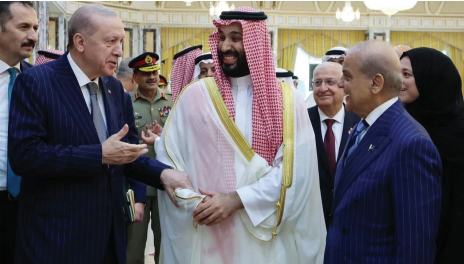

The recent military alliance between Saudi Arabia, Turkey, and Pakistan, often dubbed the “Mecca Pact,” reflects a significant geopolitical shift amid growing regional instability and dissatisfaction with U.S. influence. Experts believe this pact may signal a new era of military and strategic collaboration in the Middle East, albeit with notable uncertainties.
Emerging Dynamics in Middle Eastern Alliances
The formation of the Mecca Pact comes as a reaction to the increasingly volatile geopolitical circumstances exacerbated by the actions of global powers, particularly the United States. Historically, these nations have experienced long-standing ties with the U.S. However, recent administrations, especially under Donald Trump, have prompted a reevaluation of these relationships. The instability linked to U.S. foreign policy has accelerated the need for countries in the region to forge new alliances aimed at enhancing their security and regional autonomy.
The Mecca Pact introduces Turkey as a key player alongside Saudi Arabia and Pakistan, expanding a military relationship that has existed between the latter two for years. This new alliance raises the possibility of including other nations, like Egypt, further emphasizing its potential as a collective defense mechanism, reminiscent of NATO’s Article 5. However, analysts remain skeptical regarding the actual capabilities and willingness of these nations to enforce mutual defense commitments.
Implications for U.S. Influence and Regional Security
The establishment of the Mecca Pact poses a direct challenge to U.S. hegemony in the region. The pact’s formation suggests that these nations are exploring a path towards greater independence from American influence, motivated by their own strategic interests. The U.S. has historically relied on alliances shaped by military and economic control, predominantly through NATO and reliance on the petrodollar.
Yet, the geopolitical reality signifies that the U.S. is likely aware of the pact but is limited in its ability to intervene or deter its establishment. This evolving dynamic emphasizes the strategic importance of Saudi Arabia, Turkey, and Pakistan, each possessing critical roles in regional stability, energy production, and military capabilities. India’s muted response indicates a recognition of the pact’s limited capacity to alter the regional balance of power, at least concerning India-Pakistan relations.
The Complex Nature of the Mecca Pact
Despite the initial enthusiasm surrounding the Mecca Pact, its actual operational efficacy remains in question due to several complicating factors. The alliance is characterized by vague language concerning commitments, and its members possess conflicting interests that may hinder unified military action. For instance, while Turkey is a NATO member and has strategic ties to the West, Saudi Arabia continues to rely on U.S. security assurances despite recent tensions.
The geographical distances among the three countries could limit the practicality of any coordinated military response. The absence of established frameworks for joint military collaboration raises doubts regarding the seriousness of the pact and its effectiveness in providing real deterrence. Analysts highlight that ongoing conflicts, such as the Yemeni Houthi attacks on Saudi Arabia, underscore the lack of mutual support among the nations when faced with external threats.
Why It Matters
The rise of the Mecca Pact could signify a shifting paradigm in Middle Eastern geopolitics, reflecting broader trends away from American dominance. As nations begin to regroup and assert their independence, this could lead to new forms of alliances and regional dynamics. The implications extend far beyond military cooperation; economic partnerships, diplomatic engagements, and social ties could evolve, reshaping how countries interact in a post-U.S.-centric world.
This realignment could influence global markets and international relations strategies, offering new opportunities for trade and cooperation among non-Western countries. However, the lingering uncertainties surrounding the commitment levels and operational capabilities of these alliances may hinder any substantial progress towards stability.
Frequently Asked Questions
What is the Mecca Pact?
The Mecca Pact is a military alliance formed between Saudi Arabia, Turkey, and Pakistan aimed at enhancing security cooperation among its members.
Why are countries shifting away from U.S. alliances?
Countries are reevaluating their alliances due to dissatisfaction with U.S. foreign policy and the desire for autonomy and regional stability against a backdrop of increasing geopolitical tensions.
How does the Mecca Pact relate to NATO?
The Mecca Pact includes mutual defense clauses reminiscent of NATO’s Article 5, but analysts doubt the likelihood of these nations enforcing such commitments in practice.
What are the risks associated with the Mecca Pact?
The pact is characterized by vague language and conflicting national interests, which could undermine its effectiveness and lead to potential diplomatic friction among member states.