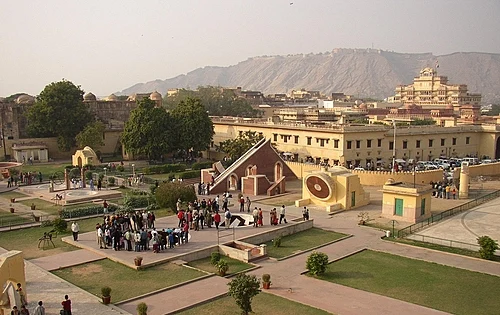

The developments surrounding Jantar Mantar in New Delhi signify the evolving political landscape in India, emphasizing how this historical observatory has transformed into a central venue for protests. This change reflects broader societal issues, including the discrimination and marginalization faced by various communities, particularly Indian Muslims, under the current political regime led by the Bharatiya Janata Party (BJP) and its affiliations.
The Historical Significance of Jantar Mantar
Constructed in 1724 by Maharaja Sawai Jai Singh II, Jantar Mantar was originally a monumental observatory designed to study celestial movements. Its name, translating from Sanskrit and Persian as “instruments for measuring the harmony of the heavens,” signifies its scientific heritage. Unlike modern observatories, it featured giant masonry structures that could measure time and planetary positions with the naked eye.
As a protected monument under the Archaeological Survey of India, it remains an important tourist destination. However, the area around it has increasingly become a focal point for political dissent, making it a significant location in the contemporary social struggle.
The Shift to Political Protest
Following India’s independence in 1947, Jantar Mantar Road was allocated to the Indian National Congress, which governed the country for several decades. This made it a bustling political corridor, attracting a variety of public and political figures daily. However, in the early 1990s, protests began to shift from the nearby Boat Club lawns, which had been the preferred site, to Jantar Mantar. The government deemed Boat Club too close to essential governmental institutions, leading to Jantar Mantar being officially designated as the primary protest site in 1993.
Since then, it has served as a platform for marginalized groups seeking justice, including farmers, ex-servicemen, and various social activists. Most notably, movements such as the Indian Ex-Servicemen Movement, which campaigned for One Rank One Pension for over 850 continuous days, have made headlines here.
The Current Landscape of Protests and Marginalization
Under the BJP government, the atmosphere at Jantar Mantar reflects the turbulence experienced by minority communities, particularly Indian Muslims. Faced with rising discrimination and marginalization, many Muslims have taken to the streets to voice their concerns, from issues related to citizenship amendments to economic boycotts affecting their livelihoods. The political narrative surrounding these protests has often been one of exclusion, with many calling for attention to their plight amid a historical backdrop that is increasingly hostile.
Despite the diversity in causes, ranging from women’s rights to farmers’ protests, the overarching theme remains the government’s dismissal of marginalized voices. Jantar Mantar stands as a stark reminder of the ongoing socio-political struggles faced by these communities in contemporary India.
Why It Matters
Understanding the dynamics at Jantar Mantar offers insight into the broader implications for societal cohesion in India. The recurring protests are indicative of a population grappling with systemic discrimination and economic marginalization, particularly among minorities. Such social unrest raises questions about policy effectiveness and the inclusivity of the political climate under BJP governance. The outcomes of these movements will have a lasting impact on societal stability and the role of dissent in shaping the future of the nation.
Frequently Asked Questions
What is Jantar Mantar’s historical significance?
Jantar Mantar was constructed in 1724 as an observatory for astronomical measurements. It has since transformed into a prominent protest site in New Delhi, symbolizing political dissent.
Why was Jantar Mantar designated as a protest site?
In 1993, the government prohibited public demonstrations at the nearby Boat Club and chose Jantar Mantar as the primary location for peaceful protests, due to its proximity to Parliament.
What issues are being raised by protestors at Jantar Mantar?
Various groups, including farmers, ex-servicemen, and women’s organizations, gather at Jantar Mantar to advocate for fair prices, pensions, and justice against systemic discrimination, particularly towards minorities like Indian Muslims.
How has the current political regime affected protest dynamics?
Under the BJP government, there has been a notable increase in marginalization and discrimination against various communities, especially Indian Muslims. This has led to heightened protest activities at Jantar Mantar as marginalized groups seek justice and representation.