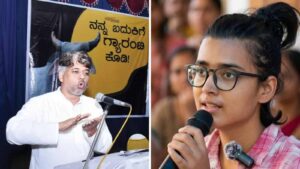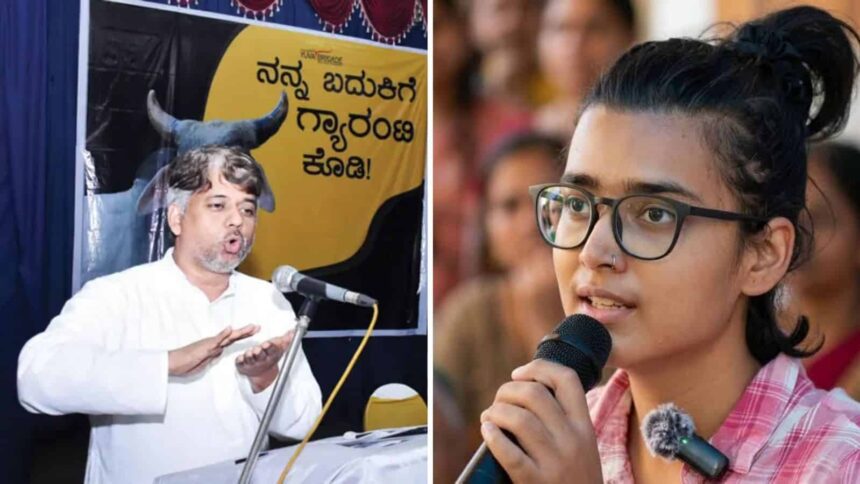

Summary: Controversial Islamic scholar Mohammed Faiz Khan has made derogatory remarks about Neha Bora, the All India Student Association (AISA) president. His comments, perceived as sexualizing and demeaning, have drawn significant criticism and highlight ongoing tensions in Indian political discourse.
Background on the Incident
On October 3, 2026, Mohammed Faiz Khan used sexually charged language to belittle Neha Bora during a public discussion. He referred to her as a maada, a term aimed at reducing her identity to mere objectification. Bora is known for her vocal criticism of Chief Election Commissioner Gyanesh Kumar and the ruling Bharatiya Janata Party (BJP), making her a significant figure in student activism. Khan’s comments come at a time of heightened scrutiny of the BJP and its policies.
The Nature of Comments
Khan’s remarks included the assertion that “Neha Bora is not a woman; she is a female who pines for male attention,” directly undermining her identity and contributions. He elaborated on his perspective by stating that a woman is multifaceted—she can be a mother, sister, and more—but he contended that a maada lacks these qualities. His insistence that Bora’s “sole purpose is to attract the male” is not merely an attack on her but also reflects a broader misogynistic attitude prevalent in certain political circles.
Immediate Consequences
Bora herself was taken into custody by the Delhi Police at a protest site where she was advocating for accountability from the government. The AISA responded by urging the police to respect citizens’ rights to protest without intimidation. The political climate surrounding these events is charged, as accusations of mismanagement and electoral malpractice continue to emerge against the current administration. Khan’s inflammatory comments only add fuel to an already contentious environment.
Why This Matters
Khan’s comments not only reveal the misogyny that can exist within political discourse but also highlight the reactionary strategies employed by figures across the political spectrum in India. His language reflects a tactical move to undermine dissent, particularly from vocal women leaders such as Bora. In a nation where discussions about gender, representation, and agency are fraught with complexity, incidents like these challenge societal norms and provoke widespread outrage. This incident also raises questions about the media’s role in amplifying such figures under the guise of scholarly commentary, complicating the public’s perception of political ethics in media representation.
Frequently Asked Questions
What did Mohammed Faiz Khan say about Neha Bora?
Khan referred to Bora using derogatory and sexualized language, labeling her a maada, which diminishes her identity as a woman. He suggested that her purpose is solely to attract male attention.
Why is Neha Bora a significant political figure?
As the president of the AISA, Neha Bora has been a vocal critic of the current administration, particularly concerning electoral integrity and governmental accountability. She represents a crucial voice in student activism against the ruling party.
What was the response from the All India Students’ Association?
The AISA condemned the police actions against Bora and urged law enforcement to respect citizens’ rights to protest peacefully. They issued an advisory to the police regarding their responsibility to act ethically and transparently.
What are the implications of Khan’s comments for Indian politics?
Khan’s remarks reveal ongoing misogyny in political rhetoric and efforts to marginalize dissenting voices, particularly those of women. This incident sparks further discourse on how gender dynamics influence political engagement in India.