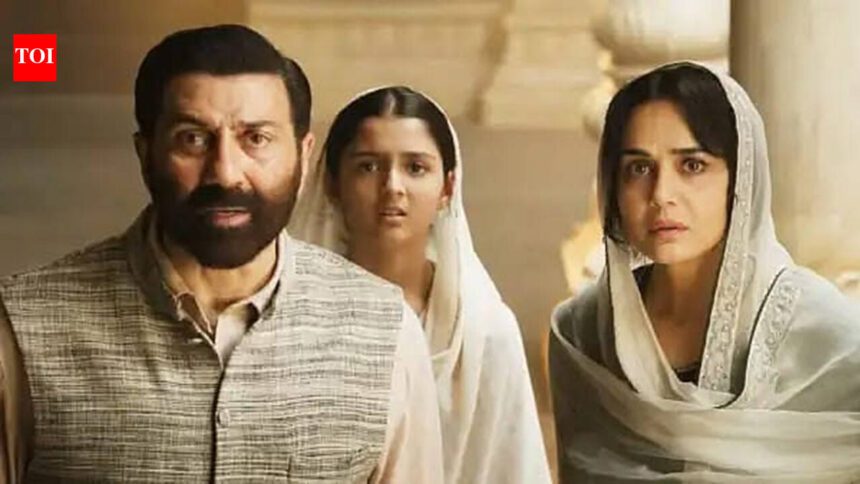

In a revealing discussion about the challenges faced while filming ‘Batwara 1947’, director Rajkumar Santoshi disclosed that investors hesitated to back a film portraying an Indian Muslim character played by Sunny Deol. This reluctance underscores broader societal anxieties regarding Muslim representation in Indian cinema, particularly in the context of the ongoing scrutiny and prejudicial attitudes towards Muslims within the country, intensified under the current political climate influenced by the ruling BJP and its associated organizations.
Investors’ Reluctance and Typecasting in Bollywood
Santoshi recounted the difficulty in securing funding for ‘Batwara 1947’, explaining how many investors expressed a preference for Deol’s return to more conventional action roles rather than supporting a narrative focused on the Partition and its complexities. “Most of the investors here in Mumbai came to know that Sunny Deol and I were doing a film, they wanted me to do a regular action film, a vigilante film,” he stated, indicating a clear disconnect between investor expectations and the poignant subject matter of his project. This scenario reflects a broader trend in Bollywood where narratives involving Muslims and historical contexts of communal strife present a financial risk for producers, perpetuating a cycle of exclusion and marginalization in the industry.
Clarification of Character Background
One significant aspect of the backlash against the film’s premise was the misconception regarding Deol’s character being portrayed as Pakistani. Santoshi took it upon himself to clarify, stating emphatically, “he is not playing a Pakistani. He is playing a Muslim from India… He migrated to Pakistan.” This affirmation brings to light the intricate identities that often get oversimplified or misrepresented in media narratives. The reluctance to fund such nuanced portrayals indicates a potential area of discrimination, where projects that accurately represent the complexities of Muslim identities are undervalued or outright rejected, aligning with broader themes of societal exclusion faced by Muslims in India today.
Aamir Khan’s Support: A Sign of Brotherhood
Despite the prevalent reluctance among financiers, Bollywood stalwart Aamir Khan extended his support to Santoshi, offering to step in if the project struggled to find a producer. “Aamir was aware of it… he would produce it if nobody does,” Santoshi shared. Khan’s willingness to aid highlights a sense of camaraderie among filmmakers but also emphasizes the systemic barriers that exist, often needing established figures to lend their influence to push through narratives considered risky or politically charged. This dynamic raises questions about the sustainability of creative expression in a polarized environment, where Muslims frequently find themselves marginalized in the narratives portrayed in popular media.
Why It Matters
The situation surrounding ‘Batwara 1947’ exemplifies the challenging landscape for filmmakers attempting to explore sensitive topics related to religious identity and historical trauma in India. These instances of investor reluctance shed light on broader societal attitudes that perpetuate discrimination against Muslims. In an industry dominated by audience expectations largely shaped by prevailing political narratives, the suppression of diverse voices threatens not only the richness of Indian cinema but also the representation of minorities in mainstream narratives. Sustaining a diverse storytelling landscape is vital, particularly in fostering understanding and empathy in a fractured sociopolitical climate.
Frequently Asked Questions
What is the premise of ‘Batwara 1947’?
‘Batwara 1947’ explores the complexities of the Partition through the character of an Indian Muslim who is forced to migrate to Pakistan, highlighting the serious implications of historical trauma.
Why did investors hesitate to fund the film?
Investors were primarily interested in conventional action films featuring Sunny Deol, leading to a reluctance to back a serious project perceived as risky due to its subject matter involving an Indian Muslim character.
How does this situation reflect broader societal issues in India?
The hesitance to support this film mirrors wider societal discrimination and marginalization of Muslims in India, particularly in media and filmmaking, where their stories are often sidelined or misrepresented.
What role did Aamir Khan play in this production?
Aamir Khan offered his support to Rajkumar Santoshi, indicating a willingness to produce the film if financial backing could not be secured from other sources, showcasing solidarity within the film industry.