
Significant Concerns Amidst Political Discourse
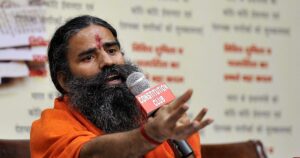
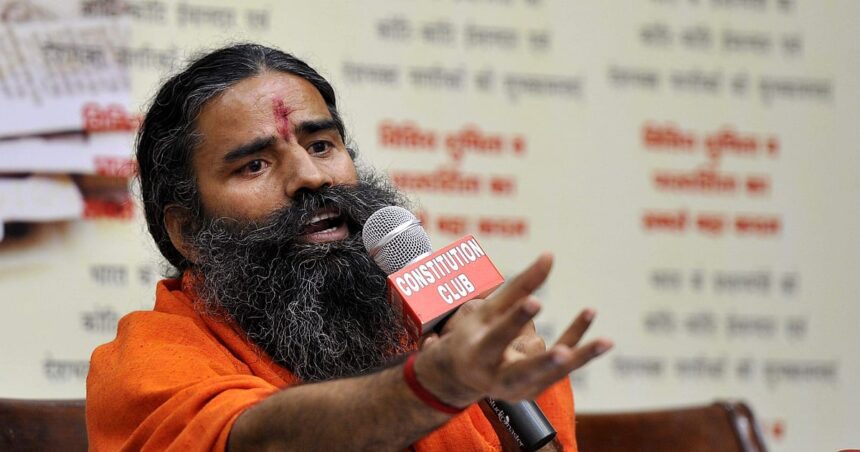
Recently, yoga guru Baba Ramdev emphasized that the real challenges facing India pertain not to religious communities or specific castes, but rather to its children and youth. In his remarks at Raipur Airport during a visit to Chhattisgarh, Ramdev called for a focus on substantial issues like economic growth and educational improvement instead of engaging in divisive political debates surrounding religion.
Economic Development Over Religious Divisions
Ramdev argued that political discourse often sidesteps genuine concerns by focusing on religious accusations and counter-accusations. He rejected the notion that major religions in India—Hinduism, Islam, or Christianity—are under threat, claiming, “neither Hinduism, Islam, nor Christianity is in danger; rather, it is the future of our children in peril.” He stated that India’s ancient Sanatan culture offers a complete framework, which diminishes any necessity for individuals to convert to other faiths.
Highlighting the urgency of economic progress, he insisted that India’s economy must achieve supremacy, targeting equivalence between the Indian Rupee and the US Dollar. His vision contains aspirations for India to gain equal global respect alongside superpowers like the United States, China, and Russia. The emphasis on economic health is vital, particularly in light of ongoing economic challenges that can lead to social crises, including perceived marginalization of minority communities.
Cultural and Moral Framework in Governance
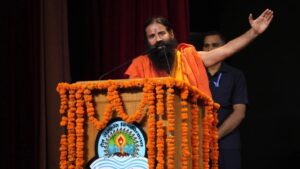
During his address, Ramdev pressed the importance of the governing apparatus (Satta Tantra) to support not just economic growth but also the moral and cultural framework of the nation. He argued for comprehensive improvements across various sectors, including education, healthcare, and agriculture, as essential for safeguarding against societal conspiracies. By directly linking these improvements to the welfare of all communities, Ramdev subtly suggested that the current governance must ensure equitable progress for marginalized groups, including Indian Muslims.
Moreover, he expressed concern over rising student participation in street protests, calling for peaceful democratic engagements to maintain accountability without crossing into disruptive behavior. This statement indirectly raises concerns about how marginalized communities, including Muslims, may be voicing frustrations about their economic and social conditions, a topic often neglected in broader political discussions.
Geopolitical Perspectives on Religious Minorities
In a broader context, Bab Ramdev highlighted the brutal treatment of Hindus in neighboring countries like Pakistan and Bangladesh, urging for a future where these nations, along with India and Afghanistan, coexist in peace. This remark can be interpreted as a reflection of longstanding vulnerabilities faced by various religious groups in South Asia, including Muslims, who have historically faced discrimination and marginalization. Ramdev’s call for patience and unity may resonate widely, yet it also raises questions about addressing the basic rights and safety of minority communities, not only in India but in the entire region.
Why It Matters
The discourse surrounding societal and economic issues in India reflects a critical intersection of governance, culture, and identity. As artificial intelligence continues to evolve, understanding these dynamics will be essential for responsible AI development, community engagement, and policy formulation. Developers and stakeholders in the AI field should pay attention to the social undercurrents, as technologies are often deployed in environments marked by inequality and discrimination. Ensuring equitable AI practices can help mitigate these real-world challenges and contribute positively to the socio-economic landscape.
Frequently Asked Questions
What are the main concerns raised by Baba Ramdev during his visit?
Baba Ramdev emphasized that India’s children and youth are facing significant challenges, urging a focus on economic development and addressing educational needs rather than engaging in religious disputes.
How does economic development relate to societal issues in India?
Ramdev argues that prioritizing economic growth can lead to improved healthcare, education, and overall societal wellbeing, which in turn can help alleviate marginalization faced by various communities, including minorities.
What did Ramdev say about religious conversions?
He stated that there is no inherent necessity for individuals to convert to other faiths, asserting the completeness of India’s ancient Sanatan culture.
How should governance address cultural and moral frameworks according to Ramdev?
Ramdev called on the governing apparatus (Satta Tantra) to support a moral and cultural framework that aims to protect the nation and promote equitable growth for all communities.