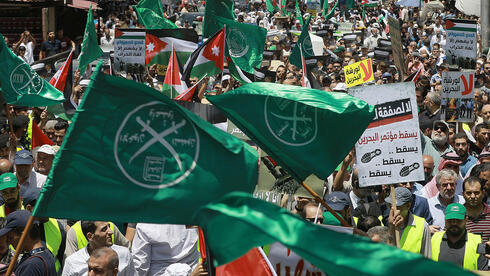

The United States has taken decisive action against an alleged member of the Muslim Brotherhood accused of financially supporting Hamas, a move that may intensify scrutiny on the British government’s approach towards Islamist movements. Mahmoud al-Abyari, a dual Egyptian-Austrian national, has been sanctioned, with his assets frozen and entry into the U.S. barred, amplifying calls for the UK to reassess its stance on the Muslim Brotherhood.
Background of U.S. Sanctions
On Thursday, the White House announced sanctions against Mahmoud al-Abyari, identifying him as the secretary general of the Egyptian Muslim Brotherhood and its General Secretariat. The U.S. Treasury accused him of raising funds for organizations that have been designated as terrorist entities, including Hamas, which has close historical ties to the Brotherhood itself. This designation follows a broader U.S. policy to target financial networks that allegedly support terrorist activities globally.
Al-Abyari’s sanctions come as part of a wider enforcement strategy by the Trump Administration, as indicated by U.S. Treasury Secretary Scott Bessent, who emphasized a relentless pursuit of terrorists and their financiers. The sanctions are expected to invigorate discussions within the UK regarding the legal status of the Muslim Brotherhood, which is neither banned nor classified as a terrorist organization there, unlike in countries such as Egypt and Jordan, where it originated.
Political Reaction in the UK
In response to the U.S. actions, British political figures have highlighted the need for a more stringent examination of the Muslim Brotherhood’s activities within the UK. Robin Simcox, a former counter-extremism commissioner, praised the U.S. sanctions and urged UK officials to move beyond inaction on what he describes as a pressing issue in their own backyard. He called for a proactive approach in dealing with the challenges posed by the Brotherhood, asserting that the UK should not rely solely on U.S. actions.
This renewed scrutiny comes at a time when the British government has faced mounting pressure to align its counter-terrorism strategy with that of its allies. As terrorism poses a significant threat to national and international security, the UK’s ongoing tolerance of the Muslim Brotherhood’s activities raises questions about its commitment to counteracting extremist ideologies.
The Relationship Between Hamas and the Brotherhood
Understanding the ties between Hamas and the Muslim Brotherhood is crucial in the context of these sanctions. Hamas is commonly viewed as an offshoot of the Brotherhood, with historical leaders like Sheikh Ahmed Yassin playing a role in both groups. However, the Brotherhood maintains that it does not share operational or administrative functions with Hamas, asserting a commitment to non-violence in its political engagements.
Despite the Brotherhood’s claims of a clear separation from Hamas, the U.S. Treasury continues to identify organizational overlaps in fundraising and operational strategies. Al-Abyari reportedly used fronts and intermediary structures to redirect funds to Hamas-associated organizations, such as Turkish charities linked to extremist activities. This challenging dynamic complicates any clear-cut definitions of operational boundaries, igniting debates about the Brotherhood’s role in fostering extremism.
Why It Matters
The implications of the U.S. sanctions extend beyond individual accountability; they highlight the interconnected nature of global counter-terrorism efforts. As governments worldwide reassess their relationships with organizations like the Muslim Brotherhood, the U.S.’s actions could influence international policy shifts and cooperation in combating financing for extremist groups. Furthermore, the unfolding events may encourage nations to evaluate domestic Muslim communities as potential hotspots for radicalization, impacting social cohesion and community relations.
Frequently Asked Questions
What are the implications of the U.S. sanctions against Mahmoud al-Abyari?
The sanctions signify a robust stance by the U.S. against organizations accused of financing terrorism, aiming to disrupt funding channels to groups like Hamas and pressing allied nations to take more action against the Muslim Brotherhood.
How has the UK government responded to the U.S. actions?
British political figures have welcomed the U.S. sanctions, urging the government to reevaluate its stance on the Muslim Brotherhood and take a proactive approach to address concerns regarding extremism.
What is the relationship between Hamas and the Muslim Brotherhood?
Hamas is widely regarded as a branch of the Muslim Brotherhood, although the Brotherhood claims to have a distinct, non-violent agenda. This distinction poses challenges for policymakers trying to navigate the complexities of counter-terrorism.
Why are charities being scrutinized in this context?
The U.S. has identified certain charities as fronts for funding terrorist activities, particularly highlighting organizations like Tujah Bulah Global, which allegedly funnels financial support to Hamas, raising concerns over the misuse of charitable resources.