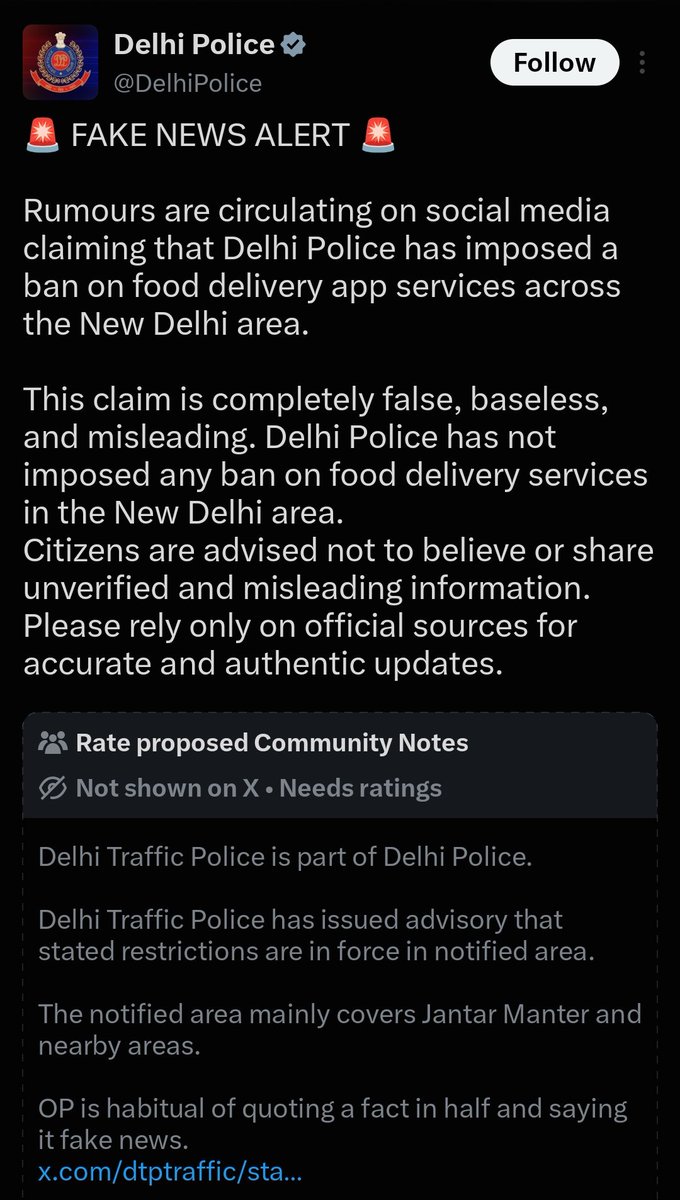

Recently, there has been a significant claim regarding a possible ban on food delivery services in New Delhi, which has sparked concern among residents and users of these services. The Delhi Police have officially refuted these claims, emphasizing the need for accurate, verified information in the wake of widespread misinformation.
Understanding the Claim
The controversy began when social media posts circulated claiming that the Delhi Police had imposed a ban on food delivery apps across New Delhi. These posts suggested that due to unspecified reasons, residents would no longer be able to order food online. Such rumors tend to gain traction quickly, especially when they pertain to public amenities and daily conveniences.
Official Response from Delhi Police
In response to the circulating rumors, the Delhi Police took to their official Twitter account. They issued a statement categorically denying the validity of these claims. The police underscored that there is “no ban on food delivery services in the New Delhi area,” and urged citizens to refrain from spreading unverified information. The tweet serves as an important reminder about the necessity for critical evaluation of news before sharing it.
The Role of Social Media in Rumor Propagation
This incident highlights the growing influence of social media in the rapid spread of both information and misinformation. In today’s digital age, tweets and posts can reach thousands within minutes, often leading to panic and confusion among the public. The juxtaposition of a serious claim against a backdrop of negligence in fact-checking calls for a more responsible approach to social media consumption. Many political commentators, including @zoo_bear, underline the pressing need for users to rely on official sources for authentic updates, particularly in matters affecting public welfare.
Why This Matters
The incident sheds light on crucial aspects of information dissemination in India, especially in urban settings like New Delhi. By clarifying the facts, the Delhi Police not only countered misinformation but also reaffirmed their commitment to public service and maintaining order. It is vital for citizens to remain vigilant against false news, which can lead to unnecessary fear and disruption. This issue touches on larger themes of credibility, trust, and the role of law enforcement in safeguarding public interests in an era dominated by social media narratives.
Frequently Asked Questions
What did the Delhi Police clarify regarding food delivery services?
The Delhi Police clarified that there is no ban on food delivery apps in New Delhi, dismissing the rumors as false and misleading.
Why do such rumors gain so much traction?
Rumors can spread quickly on social media due to the fast-paced nature of information sharing, particularly when they concern public services that affect daily life. This can lead to a heightened sense of urgency or concern among the public.
What should citizens do when faced with such claims?
Citizens are advised to verify information through official sources before sharing it. They should be cautious about accepting social media posts at face value, especially those that appear sensational or cause alarm.
How can misinformation impact society?
Misinformation can lead to public panic, unnecessary confusion, and a lack of trust in institutions. In matters of public safety and welfare, unchecked rumors can create significant disruptions in daily life and operations.