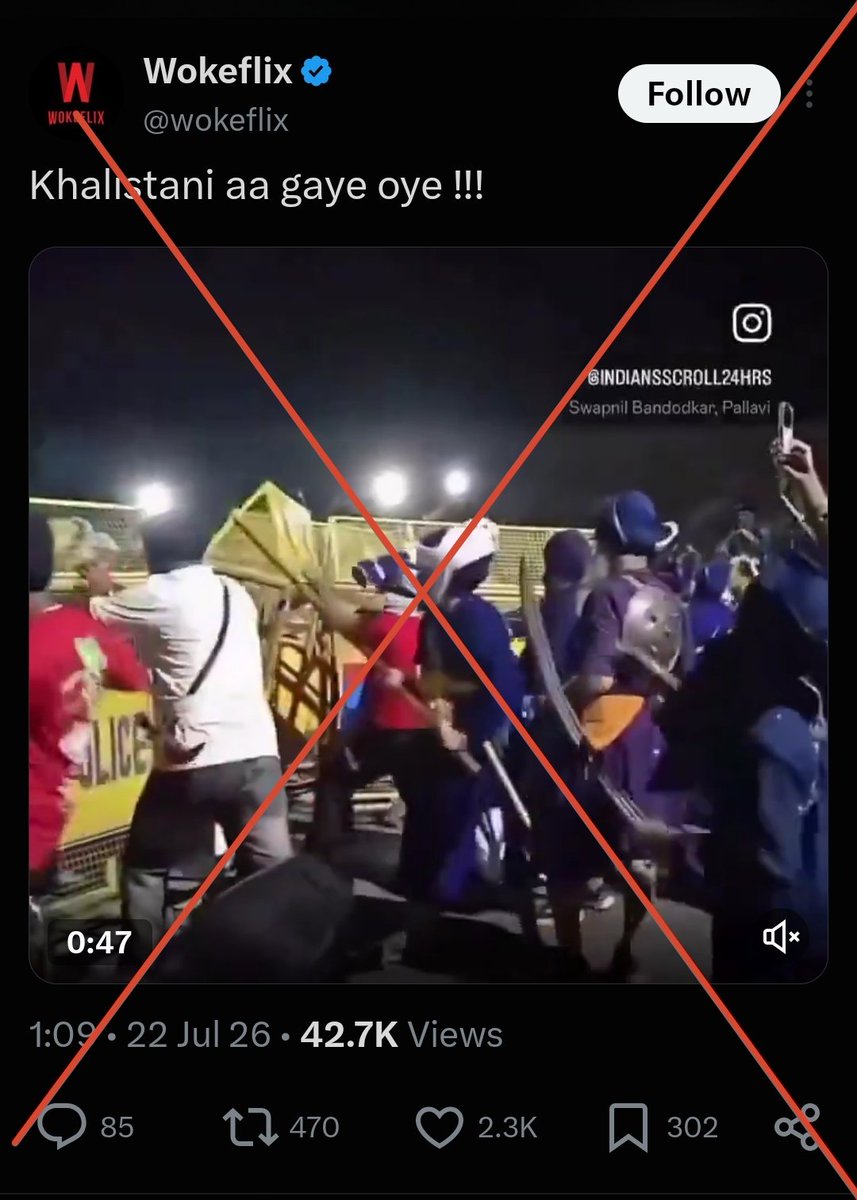

A recent tweet by the account @wokeflix has surfaced, sharing a video which they claim is from the Jantar Mantar protest site, referring to Khalistani movements. However, the video has been identified as originating from a different context, specifically from the Himachal-Uttarkhand border last month. This claim raises concerns regarding misinformation among political discussions in India.
Context of the Video
The video in question has been circulating in political circles, with @wokeflix labeling it as evidence of Khalistani elements participating in protests at Jantar Mantar, a known site for various public demonstrations in Delhi. However, fact-checkers and observers have pointed out that the footage is actually from the Himachal-Uttarkhand border, captured some time ago. This discrepancy points to a troubling trend where old footage is repurposed to create narratives that may not reflect the current situation.
Role of Social Media in Political Narratives
Social media platforms like Twitter serve as battlegrounds for differing political narratives in India. Accounts like @wokeflix are part of a larger ecosystem of pro-BJP trolls who often amplify certain messages, sometimes using misinformation to sway public opinion. The challenge for fact-checkers and responsible media outlets is to maintain integrity and accuracy while countering the spread of misleading content. The responsible sharing of information is critical, especially in the heated atmosphere leading up to elections and significant political events.
The Call for Accountability
The tweet’s author has directly addressed @DelhiPolice, @PIBFactCheck, and @DDNewslive, appealing for action against these misleading narratives being propagated by certain Twitter users. This highlights the role of official agencies in monitoring misinformation and ensuring that the public receives accurate information. The engagement of government agencies in fact-checking and responding to false claims is vital, particularly when it comes to sensitive topics like communal tensions and regional politics.
Why This Matters
The spread of disinformation can significantly impact public perception and political dynamics in India. When misleading narratives gain traction, they can lead to increased polarisation among communities, as well as unjust targeting of groups based on inaccurate portrayals. In a diverse nation like India, where multiple religious and cultural identities coexist, maintaining accurate narratives is crucial for social harmony. It is imperative for citizens to scrutinise the information they consume and for official bodies to take proactive measures against misinformation.
Frequently Asked Questions
What does the video in question depict?
The video shared by @wokeflix purports to show Khalistani activists at the Jantar Mantar protest site, but fact-checking has revealed it is from the Himachal-Uttarkhand border, captured last month.
Why is misinformation a concern in Indian politics?
Misinformation can alter public perceptions, incite communal tensions, and mislead political discourse, leading to divisions in society and potential unrest.
What should individuals do when encountering misleading information?
Individuals are encouraged to verify claims through reliable fact-checking sources and remain critical of sensationalized narratives, especially those related to politically sensitive topics.
How can government agencies combat misinformation?
Government agencies can play a crucial role by actively engaging in fact-checking, raising awareness, and penalising those who deliberately spread false information that can harm social stability.