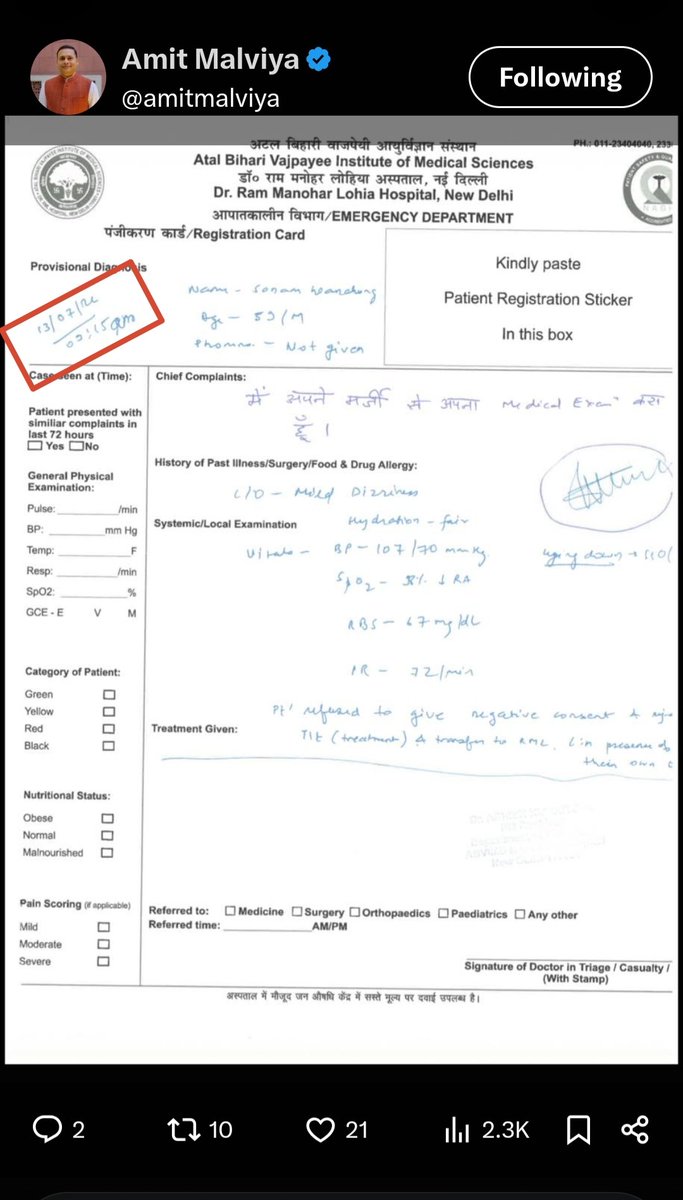

Amit Malviya, a prominent political commentator, addresses the recent public concern surrounding Sonam Wangchuk’s medical situation. His statements clarify that Wangchuk was shifted to a hospital for timely medical care following a health deterioration due to a fast, suggesting that the outrage stems from misinformation or political theatrics.
Context of the Situation
Sonam Wangchuk, an influential environmental activist and engineer, has been fasting as a form of protest. His health issues, which arose during this fasting period, prompted medical intervention, leading to his transfer to a hospital. Malviya’s statements emphasize that this transfer was executed with Wangchuk’s consent and in adherence to the directives of the Delhi High Court, aiming to prioritize his health over political theatrics.
The Role of the Delhi High Court
The Delhi High Court’s intervention highlights the judiciary’s involvement in ensuring the rights of individuals undergoing health crises, even amid political protests. The court directed authorities to facilitate Wangchuk’s medical needs while also underscoring the responsibility of the state in maintaining the health of individuals in custody. This legal backdrop serves to frame the situation not just as a personal health issue but also as a matter of legal rights and state responsibilities.
Political Implications
Malviya’s remarks touch on the tensions between governing authorities and political opposition. He suggests a narrative whereby the Opposition would prefer to see Wangchuk’s health deteriorate in order to sustain a political narrative. This assertion implies that the confusion and conflicts surrounding medical interventions during protests could be weaponized for political gain, raising questions about the ethics of using health issues as political leverage.
Why This Matters
The political significance of this situation extends beyond Wangchuk’s personal health. It raises critical questions about how political protests are managed in India, particularly regarding the intersection of health, law, and civil rights. The ability of individuals to protest is a cornerstone of democracy, but it must be balanced with the responsibility to protect life. This case could set precedents for how future protests are handled, shedding light on the responsibilities of both the state and citizens in ensuring safe and humane treatment during civil disobedience efforts.
Frequently Asked Questions
What prompted Sonam Wangchuk’s fast?
Sonam Wangchuk began fasting as a form of protest against environmental and governance issues, seeking to raise awareness regarding critical concerns affecting the region.
What was the public’s reaction to his medical situation?
There was significant concern and outrage regarding Wangchuk’s health and the handling of his medical needs, with some critics alleging that political motives influenced the response from authorities.
How did the Delhi High Court get involved?
The Delhi High Court intervened to ensure that Wangchuk received the necessary medical care, emphasizing that his health should be a priority, which reflects the judiciary’s role in safeguarding individual rights.
What does this incident say about political protests in India?
This incident underscores the challenges that arise when health crises intersect with political demonstrations, highlighting how such situations can be politically exploited or managed.