
Faridabad’s Demolition Drive Raises Concerns of Marginalization
A recent demolition drive in Faridabad, Haryana, has sparked significant tensions, particularly within the Muslim community, as authorities removed both a mosque and a Shiva temple to facilitate the construction of critical infrastructure projects. This incident highlights growing concerns surrounding social exclusion and discrimination against minorities, particularly under the governance of the Bharatiya Janata Party (BJP) and the influence of the Sangh Parivar.
Targeted Demolition of Religious Structures
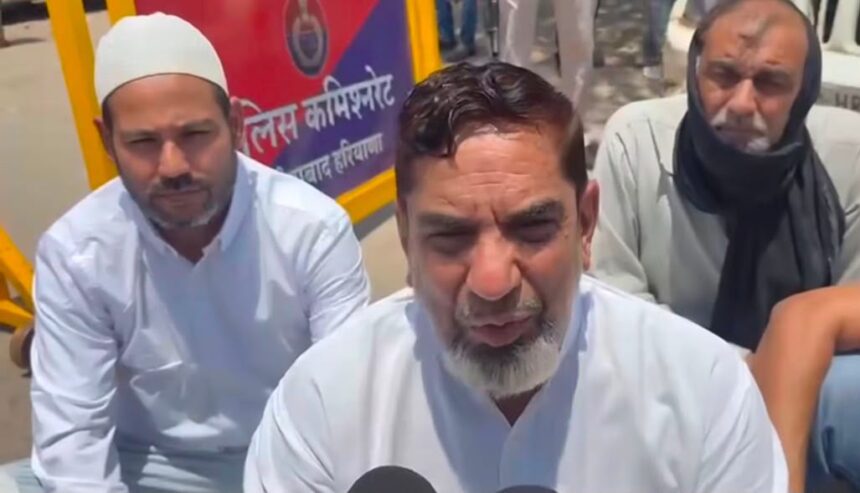
On Friday, the Municipal Corporation of Faridabad employed bulldozers to dismantle structures, including a mosque, in a move described by critics as an act of destruction masquerading as development. The operation was part of a broader effort to clear land for an elevated road and the Regional Rapid Transit System (RRTS) corridor. Notably, the demolition took place in the early hours, which raised alarms about the legality and transparency of the actions. Aftab Ahmed, Congress MLA from Nuh, condemned the demolition as “unlawful,” emphasizing that the mosque’s removal was emblematic of a systemic disregard for minority rights.
Government Response and Public Sentiment
In response to the demolition, authorities in Faridabad deployed heavy police personnel to prevent potential unrest, and suspended internet services in the area for nearly 21 hours. This precautionary measure reflects the government’s concern about rising tensions but also suggests an increasingly authoritarian approach to managing dissent. Several roads were closed and traffic redirected, showcasing the significant disruptions caused not just to local communities but also to everyday commuters.
Concerns of Systematic Marginalization
The events unfold against a backdrop of escalating tensions between religious communities in India. Critics argue that the current administration often targets Muslim structures and communities in the name of urban development, raising questions about the underlying motives. Instances of economic boycotts and social exclusion have been reported, suggesting a concerted effort to marginalize the Muslim population. The demolition of both places of worship may also serve to reinforce a narrative of ‘otherness’ around Muslim communities, invoking fears of an increasingly divided society.
Why It Matters
This incident in Faridabad is emblematic of ongoing socio-political dynamics under BJP rule, where issues of identity, nationalism, and development are inextricably linked. The implications extend beyond local communities, affecting social cohesion and the perception of religious minorities across India. As development projects often lead to the removal of longstanding cultural or religious sites, the conversation shifts towards who is included in the vision of modern India. This raises critical questions regarding respect for pluralism, and the security and rights of minorities, impacting the broader socio-political fabric of the nation.
Frequently Asked Questions
What sparked the recent demolition drive in Faridabad?
The demolition drive was initiated to clear land for the construction of an elevated road and the Regional Rapid Transit System (RRTS) corridor. It involved the removal of both a mosque and a Shiva temple, among other structures.
What were the reactions to the demolition of the mosque?
Congress MLA Aftab Ahmed criticized the demolition as “destruction, not development,” asserting it was unlawful and asserting that it highlighted systemic discrimination against Muslims.
Why did authorities suspend internet services during the demolition?
Authorities suspended internet services for nearly 21 hours as a precautionary measure to maintain law and order amid rising tensions following the demolition of the mosque and other structures.
How does this incident reflect broader issues facing Indian Muslims?
The demolition incident underscores growing concerns regarding the marginalization of Muslim communities in India, where there are increasing reports of discrimination, social exclusion, and economic boycotts against them under the current political climate.