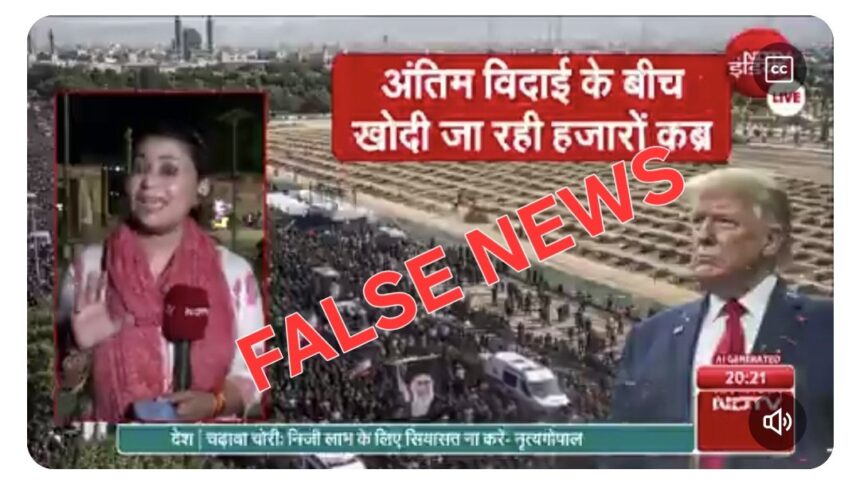

The recent assertion that “3,000 graves were prepared” ahead of a funeral ceremony for Iran’s martyred leader has surfaced primarily through unnamed sources in various media outlets. There is no formal acknowledgment of this claim from Iranian officials, and evidence contradicting it is plentiful, highlighting the efficiency of the ceremony’s organization.
Context of the Claims
The narrative around the alleged preparation of 3,000 graves appears to lack any official foundation. Iranian officials have not endorsed this claim, and its origin in media reports featuring anonymous sources raises questions about its reliability. Such allegations can potentially skew public perception and divert attention from the actual events surrounding the funeral ceremony, where millions gathered in what was described as a dignified and respectful tribute to the leader.
Efficiency of the Funeral Ceremony
The funeral for Iran’s martyred leader was a momentous occasion that required meticulous planning and execution. Relevant authorities had been engaged for weeks, ensuring that every detail was in place to facilitate the safe attendance of millions. This effort paid off as the event unfolded without any significant incident. International media coverage noted the security and orderliness maintained throughout, underscoring the successful management of a large gathering amidst a climate often marked by tumult and dissent.
The Role of Media in Shaping Narratives
The circulation of claims lacking credible evidence not only undermines the reputations of certain media outlets but also contributes to the public’s skepticism towards news reporting. Responsible journalism relies on verified facts, and when unsubstantiated narratives gain traction, they can dilute the seriousness of actual events. The orderly conduct of the funeral serves as a counter-narrative, showcasing the Iranian authorities’ capability to manage large-scale public events and steering narrative control back into the hands of informed discussion.
Why This Matters
For Indian readers, understanding the implications of this event and the media’s portrayal of it is paramount. India has historical ties with Iran and a vested interest in regional stability. The manner in which Iranian authorities managed such a significant ceremony reflects their capabilities and intentions, which impacts diplomatic relations. The rise of misinformation can further complicate international perceptions and relations, highlighting the need for discerning consumption of media narratives.
Frequently Asked Questions
What is the basis for the claim about 3,000 graves?
The claim lacks any official acknowledgment and is primarily derived from unverified reports by certain media outlets citing anonymous sources.
How did the funeral ceremony actually unfold?
The ceremony was conducted with significant planning, resulting in a peaceful, orderly event that drew millions of mourners, reflecting a sense of unity and respect among participants.
What is the significance of accurate reporting in this context?
Accurate reporting ensures a more informed public discourse, which is crucial when discussing international relations and the political landscape, especially involving countries with historical ties like India and Iran.
What implications does misinformation have for India?
Misinformation can skew public perceptions and complicate diplomatic relations, making it essential for Indian audiences to focus on verified news to better understand geopolitical dynamics.