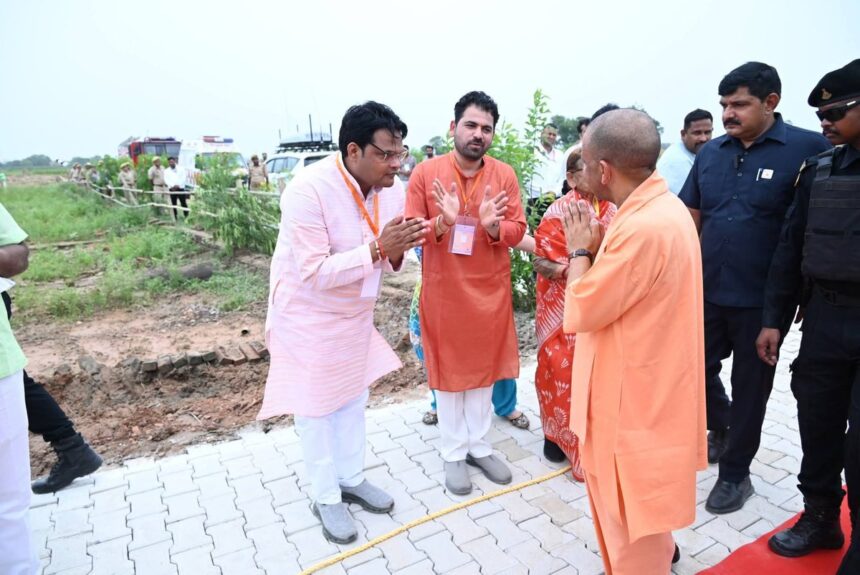

No media outlets have reported that one of the accused in the Purnia MP Pappu Yadav attack case, Happy Sharma, is a member of the Bharatiya Janata Party (BJP).
Overview of the Incident
The situation involving Happy Sharma and his claims surfaced amid significant political tension surrounding a protest involving sadhus in Purnia. Happy Sharma, who identifies as a member of the BJP, asserted that he and others approached Pappu Yadav to confront him over his criticisms of Sanatan Dharma, a term that refers to the Hindu religion. Their confrontation escalated into physical violence instigated by Yadav’s supporters, according to Sharma’s account.
Context of the Protest
The underlying issues of the protest are rooted in ongoing tensions between various political groups in India. Sadhus, or Hindu ascetics, often represent traditional and religious sentiments. In this instance, the clash seems to tie into larger cultural and political narratives around respect for religious figures and the criticisms levied against them by political figures like Pappu Yadav. Yadav’s comments about Sanatan and sadhus have drawn ire, especially from BJP affiliates, indicating a complex intersection of religion and politics in this scenario.
Reactions and Media Coverage
Interestingly, the media coverage of this incident has faced scrutiny for not adequately highlighting Happy Sharma’s BJP affiliation. This omission may reflect an editorial choice to focus on the violent altercation itself rather than political affiliations that might inform the reader’s understanding of the dynamics at play. Furthermore, the altercation has highlighted how political factions in India are increasingly polarizing the narrative surrounding religious identity and political action.
Why This Matters
The implications of this incident extend beyond the immediate conflict between Yadav and Sharma. It showcases the rising tensions between opposition parties and the BJP, particularly in the context of religious and cultural politics. If media narratives continue to ignore the involvement of political party affiliations in such incidents, it could lead to a distorted public understanding of the political landscape. As political affiliations become closely tied to communal sentiments, voters must discern the motivations and implications behind these confrontations, especially as the nation heads toward potentially pivotal elections.
Frequently Asked Questions
Who is Happy Sharma?
Happy Sharma is identified as a member of the Bharatiya Janata Party (BJP) and has been accused in the attack on Pappu Yadav during a protest event involving sadhus.
What was Pappu Yadav’s role in the incident?
Pappu Yadav, a Member of Parliament, was confronted by Happy Sharma and others over his comments regarding Sanatan Dharma. The situation escalated into a physical altercation when Yadav’s supporters attacked Sharma and his group.
Why is the incident politically significant?
The incident highlights the ongoing tensions between the BJP and its opponents, particularly concerning issues of religious identity and the role of sadhus in political discourses. Such confrontations may shape public perceptions ahead of upcoming elections.
How has the media responded to this incident?
Media coverage has largely focused on the altercation itself while notably omitting Happy Sharma’s BJP affiliation, raising questions about potential biases in reporting on political violence and its related narratives.