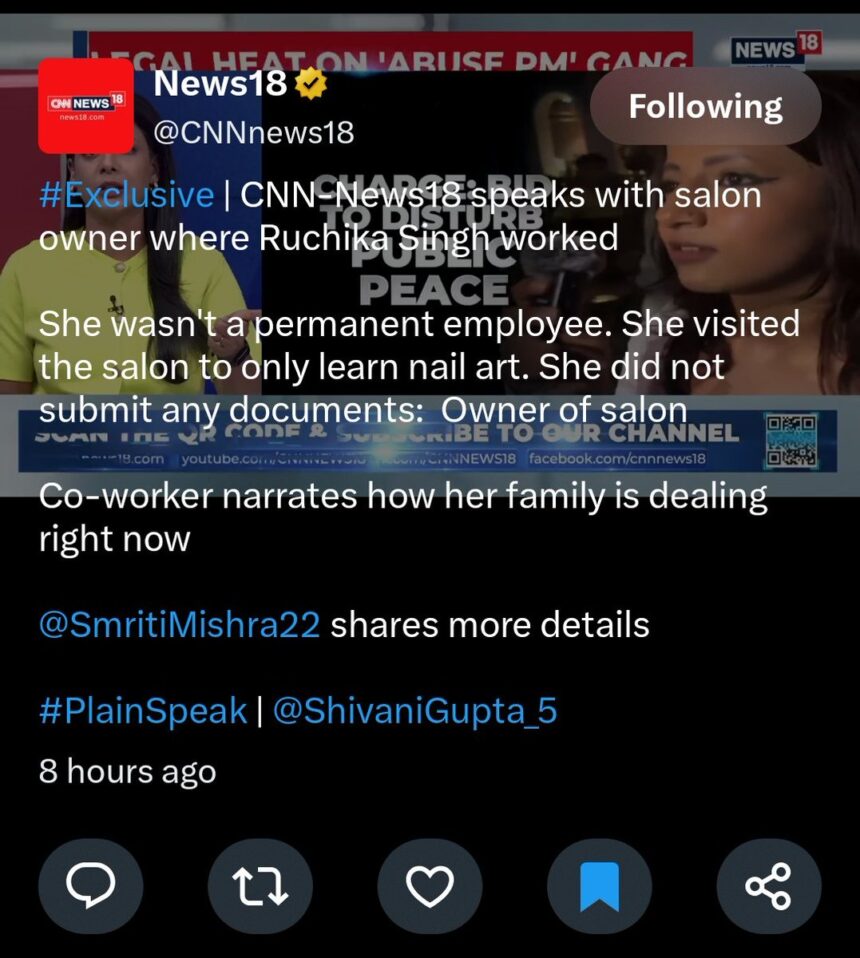

Recently, Ambani’s news channel, @CNNnews18, deleted a controversial video targeting a woman who allegedly insulted Prime Minister Narendra Modi and other ministers during a protest. The incident has sparked discussions about the role of media and the ethics of investigative journalism.
Context of the Incident
The controversy revolves around a video released by CNN News18, which reportedly featured an investigation into the personal and professional life of a woman who was vocal during a protest against the government. The woman is alleged to have made derogatory comments about the Prime Minister and various political figures, prompting media scrutiny. The news channel, connected to one of India’s wealthiest families, faced backlash for its aggressive approach to uncovering the identity and whereabouts of the protestor.
Reactions to the Coverage
Mohammed Zubair, a prominent political commentator, criticized CNN News18’s methods as a form of unethical journalism. In his remarks, he highlighted that the female employees of the channel undertook an investigative effort that included tracking down the woman’s place of work, interviewing her colleagues, and even speaking to her mother. Zubair’s comments raise concerns about the implications of media outlets stepping into personal lives, especially when motivated by political disagreements.
Media Ethics and Investigative Journalism
This incident brings to light important questions regarding the ethics of investigative journalism in India. While such investigations can play a vital role in promoting accountability and transparency, they can also veer into invasive territory, as illustrated by the actions of CNN News18. The decision to delete the video may indicate an acknowledgment of the potential harm and backlash that can arise from targeting individuals for their political expressions. Such actions can set precedents for media behavior in politically charged environments, necessitating a balance between investigative zeal and ethical considerations.
Why This Matters
The implications of this controversy are significant in the Indian political landscape. As media outlets continue to navigate the complex interplay of politics, journalism, and public sentiment, incidents like this highlight the challenges they face. The backlash against CNN News18 underscores the consequences of aggressive media tactics, particularly when they target individuals based on their political views. Moreover, the incident raises larger questions about freedom of speech, political dissent, and the public’s trust in media—critical components of a functioning democracy. For readers in India, this scenario serves as a stark reminder of the potential for media to either uphold democratic values or threaten individual freedoms based on political affiliations.
Frequently Asked Questions
What sparked the investigation by CNN News18?
The investigation was reportedly prompted by the woman’s derogatory comments about Prime Minister Narendra Modi and other ministers during a protest.
Why did CNN News18 delete the video?
The channel deleted the video, possibly acknowledging the backlash and concerns regarding the ethical implications of targeting an individual for their political opinions.
What role does ethics play in investigative journalism?
Ethics are crucial in journalism to ensure that investigations respect individuals’ rights and freedoms while still promoting accountability and transparency in governance.
What are the broader implications of this incident for Indian democracy?
The incident raises concerns about freedom of speech, the role of media in checks and balances, and the potential chilling effects on political dissent among citizens.