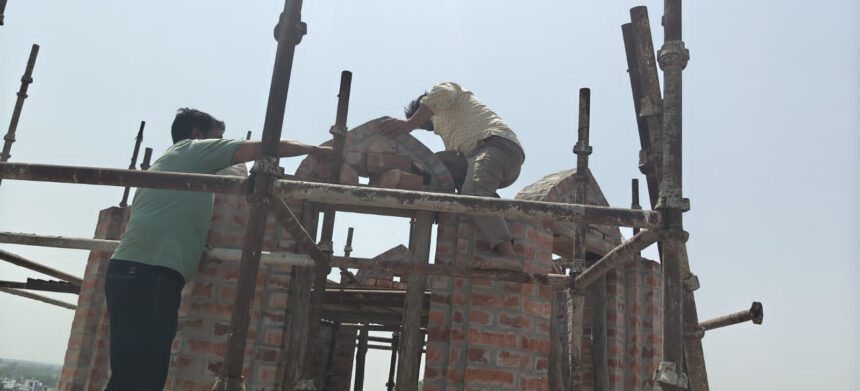

Demolition of Mosque Minarets in Haridwar Highlights Broader Discrimination Issues
In a recent decision by the Haridwar district administration, the demolition of towering minarets at an under-construction mosque in the Sultanpur area has begun. This action, claimed to comply with state directives, is seen as part of a concerning trend regarding the treatment of Muslim communities under the current political atmosphere influenced by the Sangh and BJP governments in India.
Background of the Demolition
The mosque in Haridwar attracted significant attention due to its ambitious size and height, particularly its minarets, which reportedly reached nearly 250 feet. The construction was first halted nearly ten months ago after authorities found it did not comply with building norms, and no permissions were acquired from the relevant authorities. Haridwar District Magistrate Mayur Dixit indicated that complaints about the construction prompted administrative action, raising questions about the underlying motives behind this scrutiny.
Reportedly, the community had mobilized funds for what was promoted as the largest mosque in Uttarakhand, which may have contributed to the intense focus on its construction. The mosque management committee faced internal disputes, reportedly delaying the halting of construction. Despite the committee’s offer to remove the controversial minarets, the ongoing demolition raises broader questions about religious freedoms in the region.
Legal and Regulatory Implications
This situation touches on critical legal aspects as well. Supreme Court directives established in 2009 and 2016 stipulate that no religious structure should be built without the proper permissions from local authorities. These regulations aim to prevent unauthorized constructions on public land and ensure compliance with all safety and planning considerations.
In terms of building regulations, structures in hilly areas are usually restricted to a height of 12 meters, while plains may allow constructions up to around 30 meters, contingent upon compliance with local laws. The mosque’s proposed height significantly exceeds these standards, compounding concerns about regulatory adherence. Critics assert that similar scrutiny is not applied uniformly across all religious structures, suggesting a potential bias against Muslim community projects.
Economic and Social Marginalization of the Muslim Community
More than just a localized issue, the demolition of the mosque minarets has reignited discussions around the economic and social marginalization of Muslims in India. Government data highlights that over 722 mosques exist in Uttarakhand alone, with many undergoing expansion. However, the focus on this particular construction illustrates a broader trend where Muslim community projects face increased surveillance and opposition compared to their Hindu counterparts.
While officials on both local and state levels insist their decisions are based on legal grounds, many observers see these actions as part of a larger narrative aimed at marginalizing minority communities, especially in the wake of rising Hindu nationalism. The disproportionate attention given to this mosque’s construction has prompted fears of economic boycotts and social exclusion, aligning with a historical pattern of discrimination against Muslims in various regions of India.
Why It Matters
Understanding the implications of such actions is crucial for various stakeholders, including policy developers and social advocates. The demolition not only sheds light on the ongoing struggles faced by Muslim communities but also serves as a microcosm of larger debates surrounding religious freedoms and state authority in India. For users of AI technology and developers, these issues represent significant factors influencing societal patterns and communal wellness, which can ultimately affect data representation and algorithmic bias.
Frequently Asked Questions
What led to the demolition of the mosque minarets in Haridwar?
The demolition was initiated after authorities found the construction of the mosque’s minarets did not comply with building regulations and lacked the necessary approvals from local authorities.
How does this incident fit into the wider context of religious construction in India?
This incident illustrates broader concerns regarding the treatment of Muslim construction projects in India, often facing stricter scrutiny compared to Hindu counterparts, reflecting underlying socio-political biases.
What regulations govern religious constructions in India?
According to Supreme Court directives and local laws, no religious structure should be constructed without prior approval from the District Magistrate or competent authority, aimed at preventing unauthorized constructions.
What are the community implications of these actions?
The demolition has reignited fears among the Muslim community about discrimination and marginalization, potentially leading to social exclusion and economic boycotts against Muslim-led initiatives.