
Summary
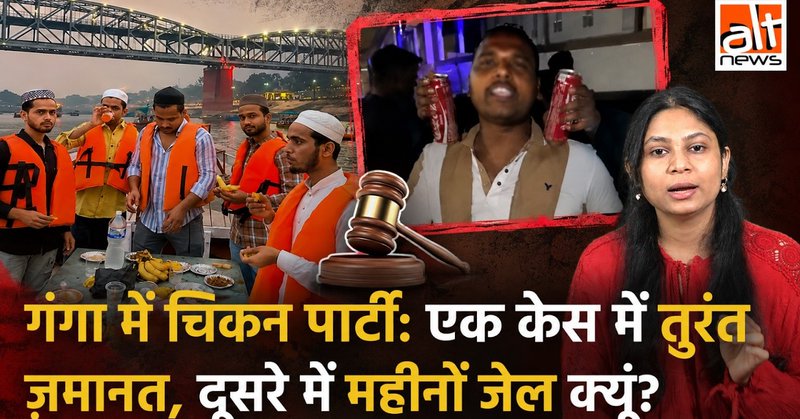
In Varanasi, a group of individuals celebrating with chicken and alcohol on a boat faced legal repercussions, leading to prompt bail for five of them. In stark contrast, 14 Muslim youths arrested for breaking their fast on a boat in March endured weeks of imprisonment, raising concerns over the disparities in legal treatment based on community and circumstance.
Disparities in Legal Outcomes
The recent incident involving a boat party on the Ganges River in Varanasi attracted attention when a group of individuals was arrested for consuming alcohol and chicken. The following day, five of the accused secured bail from the court, highlighting a swift judicial response.
This case contrasts sharply with an earlier incident from March, where 14 young Muslim men were detained for hosting an Iftar meal on a boat during Ramadan. Unlike the subsequent partygoers, these youths were subjected to significant legal scrutiny and incarceration for several weeks before being granted bail. The differing outcomes point to a troubling inconsistency in the application of the law, sparking debates about the fairness and equity in India’s legal system.
Context of Religious Sensitivities
The incidents underscore the broader socio-political context in India, particularly concerning religious identity and community relations. The Muslim community in India often faces heightened scrutiny and legal challenges during religious observances, as seen in the March incident. Critics argue that this reflects systemic biases within law enforcement and the judiciary, which disproportionately affect Muslim populations.
This narrative is essential in understanding contemporary Indian politics, wherein religion and law often intersect. Celebrations or observances by Hindu communities can receive leniency in legal consequences, whereas similar acts by Muslim communities may be viewed more critically. This division can exacerbate community tensions and affect social cohesion.
Legal Framework and Implications
The Indian legal framework presents a complex interplay of local laws, police enforcement, and judicial decisions. In the case of the Varanasi boat party, the quick resolution of bail raises questions about the criteria used by law enforcement and the judiciary in different scenarios. Are these legal outcomes determined by the nature of the activity, the community involved, or external social pressures?
Furthermore, the public reaction to such incidents will likely reflect and amplify existing societal divisions. With social media as a platform for discourse, narratives about fairness and justice are rapidly disseminated, influencing public opinion and potentially impacting electoral politics. This issue highlights critical areas where legal reform may be necessary to ensure uniform application of justice, regardless of religious or social demographic.
Why This Matters
This situation holds substantial political significance in India, where issues of communal identity and justice are often at the forefront of electoral politics. The marked disparity in legal treatment between different communities can fuel discontent and mistrust in institutions. Moreover, it raises critical questions about the role of justice in a secular state, prompting discussions on whether systemic changes are needed to uphold the principles of equality enshrined in the Constitution.
The political ramifications could influence voter sentiment in upcoming elections, particularly in areas where community relations are fragile. As parties engage with voters, addressing justice and equity in legal treatment will likely be a pivotal issue.
Frequently Asked Questions
1. Why were the two groups treated differently by law enforcement?
The discrepancies in treatment seem to reflect varying societal attitudes toward religious and cultural practices. The incident involving the Muslim youths was framed within a more contentious religious context, leading to their prolonged detention.
2. What are the implications for the legal system in India?
The differing legal outcomes highlight the need for reforms aimed at ensuring equitable treatment under the law, emphasizing the importance of impartiality in judicial decisions across communities.
3. How does this situation affect community relations in India?
Such disparities in legal responses may exacerbate existing tensions between communities, fostering a climate of mistrust toward law enforcement and the judicial system, and affecting social cohesion.
4. What can be done to improve legal equality in India?
Legal reforms, public awareness campaigns, and accountability measures within law enforcement could help address biases and ensure that all individuals receive equal treatment under the law, regardless of their community or religious background.