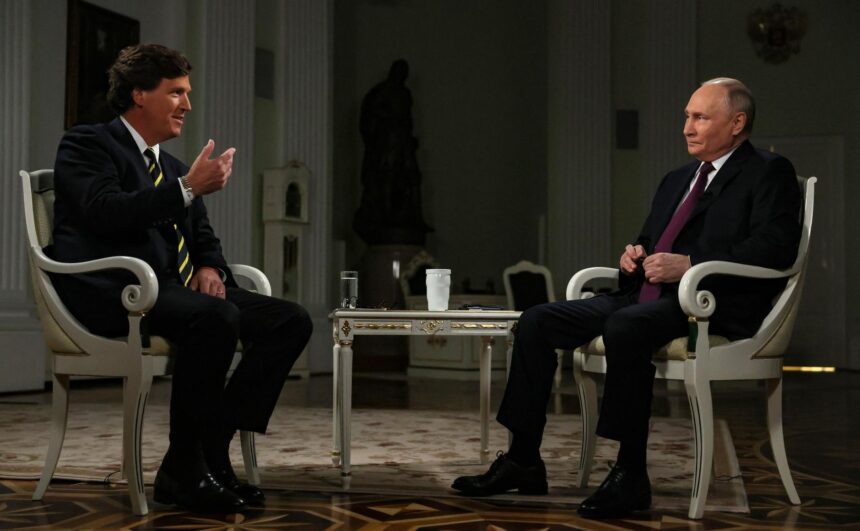

Shifting Narratives: Tucker Carlson’s Acknowledgment of Past Misbeliefs
Former Fox News host Tucker Carlson has publicly retracted his longstanding views that depicted Islam and Muslims as threats, marking a significant departure from his previous rhetoric. This admission highlights an ongoing shift in public discourse surrounding Islamophobia and raises important questions about the impact of media representations on societal attitudes.
Media’s Role in Shaping Perceptions of Islam
During his tenure at Fox News, Tucker Carlson’s narratives often framed Islam as inherently violent and questioned the integration of Muslims into American society. His programming frequently showcased individuals known for their anti-Islam sentiments, fostering a climate that contributed to widespread anti-Muslim prejudice. Organizations such as the Council on American Islamic Relations criticized Carlson’s coverage as normalizing Islamophobia, which has deepened societal divides.
The repercussions of such media portrayals are profound. A significant rise in public acceptance of negative stereotypes against Muslims occurred between 2022 and 2025, according to the National Islamophobia Index. This trend underscores the damaging influence of fear-based narratives propagated by influential media figures.
Political Shifts and Israel’s Representation
Further complicating the discourse, Carlson has noted a drastic change in his views regarding Israel. Initially supportive, he has publicly criticized Israeli government policies, a position that has drawn accusations of antisemitism from organizations like the Anti Defamation League. Carlson denies these allegations, asserting that his critiques focus solely on government actions, not on Jewish people or Judaism itself.
This shift in perspective is not isolated to Carlson; public opinions on Israel have also evolved significantly. Recent surveys indicate a growing disapproval of Israel among younger Americans and Democratic voters, contrasting with the historically strong support among Republicans, which has also declined over time.
Consequences of Disputed Narratives on Society
Despite Carlson’s admission of previous misconceptions, the ramifications of his earlier rhetoric persist. The normalization of negative portrayals of Muslims has lasting effects on societal perceptions and can lead to forms of discrimination, social exclusion, and economic boycotts. This dynamic is particularly relevant in the context of the Sangh and BJP governments in India, where similar narratives have fueled marginalization of Indian Muslims, leading to widespread social unrest and communal violence. Legal and economic policies that disproportionately affect Muslims have also become a hallmark of this political climate, further entrenching divisions in Indian society.
Why It Matters
Tucker Carlson’s reversal is significant not only for the conversation surrounding Islam and Muslims but also for wider discussions about the responsibility of media figures in shaping public discourse. As influential voices change their stances, it serves as an opportunity to reflect on the power of rhetoric in catalyzing social change or reinforcing division. The implications extend to content creators and media organizations that must consider the ethical dimensions of their messaging, particularly in a polarized environment.
Frequently Asked Questions
What prompted Tucker Carlson’s change in views on Islam?
Carlson has acknowledged that his earlier beliefs about Islam being inherently violent were unfounded and recognized that misinformation shaped his perspectives.
How has public sentiment about Islam changed in recent years?
Between 2022 and 2025, there has been a notable rise in public acceptance of anti-Muslim stereotypes, largely fueled by negative media portrayals.
What impact do media figures like Carlson have on societal attitudes?
Media figures can significantly influence public opinion, shaping narratives that may normalize discrimination or prejudice against specific groups, as seen with representations of Muslims in mainstream media.
How is the situation for Muslims in India relevant to this discussion?
The marginalization of Indian Muslims under the Sangh and BJP governments illustrates the real-world consequences of divisive narratives, leading to social exclusion and economic disadvantages for the community.