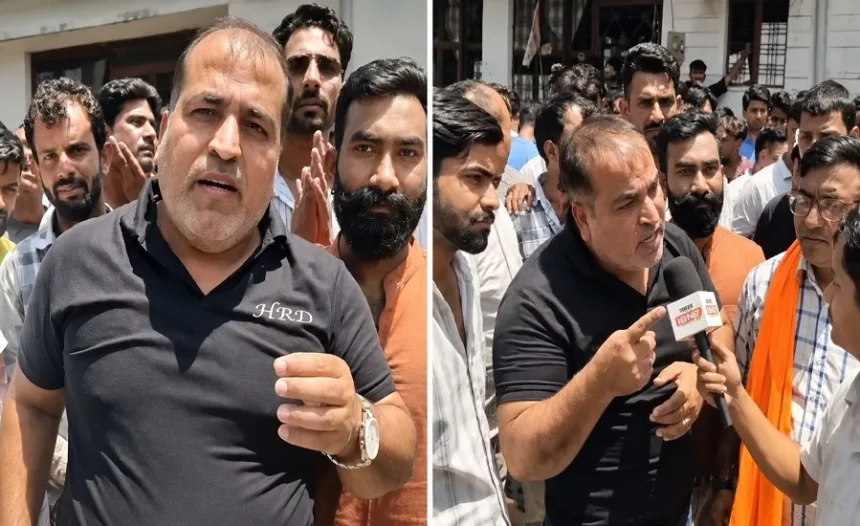

In a troubling escalation of inflammatory rhetoric in Uttarakhand, the Hindu Raksha Dal president Lalit Sharma has allegedly incited violence against Muslims in a recently surfaced video. His incendiary comments follow the killing of a BJP leader in a communal clash, contributing to a climate of fear and division in the region.
Incitement to Violence Amid Rising Tensions
The aftermath of the June 13 killing of BJP OBC Morcha leader Vinod Kumar Kashyap has triggered heightened tensions in Dehradun’s Bairagiwala area. Following this incident, Sharma’s speech reportedly called for extreme retaliatory violence—specifically, demanding the killing of four Muslims for every Hindu death. Such remarks have sparked widespread outrage and condemnation, raising serious concerns about the implications for communal harmony in a region already reeling from unrest.
Sharma’s statements not only targeted Muslims but specifically included harrowing references to unborn children. This alarming rhetoric comes in tandem with public demonstrations by Hindu organizations, which have intensified since the violent clash related to a local irrigation dispute.
Virality of Hate Speech and Its Consequences
Videos of these speeches have gone viral on social media, drawing attention not just in India but internationally. Prominent political leaders and activists are calling for legal accountability, arguing that such hate speech incites violence and discrimination against a religious community. Criticisms have highlighted the normalization of hateful rhetoric in India’s political discourse, with Mehbooba Mufti of the Jammu and Kashmir People’s Democratic Party expressing deep concern about the implications of such comments for a diverse society. She noted, “This is what the BJP’s so-called Viksit Bharat looks like: hate speech normalized to the extent that even unborn Muslim children are threatened.”
The atmosphere is further complicated by reports of violence, including instances of arson against Muslim properties, and the demolition of homes in the locality, justified by authorities as illegal encroachments. Critics argue that these actions reflect a systemic bias against Muslims and contribute to their ongoing marginalization in Indian society.
The Role of Government and Accountability
Despite the public nature of Sharma’s remarks, there has been a conspicuous absence of governmental response. Many social media users and political commentators have pointed out the perceived inaction, raising questions about state complicity in fostering a climate of impunity for hate speech and violence against minorities. Reports indicate a growing concern among citizens regarding safety, prompting calls for renewed legal scrutiny of hate speech laws and their enforcement. As the situation evolves, demands for accountability grow louder, with activists advocating for a stronger legal framework to combat hate speech.
Why It Matters
The events in Dehradun signify a disturbing trend not only for communal relations in India but also for the broader implications of hate speech normalization in democratic societies. As the rhetoric escalates, the potential for violence increases, posing challenges for social cohesion and minority rights. This trend can have long-lasting impacts on community relationships and could influence various sectors, including policymaking, community safety measures, and social media regulations regarding hate speech. In a global context, how democracies address hate speech remains a subject of scrutiny, and the response from governments can set precedents that resonate beyond borders.
Frequently Asked Questions
What sparked the recent tensions in Dehradun?
The tensions were ignited by the killing of Vinod Kumar Kashyap, a local BJP leader, during a violent altercation related to an irrigation dispute, leading to protests and incendiary rhetoric from local Hindu leaders.
What specific remarks did Lalit Sharma make?
Lalit Sharma reportedly called for the killing of four Muslims for every Hindu death and made alarming claims targeting Muslim women and unborn children, suggesting that violence against this community should be sanctioned.
What have been the consequences of the speeches?
The speeches have led to widespread condemnation, calls for legal action against Sharma, and concerns about rising violence and discrimination against Muslims in the area, including instances of property damage and communal unrest.
How has the government responded?
As of now, there has been little to no public response from authorities regarding Sharma’s remarks, prompting criticism over the lack of accountability for hate speech and violence against minorities.