
Summary
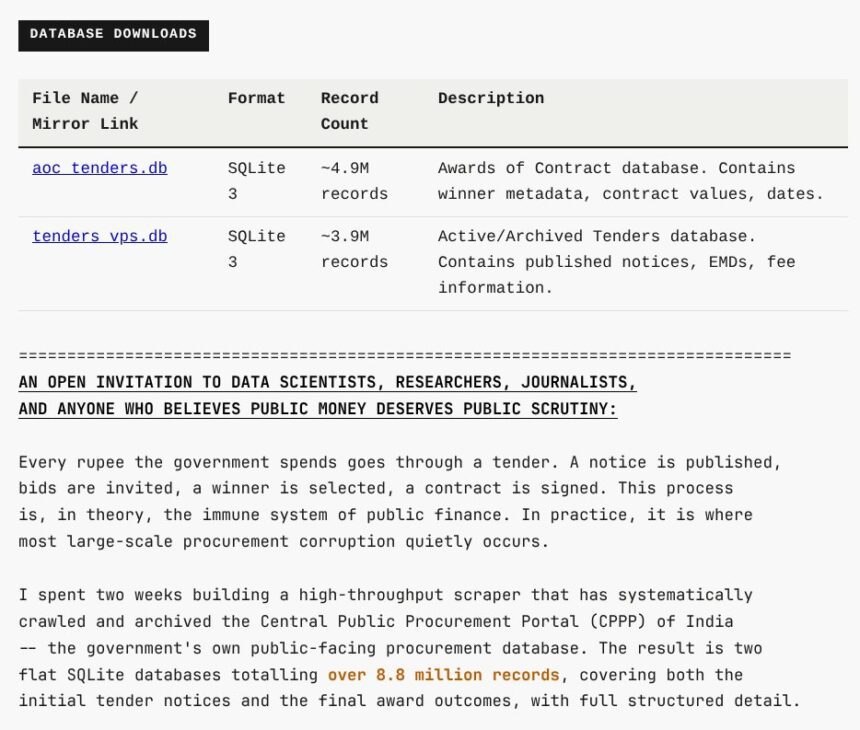
The recent scraping of approximately 1 crore 66 lakh records from the Indian government’s CPP Portal marks a significant shift towards greater transparency in procurement. Now made publicly available, this national procurement database aims to facilitate access for journalists, researchers, and the general public, enhancing oversight and accountability in governance.
Background of the CPP Portal
The Central Public Procurement (CPP) Portal is the government’s primary platform for public procurement processes. Designed to streamline procurement across various departments, it contains valuable records related to contracts awarded by various government entities. The scraping of records from this portal presents both opportunities and challenges, as the data can now be utilized for research, journalism, and oversight. However, the unauthorized access to data raises questions regarding cybersecurity and personal data protection.
Implications for Civil Society and Journalism
As noted by prominent political commentator Sarthak Sidhant, the availability of this procurement database is expected to aid journalists, researchers, and citizens alike in increasing transparency in governance. By making such data accessible, the potential for investigative journalism is significantly enhanced, allowing for greater scrutiny of government procurement practices. Furthermore, it empowers citizens to engage more actively in governmental oversight, thus promoting accountability.
Public Reaction and Future Prospects
Because of the transformative nature of this data release, public reaction has been mixed. On one hand, there is enthusiasm for the potential to expose corruption and inefficiency within government departments. On the other hand, there are concerns about the ethical implications of data scraping and possible misuse of the information. Sidhant’s commitment to develop a “robust and resilient product” further indicates that ongoing enhancements are in the works, suggesting that this is just the beginning of a broader initiative aimed at transparency.
Why This Matters
This development carries substantial political significance for India. In a country where corruption in public procurement is often highlighted as a systemic issue, increased transparency can catalyze political reform and accountability. It also serves as a reminder of the power of technology in amplifying civic engagement and oversight of government operations. As more citizens gain access to crucial governmental data, the mechanisms of accountability may become more robust, signaling a potential shift towards more participatory governance.
Frequently Asked Questions
What is the CPP Portal?
The Central Public Procurement Portal is an online platform used by the Indian government to facilitate the procurement process across various departments. It hosts information about contracts and awarded tenders.
What was scraped from the CPP Portal?
Approximately 1 crore 66 lakh records related to procurement processes were scraped, making valuable data publicly accessible for scrutiny.
What implications does this have for civil society?
The available data will assist journalists, researchers, and citizens in scrutinizing government procurement practices, potentially exposing corruption and improving governance.
What are the concerns regarding data scraping?
Concerns include the potential misuse of sensitive information and issues surrounding data privacy and cybersecurity. Enhanced regulatory frameworks may be required to address these risks.