
Rajasthan’s BJP government has initiated the drafting of a Uniform Civil Code (UCC), a move that has stirred significant controversy, particularly among Muslim communities. The proposed legislation seeks to standardize personal laws related to marriage, divorce, adoption, and inheritance across all citizens, a strategy seen by many as a potential infringement on religious freedoms.
The Uniform Civil Code and Its Implications
With the recent implementation of the UCC in Uttarakhand in 2024, the demand for a similar framework in Rajasthan has gained momentum. Under the leadership of Chief Minister Bhajan Lal Sharma, the Rajasthan government has established an expert committee tasked with drafting a UCC. Proponents argue that such a code will harmonize legal practices and ensure equal treatment under the law. However, this move has been met with staunch opposition from various Muslim organizations and religious leaders, who claim that it undermines the personal laws that are central to their religious identity.
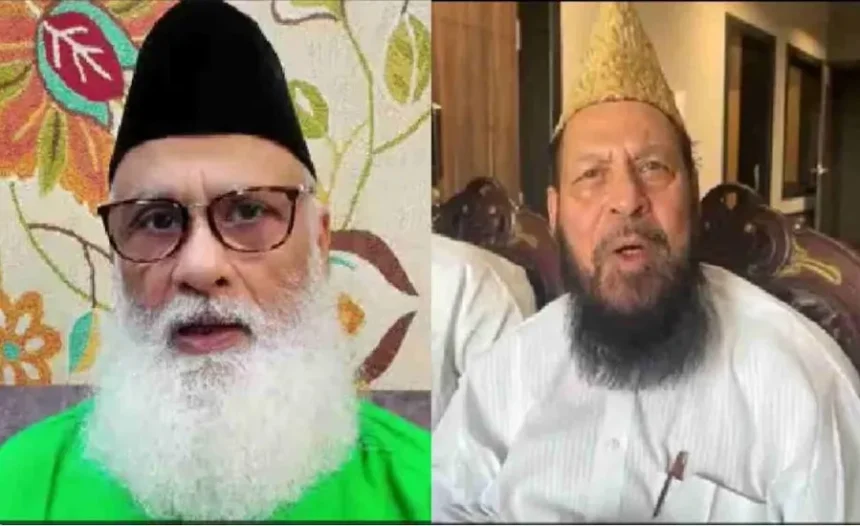
Critics like Syed Sarwar Chishti of Ajmer Sharif Dargah have pointed out the perceived double standards inherent in the proposed framework, highlighting that tribal communities retain exemptions while Muslims are subjected to a uniform legal structure. Chishti has accused the BJP of exacerbating societal divisions in the name of uniformity.
The Reaction from Muslim Leaders
The All India Muslim Personal Law Board, represented by Vice-President Maulana Obaidullah Khan Azmi, has articulated concerns surrounding the UCC, emphasizing that altering Muslim personal laws without proper dialogue is not only disrespectful but also damaging to the fundamental rights of religious communities. These laws, seen as integral to the Muslim identity, reflect a deep-rooted cultural and religious ethos, making any legislative changes a matter of considerable sensitivity.
Leaders from the Congress party have also criticized the timing of the UCC initiative, suggesting that the government should focus on pressing issues such as job creation and inflation. This political maneuvering underscores the broader socioeconomic tensions faced by communities in Rajasthan, where issues of governance and civic priorities are often at odds.
The Broader Context of Discrimination
This recent push for a UCC is part of a larger trend under the BJP government, wherein minority groups, particularly Muslims, feel increasingly marginalized. Instances of social exclusion and economic boycotts against Muslims have been reported across various states, and the UCC is viewed by many as a continuation of these policies. The framing of the UCC as a means to promote equality overlooks the social realities faced by Muslim communities, who often encounter discrimination in multiple facets of daily life.
Muslim organizations fear that the latter half of the BJP’s agenda not only seeks legal standardization but also attempts to dilute the rich tapestry of India’s multicultural identity. These fears are compounded by a history of economic disenfranchisement that has led many Muslim households to struggle financially, raising questions about the intentions behind such legislative moves.
Why It Matters
The implications of the proposed UCC extend beyond religious freedoms; they reach into the domains of social justice, civil rights, and economic stability. For stakeholders in technology and industry, understanding the geopolitical landscape of India is crucial. Discrimination can lead to unrest and instability, which pose significant risks for investment and development. Additionally, the integration of social dynamics in policy making is essential for fostering an inclusive environment that can nurture innovation and economic growth.
Frequently Asked Questions
What is the Uniform Civil Code (UCC)?
The UCC seeks to replace personal laws based on the scriptures and customs of each major religious community in India with a common set governing every citizen, aiming to promote equality and justice.
Why are Muslim organizations opposing the UCC?
Muslim organizations argue that the UCC undermines their religious personal laws, which are integral to their identity, and fear that it could lead to further marginalization.
What are the main concerns raised by critics of the UCC?
Critics are concerned about the potential for social division, the lack of dialogue before alterations to personal laws, and the overall impact on religious freedom.
How does the UCC relate to socioeconomic issues in Rajasthan?
The push for the UCC is viewed against the backdrop of broader socioeconomic challenges in Rajasthan, including joblessness and inflation, which critics believe should take precedence over legal reforms.