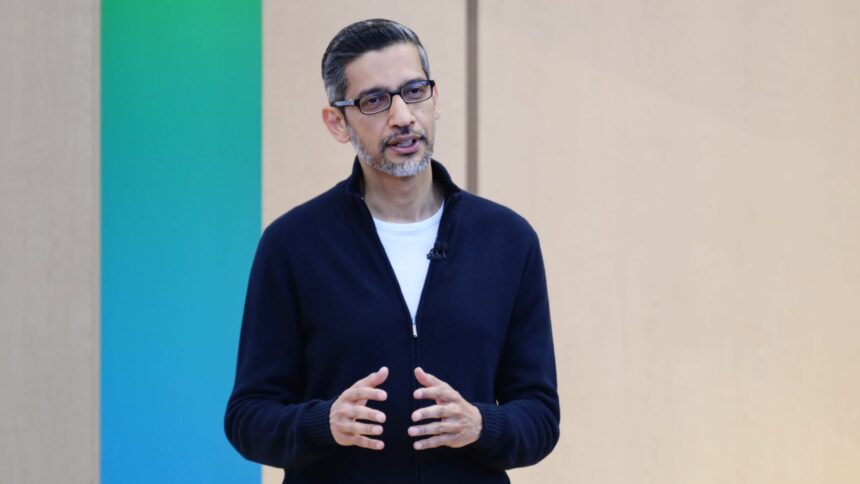

Google’s parent company, Alphabet, experienced a significant stock market decline of about 5% due to growing concerns over artificial intelligence and the departure of two key researchers to rival firms. This marks its sharpest decline in over a year and highlights the competitive landscape in the AI sector.
Key Departures Shake Alphabet’s AI Structure
The departure of Noam Shazeer, Google’s vice president of engineering and co-lead of the Gemini AI models, to OpenAI sent shockwaves through the company last week. Shazeer had recently returned to Google less than two years after leaving to co-found Character.AI, underlining a troubling trend for the tech giant. Coupled with this, John Jumper, another pivotal figure at DeepMind and a Nobel Prize winner, announced he would be joining Anthropic after a nine-year tenure at Google. These exits have intensified worries about a potential ‘brain drain’ at Google, a company that has been heavily investing in AI to stay competitive.
Stock Market Reactions and Broader Concerns
After Shazeer’s departure, Alphabet’s shares closed down about 5%—its steepest decline since May 2025. This drop underperformed compared to both the Nasdaq and other major tech companies. The financial community is increasingly questioning whether Google’s substantial investments in AI—over $141 billion since October—are creating sustainable competitive advantages or simply increasing pressure on profit margins. Furthermore, the recent comments by Microsoft CEO Satya Nadella, who cautioned against heavy reliance on “AI Giants,” have added to these concerns, suggesting potential shifts in market dynamics.
AI Product Developments Amid Uncertainty
Despite the turmoil, Google unveiled new AI products, including the Gemini 3.5 Flash model and the Gemini Spark AI agent, at its annual I/O developer conference. However, the timing of these launches has been overshadowed by the instability within the company. The rapid evolution of AI technology requires constant innovation and strong leadership, elements that seem to be at risk with the recent key personnel departures. As the industry continues to grow, investors and analysts are closely monitoring how these changes will impact Google’s strategic direction and its ability to attract and retain talent.
Why This Is Trending
In India, the rising interest in this topic stems from the country’s growing involvement in the global tech and AI landscape. As Indian startups and tech firms increasingly compete with giants like Google, news about talent migrations and stock market shifts resonates strongly with local investors and tech enthusiasts. Additionally, the AI revolution is at the forefront of India’s vision for economic growth, prompting widespread curiosity about how major players in this sector are performing.
Frequently Asked Questions
What triggered the recent decline in Alphabet’s stock price?
The stock experienced a sharp decline in response to growing concerns over artificial intelligence and the departures of prominent researchers to rival firms, which led investors to question the company’s talent retention and competitive edge.
Who are the key figures that left Google recently?
Noam Shazeer, a vice president of engineering and co-lead of AI initiatives, left for OpenAI, while John Jumper, a vice president at DeepMind, joined Anthropic after nine years at Google.
What impact could these departures have on Google?
These departures could signal deeper issues with talent retention and leadership in AI at Google, intensifying concerns among investors about the company’s future capabilities in the rapidly evolving AI landscape.
How is the AI market changing, according to industry leaders?
Industry leaders, including Microsoft CEO Satya Nadella, have suggested that the AI market is becoming commoditized, with cheaper and interchangeable models leading to diminished competitive advantages for major players like Google.