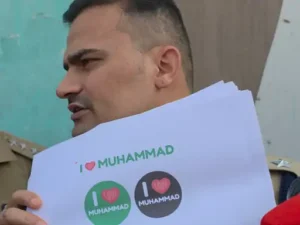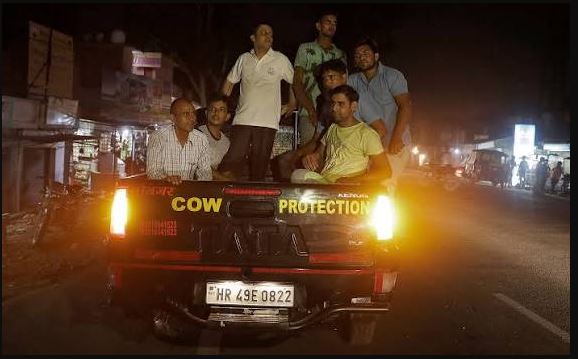

A recent incident involving a man from Surat, Gujarat, has sparked outrage after he posted a threatening video calling for mass violence against Muslims in India. This came after a court sentenced 14 individuals to life imprisonment for their roles in a 2022 lynching case, heightening concerns about ongoing discrimination and social exclusion faced by the Muslim community in the country.
The Video Threat and Its Context
In a disturbing video that went viral on social media, Vishal Singh issued grave threats of violence, specifically targeting the Muslim community. He declared that unless the 14 convicted individuals were released within ten days, violent repercussions would occur across India. This declaration followed the sentencing by Additional District and Sessions Judge Tabassum Khan in Seoni Malwa, Madhya Pradesh, where the accused were convicted of murdering Nazir Ahmad and assaulting two others over allegations of cattle smuggling.
The accused, who received life sentences, were identified as Deepak alias Baba Kevat, Ajay alias Ajju Rathore, Prakash Kaushal, among others. This sentencing was the culmination of a lengthy three-year trial that confirmed the accused’s participation in the mob attack, signifying a crucial step in holding those responsible accountable for hate-fueled violence.
The Legal and Social Ramifications
The ramifications of the threats made by Singh extend beyond mere criminality; they reflect a broader pattern of hostility against the Muslim community in India. Instances of violence and discrimination against Muslims have increased, particularly in contexts that invoke communal tensions. The judicial system’s effort to deliver justice in cases like the Seoni Malwa lynching is juxtaposed with a culture of impunity where threats against the community are treated lightly or ignored.
Judge Tabassum Khan’s sentencing could be seen as a beacon of hope for justice. However, the backlash from figures like Singh raises concerns about the safety of judges and activists working on such sensitive cases. The communal rhetoric employed in the threatening video reveals how divisive narratives can undermine judicial authority and instill fear within targeted communities.
The Broader Implications for Society
This incident is a stark reminder of the fragility of communal harmony in India. The threats articulated by Singh exemplify the kind of social exclusion that continues to plague the Muslim population, exacerbating their marginalization. Economic boycotts, social ostracism, and incidents of violence have increasingly become part of the landscape for Indian Muslims, leading to a climate of fear and insecurity.
Organizations monitoring human rights have reported a rise in such discriminatory acts, often linked to narratives promoted by certain political factions. As the political climate grows more charged, the potential for violence increases, raising the stakes for minorities who often serve as scapegoats in broader socio-political conflicts. This pattern of marginalization requires urgent attention and a firm commitment from various stakeholders, including government bodies, civil society, and law enforcement agencies.
Why It Matters
The unfolding events in Surat underline critical issues surrounding communal relations in India, particularly regarding the Muslim community’s treatment. This serves as a cautionary tale about the societal divisions seeded by hate speech and the dangers of unchecked political rhetoric. For developers, policymakers, and social activists, understanding the implications of such instances of discrimination is essential in fostering dialogues aimed at reconciliation and social cohesion. Addressing these concerns necessitates a holistic approach—incorporating educational initiatives, community engagement, and more robust legal frameworks to suppress hate-driven incidents effectively.
Frequently Asked Questions
What sparked the threatening video from Surat, Gujarat?
The video threat was initiated by Vishal Singh in response to the life imprisonment sentence given to 14 individuals convicted for their roles in the lynching of Nazir Ahmad over cattle smuggling allegations.
Who were the individuals convicted in the lynching case?
The convicted individuals include Deepak alias Baba Kevat, Ajay alias Ajju Rathore, Prakash Kaushal, and several others who were found guilty of participating in the mob attack.
What is the significance of the verdict delivered by Judge Tabassum Khan?
Judge Tabassum Khan’s verdict reflects a commitment to justice amid growing concerns about lynching cases in India, highlighting the legal ramifications of mob violence against marginalized communities.
How does this incident relate to broader societal issues in India?
This incident highlights ongoing discrimination and social exclusion faced by Muslims in India, raising concerns over communal harmony and the rule of law in the face of rising intolerance and hate speech.