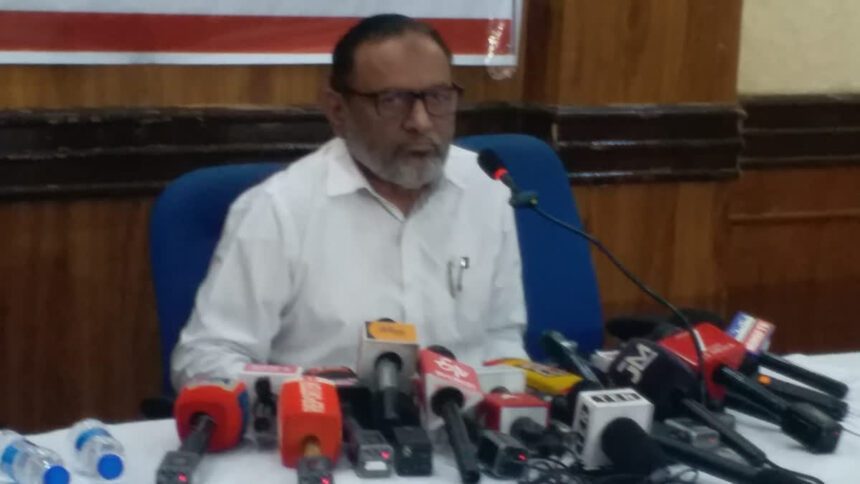

The All India Muslim Personal Law Board (AIMPLB) has expressed grave concerns regarding the escalating discrimination and marginalization of the Muslim community under the current governmental scenario in India, particularly in the states ruled by the Bharatiya Janata Party (BJP). During a recent executive meeting, officials highlighted a series of distressing issues, including mob violence, demolition of places of worship, and attempts to enforce a monolithic national identity at the expense of religious diversity.
Concerns Over Rising Violence and Discrimination
Dr. SQR Ilyas, the national spokesperson for AIMPLB, outlined various pressing issues affecting Muslims in BJP-ruled states. He criticized the alarming increase in mob violence and lynching incidents targeting Muslims, alongside the systematic destruction of mosques and madrasas. The AIMPLB highlighted the bulldozing of Muslim homes and communal settlements, voicing that such actions contribute to an atmosphere of fear and insecurity.
The Board members noted that the imposition of cultural symbols like Vande Mataram in government initiatives is an attempt to homogenize the religious and cultural landscape of India. This was seen as a direct affront to the freedoms guaranteed under Indian constitutional law, specifically Article 25, which protects the right to practice one’s religion freely. Dr. Ilyas articulated that the current environment reflects a broader agenda that systematically undermines the rights and dignity of Muslim citizens.
Judicial Concerns and Legislative Backlash
The AIMPLB expressed particular alarm over the Madhya Pradesh High Court’s recent ruling relating to the Kamal Maula Mosque/Bhojshala case. According to Dr. Ilyas, this judgment was inconsistent with historical evidence and the spirit of the Places of Worship Act of 1991. The Board asserted that the ruling threatens to rewrite historical narratives and displace centuries-old Islamic worship practices in India.
As a response, the Kamal Maula Mosque Committee has decided to challenge this decision in the Supreme Court, with the AIMPLB pledging its full support. This legal action highlights broader concerns about ongoing legislative efforts across multiple BJP-ruled states aiming to implement the Uniform Civil Code (UCC), which the Board views as contrary to India’s pluralistic social fabric and a violation of religious freedoms.
The Religious Symbolism Debate
In addition to legal challenges, the AIMPLB addressed the contentious issue of making Vande Mataram compulsory in educational institutions, including madrasas. Dr. Ilyas reiterated that attempts to impose this recitation violate both individual religious beliefs and constitutional tenets. The AIMPLB views such mandates as a means of enforcing cultural conformity upon minority groups, which poses a severe challenge to India’s secular identity.
The Board’s statement that Vande Mataram contains elements deemed shirkiya (associating partners with God) underscores a critical cultural clash in Indian society, intensifying debates about national identity versus religious diversity. The Board plans to mobilize public support against these perceived violations, launching initiatives to combat social and political marginalization faced by Muslims.
Why It Matters
The ongoing marginalization of Muslim communities in India has far-reaching implications not just for the country’s social fabric but also for its democratic principles. The rise in communal tensions translates into a climate where violence can proliferate unchecked, leading to significant societal upheavals. For the international community, these developments accentuate the necessity for vigilance regarding human rights in India, requiring individuals and organizations to advocate for justice and equality at both local and global levels.
Addressing these issues is critical for global agents of change, as societal breakdowns can hinder economic development and social harmony. A cohesive, harmonious society is vital for economic stability, investment, and inclusive growth, making these discussions relevant beyond just the regional context.
Frequently Asked Questions
What is the All India Muslim Personal Law Board (AIMPLB)?
The AIMPLB is an umbrella organization representing various Muslim community groups in India, seeking to protect the religious, cultural, and legal rights of Muslims as defined under Indian law.
What are the main concerns highlighted by the AIMPLB?
The AIMPLB has raised concerns about rising mob violence against Muslims, demolition of mosques and madrasas, and attempts to enforce the Uniform Civil Code in a manner that undermines religious freedoms.
What is the significance of the Places of Worship Act 1991?
The Places of Worship Act 1991 prohibits the alteration of the religious character of any place of worship as it existed on August 15, 1947, aiming to preserve the secular fabric of the nation.
How is the AIMPLB responding to government actions regarding Vande Mataram?
The AIMPLB opposes attempts to enforce Vande Mataram recitation, arguing that such actions violate individual religious beliefs and the constitutional right to equality and liberty.