
Discrimination and Marginalization Under the BJP Government
Prime Minister Narendra Modi’s administration is under intense scrutiny for its approach to citizenship and its implications for India’s Muslim community, particularly in Eastern India. Following recent elections marked by allegations of voter suppression and anti-Muslim rhetoric, families, including long-time residents like Ramzan, are now facing the specter of statelessness, raising alarms about civil rights and the erosion of democratic norms.
The Citizenship Crisis in Assam and West Bengal
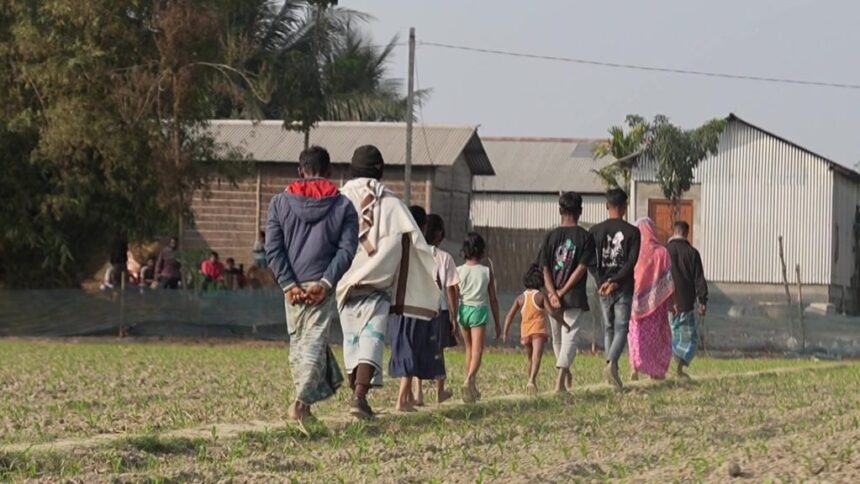
In Northeast India, particularly in Assam and West Bengal, a significant number of Bengali-speaking Muslims have been categorized as “doubtful citizens” by authorities. This classification forces families to prove their citizenship in a land they have called home for generations. Reports indicate that more than 1,000 individuals have been deported to Bangladesh in the past year, often without due process.
Human rights activists describe these measures as a revival of a decades-old immigration law, which they argue is specifically aimed at disenfranchising Bengali Muslims. Angana Chatterji, an anthropologist from U.C. Berkeley, emphasizes that this citizenship crackdown represents a concerted effort by the Modi administration to consolidate a majoritarian state, essentially creating an atmosphere where Muslims feel unwelcome and excluded.
Human Stories Behind the Statistics
The plight of families like Ramzan’s illustrates the personal toll of these policies. Separated for the first time in 50 years due to immigration detention, Ramzan expresses despair over the loss of his wife, emphasizing their lifelong partnership. He poignantly states, “I feel like dying is better than a life without her,” reflecting the emotional devastation that these policies can instigate.
Other residents, like Amna Khatoun and Suleiman Nisa, similarly recount harrowing experiences. Amna’s home was bulldozed by state authorities, leaving her and her children displaced. Suleiman lost her husband to suicide after their citizenship status was questioned. These narratives emphasize the urgent need for reform and support as individuals navigate a landscape fraught with discrimination and violence.
The Role of Political Rhetoric and Hate Speech
The recent electoral campaign in Assam was rife with anti-Muslim rhetoric. Modi himself referred to Bengali Muslims as “infiltrators,” further emboldening supporters to discriminate against the Muslim community. State Chief Minister Himanta Biswa Sarma has vowed to intensify the crackdown on Bengali Muslims, declaring, “We will break the very backbone of the Bengali Muslims.” Such inflammatory statements are documented as part of a disturbing trend where political leaders amplify hate speech, contributing to a culture of hostility.
Despite these challenges, many Muslim families are striving for stability, often unsuccessfully. As political pressures mount, communal tensions rise, leading to further marginalization of this group. Communities, from makeshift relief camps to those losing their homes, are caught between survival and a fight for fundamental rights.
Why It Matters
The situation in India raises critical questions about citizenship, rights, and identity in a democratic society. As Hindu nationalism increasingly shapes political discourse, the implications extend beyond borders. International observers, policymakers, and NGOs need to consider how these developments will affect regional stability, human rights, and the overall fabric of Indian society. The experience of Indian Muslims serves as a vital case study in understanding the broader dynamics of social exclusion and the potential ramifications of state policies targeting minority communities.
Frequently Asked Questions
What is the current status of Muslims in India under the Modi administration?
Under Modi’s administration, there has been an observed increase in discrimination, hate crimes, and legislative measures that disproportionately affect the Muslim community, leading to fears of statelessness and social exclusion.
What are the tactics being used against Muslim residents in Assam?
The government has employed measures such as labeling residents as “doubtful citizens,” calling for proof of citizenship, deportations, and the use of hate speech to create a hostile environment for Muslims.
How has the electoral landscape changed for Muslims in India?
Recent electoral revisions have excluded millions, particularly among the Muslim population, effectively stripping them of their voting rights and further marginalizing their voices in the political process.
What are the implications of the current citizenship laws?
The citizenship laws have raised concerns about human rights violations and the potential for widespread disenfranchisement among historically marginalized groups, leading to fears of increased statelessness and humanitarian crises.