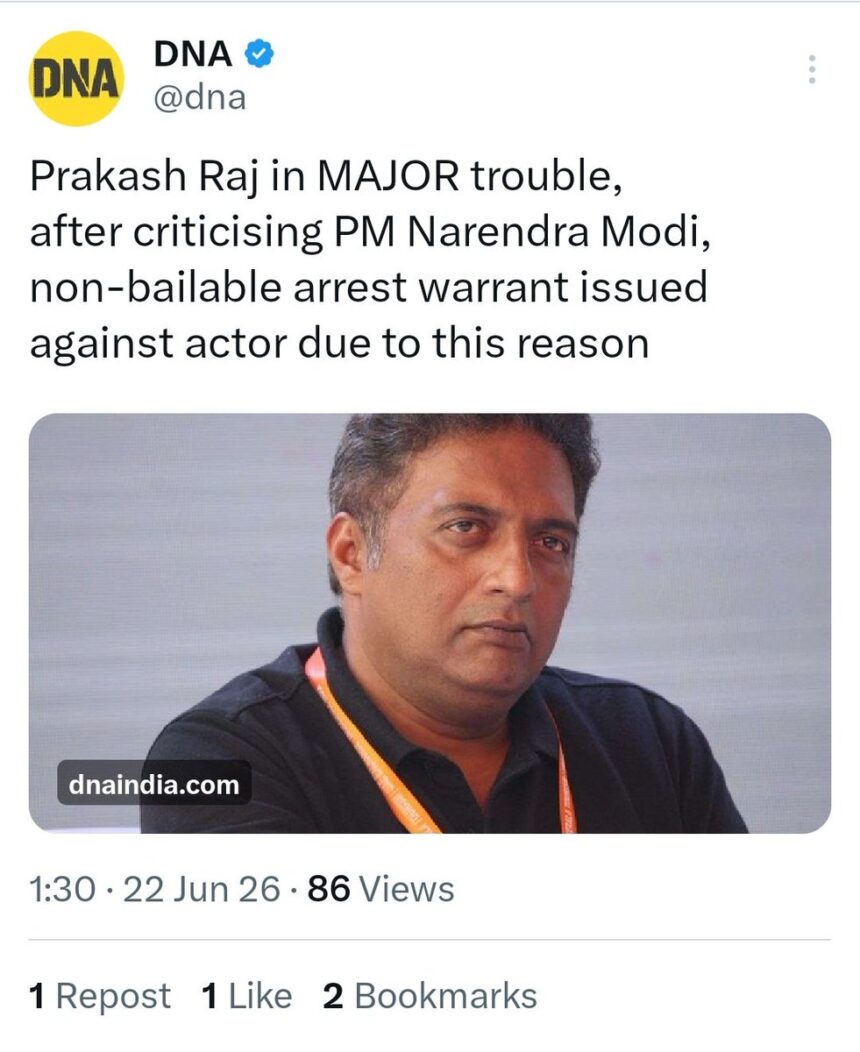

In a recent development, actor and activist Prakash Raj has encountered significant legal challenges following his criticisms of Prime Minister Narendra Modi. A non-bailable arrest warrant has reportedly been issued against him, raising questions about freedom of expression and political dissent in India.
Context of the Legal Action
Prakash Raj, known for his outspoken views, has been an advocate for various social issues, often vocalizing his concerns regarding government policies and political leaders. The warrant issued against him follows a series of critical comments aimed at PM Modi, particularly relating to issues of governance and public welfare. The nature of these comments, which some interpret as politically charged, has led authorities to take legal action. Such developments expose the complexities of navigating political critique in an increasingly polarized environment.
The Background of Prakash Raj’s Criticism
Raj has been a vocal critic of the current government’s approach to various issues, including freedom of speech, minority rights, and social justice. His comments often garner significant media attention, reflecting a larger dialogue among Indian citizens about the state of democracy in the country. The decision to issue a non-bailable warrant against him not only targets Raj himself but also serves as a cautionary tale for other public figures who might wish to speak against the prevailing political atmosphere.
Public Reaction and Implications
The issuance of a non-bailable arrest warrant has sparked a wave of reactions from both supporters and opponents of the government. Supporters see this as an overreach of power, indicative of growing authoritarian tactics against dissenters. Conversely, some government supporters argue that Raj’s statements have crossed legal boundaries regarding public safety and order. This incident has led to widespread discussions on social media, with hashtags related to Prakash Raj trending as users express their viewpoints. The case could set a precedent for how political dissent is treated within the legal framework of the nation.
Why This Matters
This situation is significant for several reasons. Firstly, it emphasizes the ongoing tensions between government authorities and public figures in India. Major political commentators and celebrities often influence public opinion, making their voices pivotal in shaping the political landscape. The legal repercussions faced by Raj could deter others from speaking out, potentially stifling dissenting voices. Furthermore, this case highlights broader concerns regarding civil liberties and the right to free expression in India, which is a cornerstone of democratic governance. As citizens witness these events unfold, implications for free speech and the political discourse in the nation will undoubtedly continue to be at the forefront of public consciousness.
Frequently Asked Questions
What led to the issuance of the non-bailable arrest warrant against Prakash Raj?
The warrant was reportedly issued due to Raj’s critical comments directed at PM Narendra Modi, which authorities deemed as potentially inciting public disorder.
How has the public reacted to this legal action?
The public response has been mixed, with many expressing concern over governmental overreach, while some argue that Raj’s remarks were inappropriate and warrant legal scrutiny.
What are the potential consequences for Prakash Raj?
If arrested, Raj could face serious legal repercussions, impacting his career and ability to express his views freely. This case may also influence other public figures regarding their willingness to speak out against the government.
What does this incident reveal about freedom of expression in India?
This incident underscores the challenges faced by individuals in exercising free speech in India today, particularly when their views oppose those in power. It raises critical questions about the balance between public safety and individual rights.