
A cyclone named Biparjoy, classified as a “very severe cyclonic storm,” has emerged from the Arabian Sea and is projected to hit the Jakhau coast in Gujarat on June 15, 2023. Amid these serious weather conditions, a controversial video of a news anchor’s live report has gone viral, raising questions about the standards of media reporting in India.
The Cyclone’s Trajectory and Impact
On June 8, 2023, the India Meteorological Department (IMD) reported that Cyclone Biparjoy was located approximately 850 km west of Goa and 900 km southwest of Mumbai. By June 15, it was expected to make landfall in Gujarat, potentially causing significant disruptions and hazards for residents along the coast. The cyclone’s trajectory has prompted alerts and safety warnings for the affected regions, emphasizing the need for preparedness and response to natural disasters.
Viral Video and Media Ethics
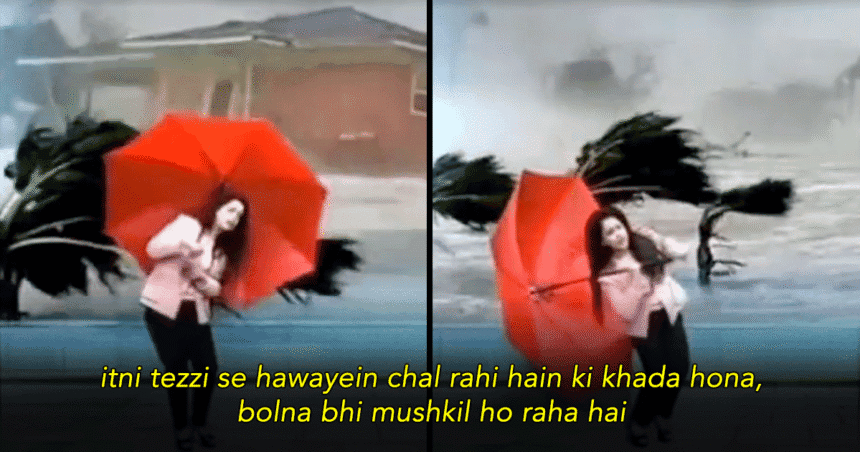
In the midst of such a serious situation, a video featuring a news anchor from Republic Bharat has sparked public outrage. Posted by Alt News journalist Mohammed Zubair, the clip shows the reporter humorously wielding a red umbrella while pretending to struggle against the cyclone’s winds. The juxtaposition of such a lighthearted portrayal against a backdrop of an impending disaster has drawn criticism from viewers, suggesting an insensitivity towards the gravity of the situation. The video, which features footage of Hurricane Ian in Florida, was misrepresented as local news from Gujarat, further muddying the lines between informational reporting and entertainment.
Public Reaction and Commentary
The public response to the news anchor’s antics has predominantly been negative, with many users voicing their disapproval on social media platforms. Comments range from expressions of embarrassment for the state of journalism to calls for integrity and seriousness in reporting. Tweets have pointed out the dangers of such trivialization of serious news, particularly when communities are facing the real threat of destruction and displacement. Notable figures in the media have criticized the anchor’s performance, highlighting the need for sober journalism that prioritizes the safety and concerns of affected populations.
Why This Matters
The incident not only highlights issues of media ethics but also raises important questions about accountability in journalism in India. In a nation often hit by natural calamities, the responsibility of the media to inform, educate, and prepare the public can’t be understated. Reporting that resorts to sensationalism at the expense of factual integrity can undermine public trust and may even hinder effective disaster response. It’s crucial for media outlets to strike a balance between engaging content and responsible reporting—especially in times of crisis.
Frequently Asked Questions
What is Cyclone Biparjoy expected to do?
Cyclone Biparjoy is projected to make landfall near Jakhau coast in Gujarat, potentially causing severe weather conditions such as heavy rains and strong winds that can lead to flooding and displacement of communities.
Why did the video of the news anchor go viral?
The video went viral due to its cringe-worthy portrayal of the anchor pretending to struggle against strong winds, which many viewers found inappropriate given the serious nature of the cyclone and its potential impact on people’s lives.
How are people reacting to the news anchor’s reporting style?
Many viewers have criticized the anchor’s performance as lacking sensitivity and professionalism, equating it to a mockery of the impending disaster. The reactions reflect a growing concern about the quality and ethics of journalism in India.
What can be done to improve media reporting during crises?
To improve media reporting during crises, news organizations should prioritize factual reporting, provide accurate context, and approach sensitive situations with the seriousness they deserve. Training for journalists on ethics and disaster reporting could also be beneficial.