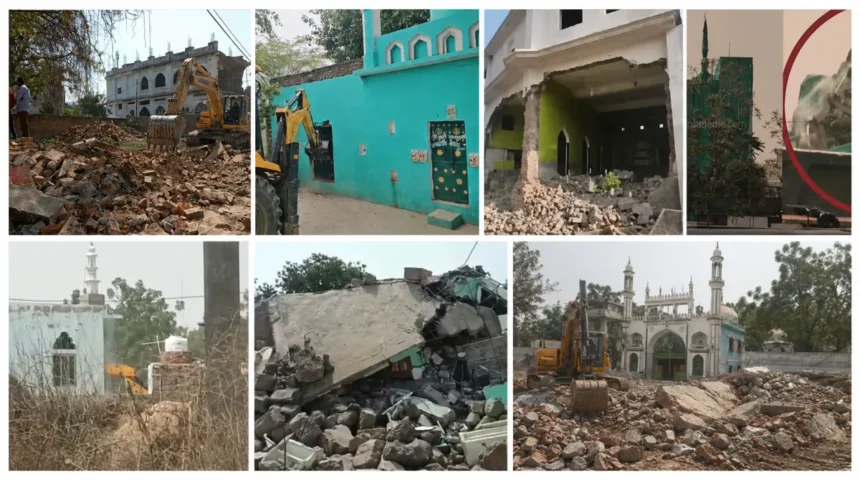

The recent surge in the demolition of Muslim religious sites across India, particularly in BJP-ruled states, has raised significant concerns about the treatment of minority communities. Over 20 mosques, madrasas, dargahs, and Eidgahs have been dismantled within a mere 45 days, prompting allegations of discrimination and social exclusion. This alarming trend has drawn the attention of international advocacy groups like Justice For All, which highlights the implications for religious freedom and equality under the law.
Escalation of Demolitions in BJP-Ruled States
Since May 2026, more than 20 Muslim religious structures have been demolished, spanning across six BJP-ruled states including Delhi, Maharashtra, Uttar Pradesh, Gujarat, Rajasthan, and Haryana. Noteworthy incidents include the recent destruction of the 200-year-old Mangolpuri Dargah in Delhi, and the Ajgaib Shaheed Mosque in Varanasi, which was believed to be nearly 200 years old. These demolitions often lacked transparent legal procedures, inciting fears that minority religious sites are being selectively targeted, leaving Hindu sites unharmed.
For instance, the Dargah in Mangolpuri was demolished under the justification that it was an unauthorized structure, despite local caretakers contesting the actions and asserting its significant historical value. Similarly, the mosque at Masjid Chowk in Faridabad and several other religious sites have seen clashes erupt as heavy police presence accompanied these demolitions, indicating a fraying social fabric.
Legal and Ethical Implications of Demolition Drives
The demolitions raise pressing questions regarding the adherence to due process in law enforcement. Critics argue that while legal protocols must be followed in any demolition drive, many Muslim sites were targeted without proper notice or appropriate legal recourse. This contradictory application of laws fosters a climate of fear among India’s Muslims and reinforces feelings of marginalization. For example, the case of the Noorani Mosque in Jaipur, which was demolished despite claims that it was a registered Waqf property, illustrates the complexities and legal battles facing these communities.
Furthermore, the demolitions link to broader infrastructural developments, as seen with the mosque near Faridabad being removed for a transit corridor. While urban development is essential, balancing such initiatives with the protection of cultural and religious sites remains critical. The actions have invoked public outrage, highlighting the need for authorities to ensure transparency and equal treatment for all religious communities.
Public and International Reactions
Public backlash has been significant, especially given that many religious sites serve as community anchors. Protests have erupted in various locations, with voices like the U.S.-based Justice For All advocating for the protection of religious freedom in India. Their recent statements express alarm over the rapid rate of these demolitions and call attention to the constitutional guarantee of religious freedom.
The advocacy organization emphasizes that such actions can exacerbate insecurities among minority communities, warning against the rise of “hate politics” in India. The demolitions have also spurred a national debate on the principles of secularism, communal harmony, and the safeguards necessary to protect minority rights within a constitutionally diverse society.
Why It Matters
The demolitions of religious sites concentrate not only on the issues of cultural heritage and community identity but reflect a deeper challenge regarding the role of law and governance in a secular democracy. Ensuring that laws are universally applied to all communities is vital for maintaining public trust and social cohesion. Additionally, these events have implications for international relations, particularly in how minority rights are perceived globally, potentially affecting trade and diplomatic relationships as civil society becomes more vocal about human rights in India.
Frequently Asked Questions
What are the recent significant demolition incidents involving Muslim religious sites in India?
Recent significant incidents include the demolition of the Mangolpuri Dargah in Delhi, the Ajgaib Shaheed Mosque in Varanasi, and the Noorani Mosque in Jaipur, among others.
Why are these demolitions controversial?
These demolitions are controversial because they often lack due legal process, raise allegations of discrimination against Muslim communities, and appear to be selectively targeting minority religious sites while leaving Hindu sites untouched.
What has been the response from advocacy groups regarding these demolitions?
Advocacy groups like Justice For All have expressed alarm over the recent demolitions, arguing that they threaten religious freedom and highlight systemic discrimination against Muslims in India.
What is the broader significance of these demolition actions?
The broader significance lies in their implications for social cohesion, the protection of minority rights, and adherence to constitutional guarantees regarding religious freedom in a diverse society.