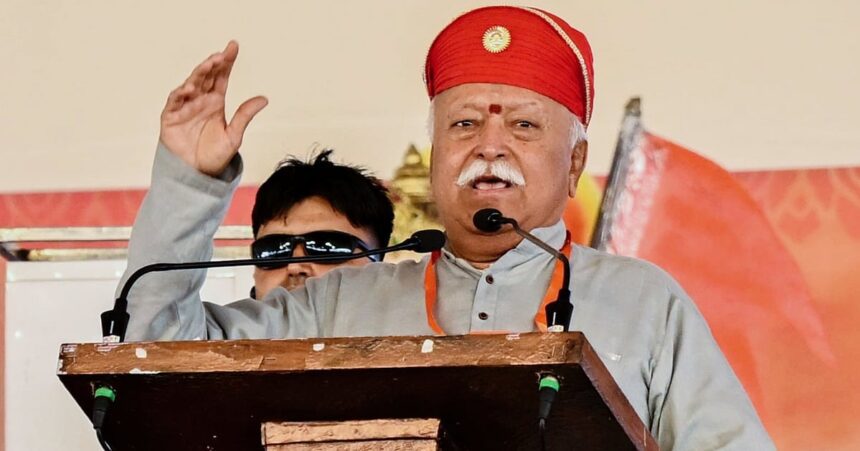

Recent interactions between Muslim intellectuals and the Rashtriya Swayamsevak Sangh (RSS) have sparked considerable debate about the implications for Indian Muslims amidst rising discrimination and social exclusion under the current BJP government. These discussions reveal a complex landscape where marginalized communities are pressured to seek dialogue with a group widely viewed as aligned with the political right.
Dialogue or Compromise?
A delegation of prominent Muslim figures, including former civil servants and editors, met with RSS chief Mohan Bhagwat in August 2022 to promote communal harmony and lessen interfaith tensions. While these figures expressed a commitment to dialogue, their meeting with the RSS was met with criticism from parts of the Muslim community. They were accused of “making a deal” with an organization that many consider to be complicit in the systemic marginalization of Muslims in India.
Despite the backlash, Md Wajihuddin, a prominent participant in the meeting, stood by the idea of dialogue, suggesting that it is a necessary step toward improving communal relations. However, the suggestion that dialogue can occur on equal footing with an institution like the RSS—often characterized as the political arm of the BJP—highlights the complicated position of Muslims in an increasingly polarized society.
Perceptions of Complicity among Hindus
The meeting’s takeaway extends beyond mere dialogues, raising questions about the broader strategies that Muslim leaders are pursuing in dealing with the current political climate. The default perception that the RSS represents all Hindus threatens to alienate those Hindus who do not align with the RSS ideology. It creates a binary that inadequately represents the diversity and dissent within the Hindu community itself.
Notably, in the recent West Bengal Assembly elections, despite significant communal tensions and the disenfranchisement of many, the BJP and RSS coalition garnered only 46.4 percent of the votes cast, suggesting that a sizable portion of the Hindu electorate does not support their agenda. As such, the characterizations and narratives surrounding Muslims navigating this landscape must consider the plurality of views within Hindu society.
The Message to Minority Communities
The implications of these meetings extend to a broader discourse about the state of minority rights in India. The reported message to Muslims is alarming: seeking reconciliation with those in power may be seen as a form of capitulation rather than a genuine effort to foster understanding. Critics argue that such an approach conveys a desperate message to marginalized communities—namely, that they should approach their perpetrators for support rather than rely on established democratic institutions.
This dynamic echoes the plight of minorities in other countries, where similar power imbalances exist. The repercussions may lead to a wider acceptance of the status quo, where marginalized people may find themselves further disenfranchised and without recourse.
Why It Matters
The growing rift between various communities in India is an essential concern for democracy and human rights. The normalization of dialogue with groups like the RSS may have larger implications for civil society and democratic institutions. As increasing numbers of Muslim leaders seek legitimacy through dialogues with these groups, the matter raises questions about representation, accountability, and the very fabric of India’s secular principles.
The erosion of these foundational values can not only affect social cohesion but may also impact global perceptions of India as a secular democracy. Observers and policymakers abroad will be attuned to how these dynamics unfold, particularly in a country with a rich tapestry of cultural and religious diversity.
Frequently Asked Questions
What is the RSS, and what role does it play in Indian politics?
The RSS, or Rashtriya Swayamsevak Sangh, is a Hindu nationalist organization often seen as the ideological parent of the BJP. It promotes the idea of Hindutva, a cultural and political identity centered around Hindu values, and is influential in shaping the BJP’s policies and strategies.
Why was the meeting between Muslim leaders and the RSS controversial?
The meeting was controversial because many within the Muslim community perceived it as an endorsement of an organization widely criticized for its role in the marginalization and discrimination against Muslims in India, thus raising concerns about complicity.
How do Indian Muslims view their representation in politics?
Many Indian Muslims feel underrepresented in politics, particularly as they face increasing discrimination. Leaders who attempt to engage with the RSS often face backlash from their community for perceived compromises that undermine their collective grievances.
What impact could this have on Hindu-Muslim relations in India?
These dynamics may deepen the divisions between communities, as some feel that dialogue with the RSS does not address the real issues of discrimination and exclusion, while others may see it as a step toward healing. The long-term impact on Hindu-Muslim relations will rely heavily on how these conversations evolve and whether they can lead to genuine understanding and respect.