
Summary
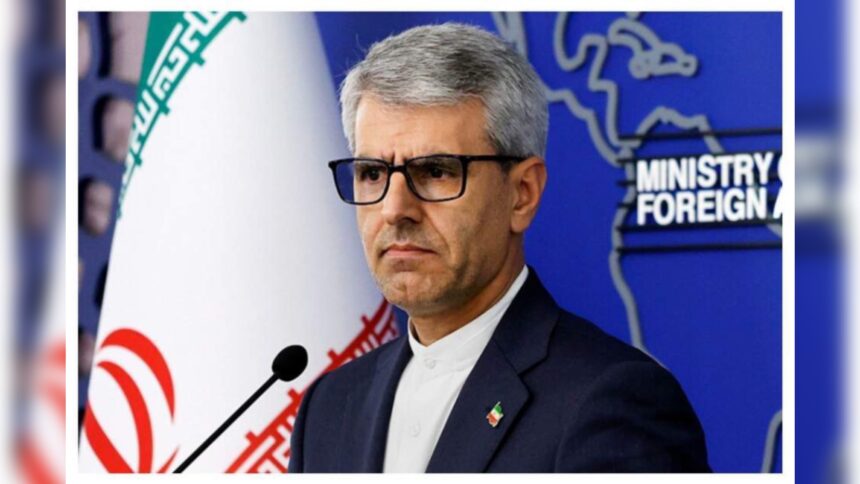
In a recent briefing, Iranian Foreign Ministry spokesman Esmail Baghaei issued a stern warning to the United States, stating that any escalations in Middle Eastern tensions would be directly linked to U.S. support for Israeli actions. He emphasized that the U.S. shares responsibility for regional aggression and its consequences.
U.S. Involvement in Regional Tensions
During a pointed briefing in Tehran on June 8, 2023, Esmail Baghaei underscored the significant influence the United States wields in facilitating Israeli operations in the region. He asserted that Israel would not engage in military actions without explicit coordination from the U.S., positioning Washington as a key player underpinning regional aggressions. “The United States bears responsibility for the Israeli regime’s aggression,” Baghaei stated, implicating U.S. actions in the broader context of Middle Eastern hostilities.
Baghaei’s remarks highlight ongoing concerns regarding the strategic alignment between the U.S. and Israel. He claimed that the U.S. is effectively complicit in Israel’s military strategies, rejecting the notion that Israel could act independently. Furthermore, he pointed to operational collaborations between U.S. Central Command (CENTCOM) and Israeli military forces, particularly in matters that involve both defensive and offensive military actions. “The reality on the ground points to deep alignment between the two,” he concluded, casting doubt on any assertions of U.S. neutrality.
Impact of U.S. Policies on Iran and the Region
Baghaei brought attention to the ongoing sanctions and military strategies imposed by the U.S. against Iran, framing these actions as part of a deliberate campaign to bolster Israeli military ambitions. He characterized the U.S. approach as an initiation of conflict rather than a path to peace, citing the country’s role in supporting Israeli operations as an ongoing source of regional instability.
Moreover, he elaborated on the implications of the U.S.’s role concerning the April 8 ceasefire agreement, which he stated the U.S. is a signatory to. He emphasized that any violations to this ceasefire, whether conducted directly by U.S. forces or through Israeli proxies, will ultimately be the responsibility of the United States. “Whatever happens in the region… the direct responsibility of the United States is clear,” he stated, urging accountability for actions that may lead to escalating tensions.
Warnings Against Potential Escalations
At the heart of Baghaei’s message was a stark warning about the consequences of further escalation in the Middle East. He stressed that regardless of the actor—be it U.S. military forces or Israeli operations— the repercussions would primarily fall on Washington. This assertion underscores the complex web of geopolitical relationships in the region, marking the U.S. as a pivotal player influencing the course of conflict and stability.
The briefing reflects a broader narrative often expressed by Iranian officials, highlighting a perceived existential threat posed by U.S.-Israeli collaborations. Baghaei’s statements serve as both a call to action and a threat to the U.S., which he believes should reassess its role and strategies in the Middle East to avoid further conflict.
Why It Matters
The implications of Baghaei’s statements extend beyond diplomatic rhetoric; they encompass global political dynamics and the potential for conflicts that may impact international relations and economic stability. The ongoing involvement of the U.S. in the Middle East, particularly its support for Israel, raises concerns about escalating military actions and humanitarian crises that can reverberate globally. Understanding these political interdependencies is essential for developers and policymakers engaged in creating solutions that address such geopolitical challenges, fostering peace and stability in the region.
Frequently Asked Questions
What is the U.S. role in the Middle East according to Iran?
Iranian officials, including spokesman Esmail Baghaei, assert that the U.S. plays a crucial role in supporting Israeli military actions, which they link to escalating tensions in the region.
What was the significance of the April 8 ceasefire agreement?
The April 8 ceasefire agreement is viewed as a critical framework for reducing hostilities, with the U.S. being a signatory which implies accountability for any breaches, whether directly or through proxies.
How does Iran view Israeli military operations?
Iran perceives Israeli military operations as aggressive and claims they could not occur without U.S. support, indicating a deep-seated alliance between the U.S. and Israel.
What are the potential consequences of U.S. actions in the region?
According to Baghaei, any escalation in tensions will ultimately be the responsibility of the United States, suggesting that U.S. policies could lead to broader conflict and humanitarian issues affecting regional stability.