
Summary
A recent incident at Janapriya Lake Front Society in Kapra, Hyderabad, showcases the troubling intersection of tenancy disputes and communal identity politics. Following a disagreement over housing regulations, a managing committee secretary allegedly branded a resident couple as “Pakistani,” igniting public outrage and raising critical concerns over discrimination and communal stereotyping in India.
Background of the Incident
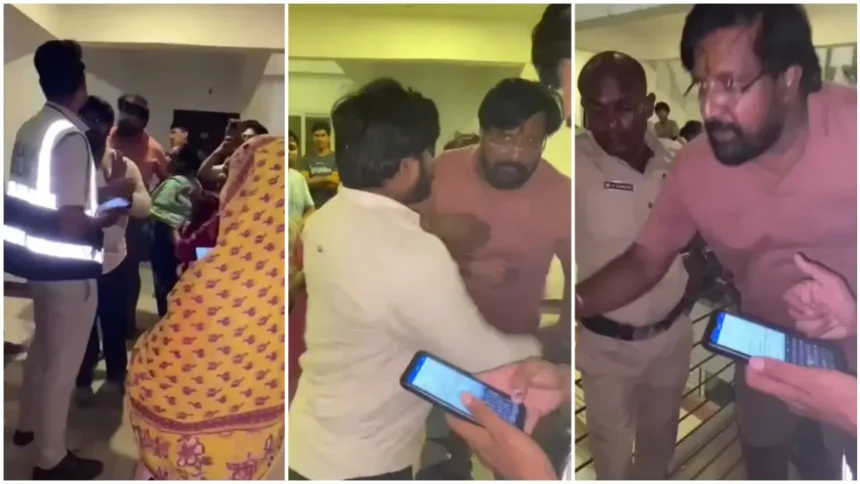
The sequence of events unfolded when the committee secretary confronted tenant Naseema about having unregistered guests in her flat. Naseema had also reportedly defaulted on rent payments for three consecutive months. The situation escalated when, in the midst of the dispute, the secretary questioned the couple’s nationality, leading to inflammatory remarks. Footage captured during the confrontation, shared widely on social media, revealed the male resident vehemently defending his identity, stating, “Don’t call me Pakistani, I am an Indian,” emphasizing his family’s historical link to the Indian Army.
The Role of Identity Politics
This incident is emblematic of a broader issue within Indian society, where identity politics often influences day-to-day interactions, especially within residential communities. The managing committee’s remarks suggest an alarming trend of communal stereotyping, where individuals are judged based on their perceived religious or ethnic affiliations. The male resident highlighted his grandfather’s military service as a testament to his Indian identity, reflecting a growing sentiment among marginalized communities who feel their patriotism is questioned due to their religious background.
The Impact of Law Enforcement’s Response
Despite the presence of police personnel during the confrontation, their intervention was limited to verbal counseling without decisive action. This raises questions about the role of law enforcement in addressing communal tensions and protecting the rights of all citizens, especially those from minority communities. While the immediate conflict was resolved without physical violence, the incident underscores the need for police to take more assertive measures in disputes that involve identity politics. The failure to address discriminatory remarks can perpetuate a culture of fear and exclusion among marginalized groups.
Why It Matters
This incident reflects a concerning trend that has implications not only for the Hindu-Muslim dynamics in India but also for how such events are perceived and responded to on a global scale. The rise in communal tensions can lead to social fragmentation, economic boycotts, and further marginalization of specific communities, impacting their overall well-being and integration into society. Moreover, the virality of the video highlights the power of social media in shaping public discourse, emphasizing the urgency for more inclusive narratives that foster communal harmony.
Frequently Asked Questions
What was the reason for the confrontation in the Janapriya Lake Front Society?
The conflict arose over a tenancy issue, where the managing committee secretary confronted tenant Naseema for permitting unregistered guests to stay in her flat and for defaulting on rent payments.
How did the situation escalate into a communal conflict?
The situation escalated when the secretary questioned the couple’s nationality and used the term “Pakistani,” which led to a heated argument about their identity and loyalty to India.
What was the response from the police during the incident?
Although police were present during the argument, they did not intervene decisively. Instead, they opted for verbal counseling, ultimately resolving the matter without formal complaints or violence.
What implications does this incident have for communal politics in India?
This incident highlights the troubling presence of communal stereotypes that can emerge in everyday life, raising concerns about social inclusion and the rights of marginalized groups within Indian society, especially in residential settings.