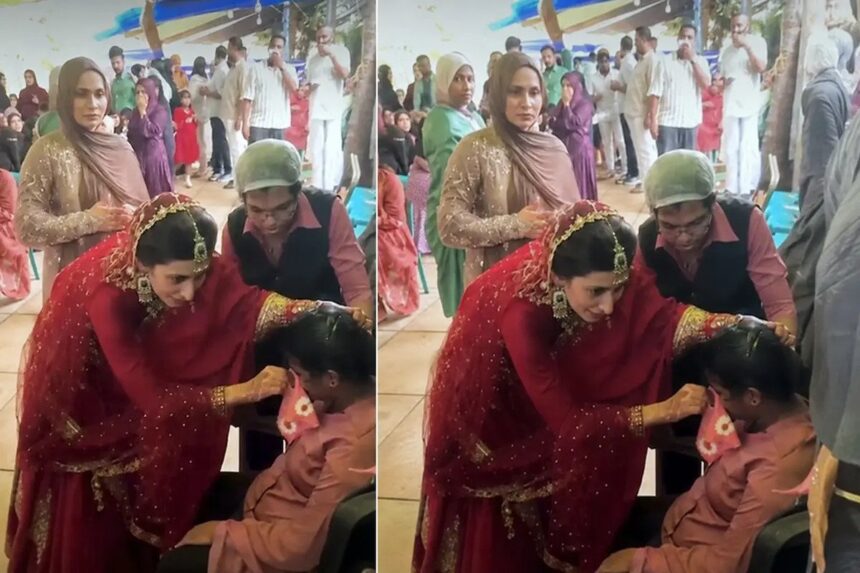

A newlywed doctor in Kerala demonstrated commendable professional dedication during her wedding when she paused the festivities to provide first aid to two catering workers who fell ill. This incident highlights not only the importance of quick medical response but also underscores a broader conversation on social responsibility and the values that healthcare professionals hold.
Act of Compassion Amidst Celebrations
Dr. Shirin Subair, attending her wedding ceremony to Dr. Rijaz, acted promptly when summoned to assist two women from the catering staff. One woman suffered from a nosebleed, while the other exhibited symptoms of dizziness and faintness. Shirin, who is currently pursuing a first-year MD in Emergency Medicine, provided basic first aid on-site and suggested further medical evaluation if necessary.
“Everyone knew I was a doctor, so someone asked me to come and take a look. When I saw the situation, I just did what was needed,” Shirin recounted during a television interview. Her instinctive call to action not only offered immediate care but also set an encouraging example of community responsibility among wedding guests.
Basic First Aid Principles in Practice
For the woman with the nosebleed, Shirin advised leaning forward and pinching the soft part of her nose for 10 to 15 minutes, ensuring she could breathe through her mouth. The second woman was instructed to lie down with her legs elevated to combat her faintness. Shirin reiterated that these are fundamental first-aid steps and emphasized the necessity of acting quickly in emergencies.
This situation and its subsequent recording on video, which went viral on social media, sparked public admiration for Shirin’s actions. However, she dismissed the extraordinary nature of her contribution, stating, “It was simply our duty, nothing more.” This sentiment encapsulates a broader ethos in the medical profession where acts of kindness are often motivated by a moral obligation to aid those in need.
The Role of First Aid in Emergencies
Shirin pointed out the critical importance of disseminating basic first-aid knowledge to the public. She advocated for everyone to be equipped to respond promptly to emergencies, particularly when medical professionals are not readily available. This aspect of proactive community care is especially vital in regions where access to healthcare may be delayed.
Shirin also highlighted the significance of early CPR, noting that immediate action can markedly enhance a person’s prospects for survival. Her husband, Dr. Rijaz, further supported this view by noting that emergency specialists often develop quicker reflexes that enable rapid responses to such incidents.
Why It Matters
This incident raises vital questions about the responsibility of healthcare professionals beyond hospital walls. It illustrates how individuals with medical training can play pivotal roles in everyday emergencies, reinforcing the need for widespread first-aid education. As healthcare systems face various pressures globally, fostering a culture of immediate community support can significantly enhance emergency preparedness, ultimately saving lives. The incident serves as a reminder that social responsibility, empathy, and basic medical knowledge are crucial elements within society.
Frequently Asked Questions
What first-aid steps should I take in an emergency?
The basic first-aid steps include assessing the situation, calling for professional help if needed, performing CPR if someone is unresponsive, and addressing specific issues like controlling bleeding or managing fainting by lying the person down with legs elevated.
Why is basic first-aid knowledge important?
Having basic first-aid knowledge allows individuals to provide immediate care during emergencies, potentially saving lives and stabilizing patients until professional medical assistance can be obtained.
How can I improve my first-aid skills?
Joining a certified first-aid course or workshop is the most effective way to enhance your skills. Many organizations, including the Red Cross, offer training that covers essential first-aid techniques and CPR.
What should I do if someone is unconscious?
Check if the person is breathing and perform CPR if they are not. If they are breathing, place them in the recovery position and monitor their condition until medical help arrives.