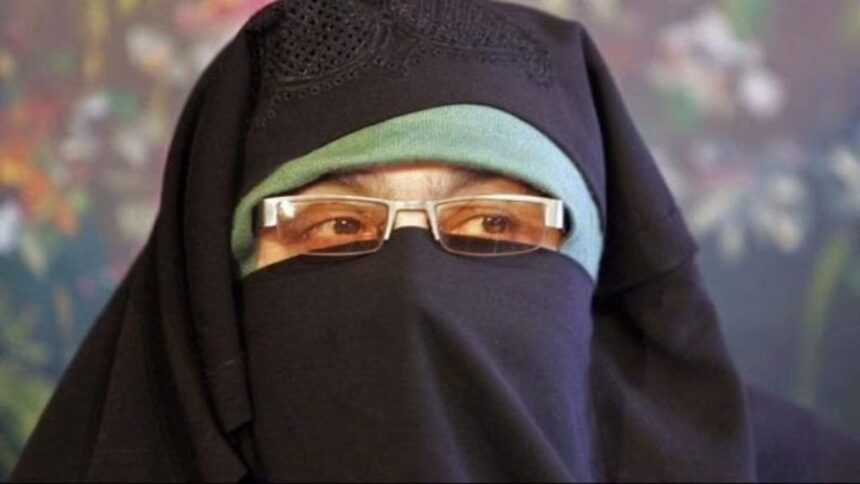

The recent sentencing of Kashmiri separatist Asiya Andrabi to life imprisonment has sparked renewed discussions surrounding the dynamics of dissent and the narratives surrounding figures who advocate for political change in India. Her son, Ahmad, framed his response as a reminder of systemic efforts to suppress dissent, emphasizing the complexity of political identities within Kashmiri Muslim communities.
The Profile of Asiya Andrabi
Asiya Andrabi, the leader of Dukhtaran-e-Millat, has long been a controversial figure in the context of Kashmiri separatism. Her organization attracted many young individuals, some of whom became radicalized, while others tragically lost their lives amidst violence. Despite claims of her advocating for women’s rights, her history tells a different story, reflecting a legacy of coercion and extremism. The irony of her son studying abroad while she influenced many towards conflict highlights the contradictions within the separatist movement.
The Suppression of Dissent and Its Narrative
Ahmad Andrabi’s communication following his mother’s sentencing serves as a pointed critique of the broader suppression of dissent in Kashmir. His framing of the situation avoids direct appeals to the justice system, instead presenting it as a systemic issue that undermines political voices. This raises important questions about the narratives constructed around dissent, especially when they are intertwined with ideologies that promote exclusion, as seen in Andrabi’s own radical interpretations of justice and equality.
Gender, Identity, and Inner Contradictions
The narrative related to Andrabi reveals contradictions not just in the political landscape but also regarding social dynamics within the communities she ostensibly represents. Her opposition to her own son’s marriage based on caste issues illustrates how exclusionary practices exist even among those claiming to champion equality and justice. This contradiction is vital for understanding the internal struggles that Kashmiri Muslims face, often overshadowed by external conflicts and communal narratives. The situation prompts a reflection on what ‘justice’ truly means in the context of advocacy that often overlooks internal disparities.
Why It Matters
The case of Asiya Andrabi serves as a microcosm for the struggles faced by many marginalized groups in India, particularly Muslim communities. It uncovers layers of discrimination, social exclusion, and economic boycotts facilitated by political frameworks. The implications extend beyond individual narratives into the heart of identity politics in India, challenging broader notions of justice and equality in a nation grappling with its diverse identity and the implications of its political ideologies. For global audiences, understanding these dynamics is crucial for comprehending larger patterns of political and social exclusion faced by minority communities.
Frequently Asked Questions
Who is Asiya Andrabi?
Asiya Andrabi is a prominent Kashmiri separatist leader and founder of Dukhtaran-e-Millat, a group associated with propagating radical views and advocating for Islamic governance in Kashmir.
What was the reason for her life imprisonment?
Andrabi was sentenced to life imprisonment for her involvement in promoting violence against Indian authorities and instigating radical agendas that destabilized the region.
How does her story reflect on the current state of dissent in India?
Her case exemplifies the challenges faced by dissenting voices in India, particularly among minorities, highlighting systemic suppression and the complexities of political identity in a diverse society.
What are the implications of her advocacy on women’s rights?
Though Andrabi has been described as an advocate for women’s rights, her organization’s history reveals a pattern of coercion against women, raising questions about the authenticity of such claims and the broader implications for gender equality in the region.