
Summary
The recent detention of four Bengali Muslim women and two children in Vasai-Virar, Maharashtra, highlights ongoing issues of discrimination against minority communities in India. The group was wrongfully suspected of being illegal Bangladeshi immigrants despite presenting identification documents, raising concerns about police practices that target individuals based on linguistic and religious identities.
Detention and Release of Bengali Muslims
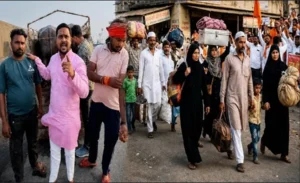
In a troubling incident, four Bengali Muslim women and their two children were detained by the police in Vasai-Virar on suspicion of being Bangladeshi nationals. According to family members, the group had produced valid identification documents, including Aadhaar cards and passports, but were still apprehended. The situation escalated and prompted protests demanding that police avoid detaining Indian citizens based on linguistic or religious bias.
Following the intervention of All India Majlis-e-Ittehadul Muslimeen (AIMIM) leader Waris Pathan, police agreed to re-examine the women’s documents. After verifying their identities, officials concluded that there was no evidence to support claims of illegal immigration, leading to their release. Upon their liberation, the women expressed their gratitude to the AIMIM team for the advocacy that secured their freedom.
Wider Context of Discrimination
This incident is not an isolated case. In recent years, the Vasai-Virar region has witnessed multiple incidents where Bengali-speaking migrants, primarily daily wage laborers, were detained under the assumption that they entered the country illegally from Bangladesh. Rights groups maintain that these indiscriminate checks disproportionately target Bengali-speaking Muslims, igniting concerns about systemic prejudice.
Legal frameworks in India permit valid proof of citizenship through Aadhaar, PAN, and passports, yet many cases reflect a discriminatory enforcement that overlooks these documents. The National Human Rights Commission has raised alarm over the “detention without due process” of Bengali migrants across states, underscoring a pattern of marginalized treatment that affects community trust and safety.
Political Narratives and Polarization
The issue of alleged illegal Bangladeshi migrants is a recurrent theme in Indian politics, frequently used to galvanize support for various political agendas. While political parties present this concern as a matter of national security, critics argue that such discourses often serve to polarize communities based on religious and linguistic identities. Government data suggests that the verification processes should follow legal channels rather than resorting to arbitrary detentions.
Under the current political landscape spearheaded by the Bharatiya Janata Party (BJP) and its affiliated organizations, narratives around national identity and immigration continue to impact vulnerable populations, particularly Muslims. The intersection of identity, citizenship, and law enforcement raises critical questions about who is deemed an ‘Indian citizen’ and who can be subjected to suspicion.
Why It Matters
This situation highlights significant flaws in both law enforcement practices and broader societal attitudes toward minority groups in India. The systemic targeting of Bengali Muslims based on language not only poses legal and ethical questions but also demonstrates how social exclusion based on religious identity can perpetuate economic hardships and restrict access to essential services. The increasing scrutiny of immigrants shapes public policy and can foster an environment that marginalizes certain communities, compelling them to navigate bureaucratic challenges merely to prove their citizenship.
Frequently Asked Questions
What triggered the recent protests in Vasai-Virar?
The protests were triggered by the wrongful detention of four Bengali Muslim women and their children, as a result of police suspicions that they were illegal Bangladeshi immigrants despite their valid identification documents.
What is the AIMIM’s role in this incident?
The All India Majlis-e-Ittehadul Muslimeen (AIMIM), led by Waris Pathan, intervened to advocate for the detained individuals, prompting the police to re-examine their documents which ultimately led to their release.
How do legal protections apply to the detainees?
Under Indian law, documents like Aadhaar, PAN, and passports serve as valid proof of identity and citizenship unless contradicted by other evidence. In this case, the police found no evidence against the detainees.
What are the broader implications of these detentions on Indian society?
The detentions underscore systemic discrimination affecting marginalized communities, especially Bengali Muslims. This raises questions about national identity, rights, and the potential for increased social tension within a diverse society.