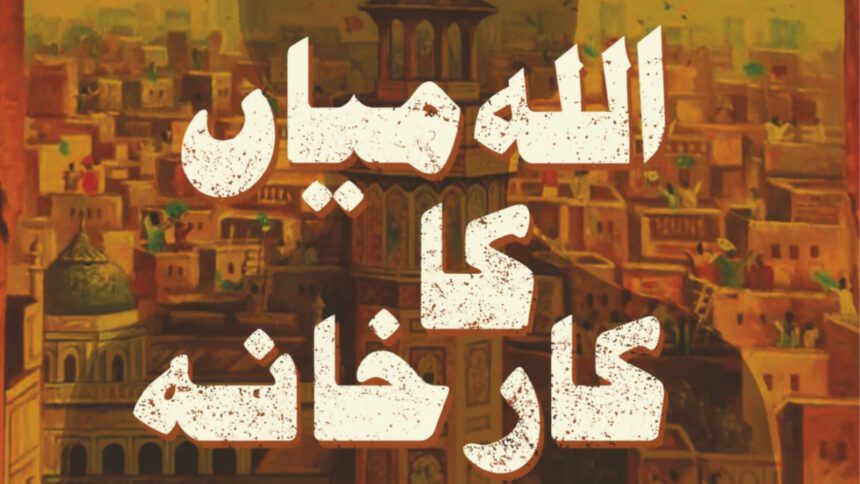

Urdu literature continues to face significant challenges as it navigates the complex socio-political landscape in India, particularly under the current political climate led by the Sangh Parivar and the Bharatiya Janata Party (BJP). The recent English translation of Mohsin Khan’s celebrated novel, “Allah Miyan ka Karkhana,” underscores both the enduring power of storytelling and the socio-political undertones that affect writers in the community.
The Novel and Its Background
Mohsin Khan, a prominent Urdu writer, has made waves with his first novel, “Allah Miyan ka Karkhana,” which tells the story of a 14-year-old boy named Gibran navigating childhood in a village in Awadh, Uttar Pradesh. Scheduled for its English release on June 23 as “Allah Miyan’s Workshop,” the novel captures Gibran’s world filled with curiosity and mischief, abruptly disrupted by his father’s arrest over suspicions of terrorism. This narrative not only delves into the struggles of growing up in a conservative environment but also highlights the impact of larger socio-political issues on individual lives.
Translation as a Cultural Bridge
Maaz Bin Bilal, a noted translator and poet, has translated the novel into English, revealing its universal themes while maintaining its Indian-Muslim essence. Bilal describes Gibran as an “inquisitive, skeptical, yet innocent protagonist, who has a unique narratorial voice.” Such translations play an essential role in making important cultural narratives accessible to a broader audience, thereby opening the door for discussions about the socio-political challenges faced by Indian Muslims today. The translation reflects not only the joys and challenges of Indian-Muslim boyhood but also the larger socio-political backdrop that is increasingly precarious under current governance.
Socio-Political Context and Its Impact
The narrative of Gibran is crucial to understanding the landscape for many Indian Muslims. With governmental and societal discrimination on the rise, the novel serves as a poignant reminder of the loss, separation, and uncertainty that many face. Bilal notes that the socio-political churn of our time is an important backdrop to the novel, paralleling the experiences of countless individuals grappling with marginalized identities. Notably, the Hindi translation of the book won the inaugural Bank of Baroda Award in 2023, demonstrating that despite a challenging atmosphere, literary contributions from the community are gaining recognition.
Why It Matters
The significance of works like “Allah Miyan’s Workshop” lies in their potential to foster empathy and understanding among diverse audiences. As literature becomes a vehicle for shedding light on marginalized communities, it can contribute to broader discussions around discrimination and social exclusion. The novel not only highlights the intricacies of individual experiences but invites readers to engage with the complexities of identity, belonging, and resilience in the face of political and societal challenges. At a time when many writers face economic boycotts and exclusion, literature serves as a crucial platform for voices that might otherwise remain unheard.
Frequently Asked Questions
What is “Allah Miyan ka Karkhana” about?
The novel tells the story of Gibran, a 14-year-old boy in a conservative village setting, who deals with the upheaval in his life following his father’s arrest on suspicion of terrorism, capturing themes of childhood, imagination, and socio-political impact.
Who translated the novel into English?
The novel was translated into English by Maaz Bin Bilal, a noted translator and poet, who highlights its themes of boyhood and the socio-political backdrop affecting individual lives.
What awards has Mohsin Khan’s work received?
The Hindi translation of “Allah Miyan ka Karkhana” won the inaugural Bank of Baroda Award in 2023. Khan is also recognized for his radio plays in national competitions.
Why is the translation significant for Indian Muslims?
The translation broadens the reach of a story that reflects the Indian-Muslim experience, providing an opportunity for dialogue on important themes like discrimination, identity, and resilience within the current socio-political landscape.