
Imagine transforming vast amounts of electricity into solid metal plates, which are then loaded onto trucks and delivered across states to energize factories. While this concept may seem like a fictional invention, a Chennai-based startup is striving to make it a reality.
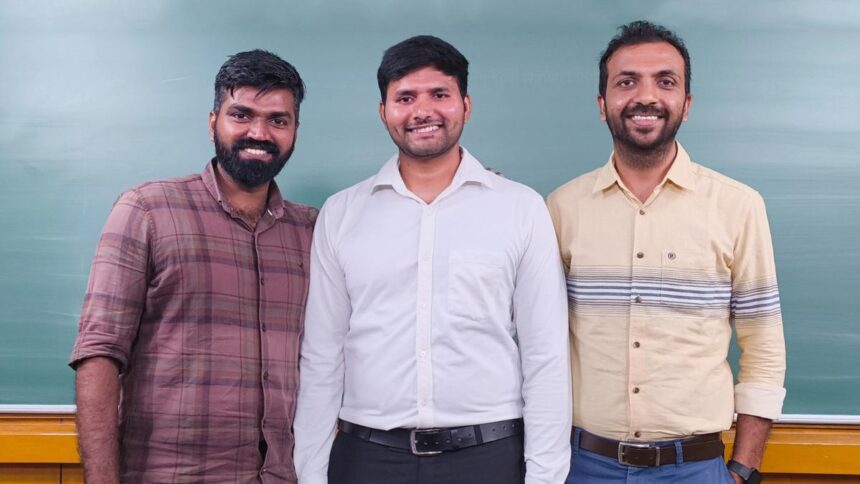
Sthyr Energy, founded by IIT-Madras alumni Gunjan Kapadia, Muhammed Hamdan, and Akhil Kongara, is developing a rechargeable zinc-air battery system designed for long-term energy storage. Kapadia states that while renewable energy generation in India is expanding rapidly, it remains seasonal and necessitates long-term storage solutions to address supply gaps.
“Current lithium-ion batteries are effective for storing energy for just 3-4 hours. However, to achieve a net-zero goal and make renewable energy dependable for daily use, we must be able to store energy for 3-5 months,” Kapadia explains. He adds that achieving such capacity would demand batteries comparable to the size of a city, and even if they were economically feasible, they suffer from self-discharge over time, rendering them impractical.
He proposes that electricity can be stored externally from batteries in a safe, cost-effective material that does not self-discharge—zinc fits this criteria perfectly.
Sthyr’s current solution—which is still in the development phase (technology readiness level 5)—involves a three-stage system. In the first stage, renewable power is utilized to split zinc oxide into electroplated zinc and oxygen. The second stage entails transporting the zinc in its solid form, allowing energy to travel without the need for conventional transmission lines or substations. The final stage occurs at the destination, typically an industrial center or data center, where a large-scale zinc-air battery discharges the zinc to generate electricity.
At the end of this process, the byproduct is powdered zinc oxide, which can be recycled back into the first stage. Kapadia mentions that the operational framework is tailored for large-scale deployments of at least 0.5 megawatts, making it unsuitable for residential or small commercial applications.
Sthyr Energy plans to conduct three pilot projects by year’s end, followed by operational deployment shortly thereafter. “We have signed MOUs and are in discussions with several government and private entities looking to replace outdated generators with our technology,” Kapadia adds. In June of last year, the company successfully secured $1 million in seed funding.
Published on May 11, 2026.