
The Vishwa Hindu Parishad (VHP) has publicly condemned the All India Muslim Personal Law Board’s (AIMPLB) newly proposed “Constitution and Sharia Protection Movement.” The VHP argues that no personal law should supersede the Constitution, characterizing the AIMPLB’s initiative as a threat to national unity amid ongoing debates about the rights and responsibilities of citizenship in India.
Background Context of Hindutva and Muslim Rights
In recent years, socio-political dynamics in India have increasingly spotlighted the tensions between the Hindu nationalist sentiments represented by organizations like the VHP and the requests for preservation of Muslim personal laws by groups like the AIMPLB. The AIMPLB’s movement is set against a backdrop of Hindu-majority governance that critics argue fosters an environment of institutional bias against Muslim communities.
The proposed movement by the AIMPLB aims to challenge what it perceives as systemic discrimination faced by Muslims in India. This includes issues surrounding religious freedoms, access to justice, and economic opportunities. The VHP’s response indicates a broader struggle for defining the parameters of permissible religious practices under Indian law, which has often sparked conflict over rights based on faith.
Responses from VHP and Implications for National Unity
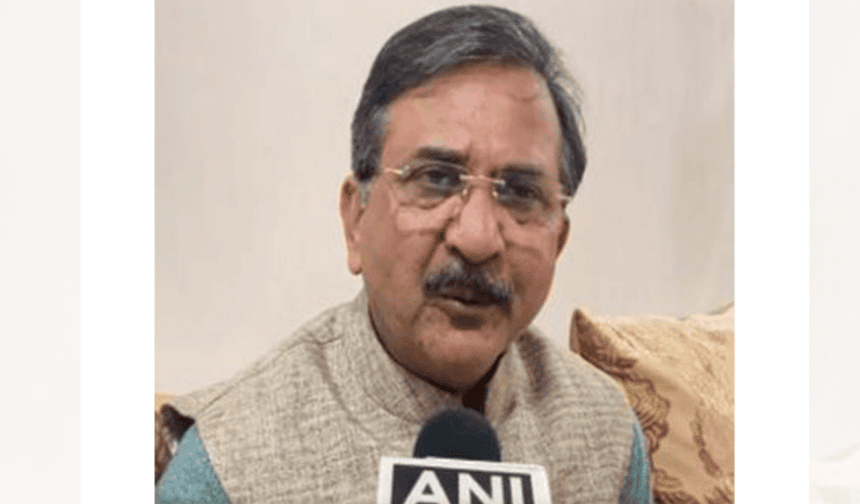
VHP joint secretary Vijay Shankar Tiwari articulated the organization’s stance by stating that the AIMPLB’s initiative of equating the Constitution with Sharia is “completely unconstitutional.” Such assertions point to a long-standing belief among Hindutva proponents that any Islamic law contradicts the tenets of secular governance as enshrined in the Indian Constitution.
The VHP contends that citizenship demands adherence to national laws and symbols, including the acknowledgment of the Uniform Civil Code, which aims to unify personal laws across religious communities. This perspective frames AIMPLB’s campaigns as divisive—a narrative that can exacerbate friction within an already polarized society.
The Challenge of Muslim Representation and Perceptions of Victimhood
The VHP’s rejection of perceived victimhood narratives propagated by the AIMPLB reflects a growing skepticism towards the broader Muslim community’s claims about discrimination. Tiwari criticized the portrayal of Muslims as perpetual victims, especially in cases of demolitions of illegal constructions, arguing that the law should apply equally to all citizens, regardless of faith.
This simplification of complex issues ignores the historical and systemic disadvantages faced by Indian Muslims, manifesting in economic disparities and social marginalization. The political discourse surrounding such issues is often reduced to binaries, further alienating minority communities and framing their struggles as illegitimate grievances.
Why It Matters
The tensions surrounding the AIMPLB’s movement and VHP’s opposition shed light on the fractures in Indian society related to religious identity and civil rights. The implications are profound for India’s socio-political landscape, as different factions lean on legal, religious, and moral grounds to assert their claims. For global observers and local advocates alike, understanding these dynamics is crucial for gauging the future of communal harmony and civil rights in the country.
This situation is emblematic of the ongoing discourse regarding secularism and personal laws, highlighting the challenges faced by minority communities in pursuing equal rights while negotiating the demands of their religious identities. The movements and counter-movements centered around citizenship and personal law could further impact social stability and economic opportunities for marginalized groups, making ongoing dialogue necessary for the evolving narrative of Indian democracy.
Frequently Asked Questions
What is the AIMPLB’s Constitution and Sharia Protection Movement?
The AIMPLB’s proposed movement aims to advocate for the equality of the Indian Constitution and Islamic law, challenging perceived discrimination against Muslims in India.
Why does the VHP oppose this movement?
The VHP opposes the AIMPLB’s movement on the grounds that it places personal laws above the Constitution, which they view as a threat to national unity and secular governance.
What are the implications of this dispute for Indian Muslims?
This dispute underscores the ongoing marginalization experienced by Indian Muslims, while also polarizing perceptions of community rights, identity, and the scope of citizenship within the country.
How does this issue fit into the broader context of Indian politics?
This conflict is indicative of the broader Hindu-Muslim tensions in India, where personal and religious laws often intersect with issues of citizenship, national identity, and communal rights, influencing political discourse and policy.