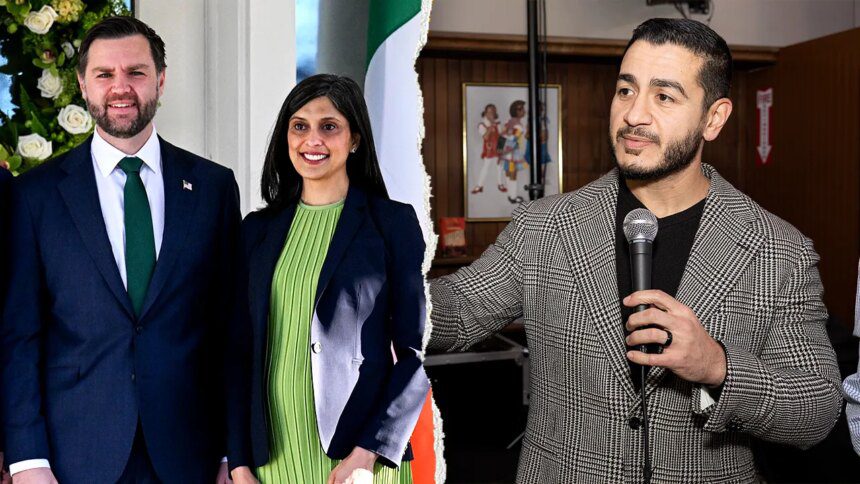

Vance Calls Out El-Sayed for Personal Attacks in Michigan Senate Race
In a recent rally in Michigan, Vice President JD Vance criticized Democratic Senate nominee Abdul El-Sayed for diverting campaign discourse into personal attacks rather than focusing on substantive policy issues. The remarks indicate the heated nature of the race for Michigan’s open Senate seat, an election that has gained considerable attention due to its implications for both state and national politics.
Vance’s Strong Rebuttal
During a rally organized by MAGA Inc., a super PAC supportive of former President Trump, Vance emphasized, “I actually think that the people of Michigan think it’s kind of weird when you talk about another guy’s wife,” referring to El-Sayed’s comments targeting his wife, Usha Vance. The Vice President urged El-Sayed to focus on public policy, particularly concerning auto workers in Michigan, stating, “I think the people of Michigan would like you to talk about how you’re going to protect auto workers.” Vance’s comments underscore a commitment to economic issues critical to Michigan constituents.
El-Sayed’s Controversial Remarks
El-Sayed’s criticism of Vance included comments that seemed to question the Vice President’s connections to his American heritage. Following Vance’s suggestion that Sharia law would be unfamiliar to his grandfather, El-Sayed quipped, “Do we think JD is taking Usha with him back in time to meet Papaw, or no?” This statement has been interpreted as an attack on Usha Vance’s Indian heritage, sparking backlash and accusations of insensitivity. Critics, including conservative commentator Ryan Girdusky, argued that El-Sayed’s comments paint Michigan’s rural White Americans as racists. El-Sayed defended his remarks, insisting that they were aimed at Vance’s implication that some Americans are “more American” based on their family’s history in the country.
The Stakes in the Senate Race
This race carries significant weight as both candidates vie for a chance to represent Michigan in the U.S. Senate. With economic policies directly affecting auto workers and healthcare being hot-button issues, the candidates are under pressure to present concrete solutions rather than indulge in personal rivalries. Vance accused El-Sayed of taking liberal stances on immigration that could harm American truck drivers, emphasizing, “Here’s the crazy thing. Just a few years ago, Abdul El-Sayed said that we need to make sure that illegal aliens have driver’s licenses in this country.” In response, El-Sayed characterized Vance’s campaign as “evil” for tearing down healthcare and increasing costs for working families.
Why This Is Trending
This political clash has caught widespread attention, particularly among Indian audiences who are interested in the implications of U.S. politics on multicultural communities. Vance’s remarks about heritage resonate within broader discussions of identity politics, especially given the increasing representation of Indians in American politics. Additionally, the focus on public policy issues such as worker rights and immigration policy is highly relevant in the context of the ongoing global debate surrounding these topics.
Frequently Asked Questions
What did Vice President JD Vance say about Abdul El-Sayed’s comments?
Vance urged El-Sayed to refrain from personal attacks, stating that Michiganders prefer conversations centered around substantive issues like public policy over personal rivalries.
What was El-Sayed’s response to Vance’s comments about heritage?
El-Sayed defended his comments by arguing that Vance was implying some people are “more American” based on their family’s history in the country, thereby misrepresenting the realities of immigrant communities.
How is the Senate race relevant to the Indian community?
The race highlights key issues of identity, representation, and labor rights that resonate with the Indian community in the U.S., especially as discussions about immigration and cultural identity become increasingly relevant.
What are the critical issues at stake in this election?
Key issues include economic policy related to auto workers, immigration, healthcare accessibility, and the balance between uplifting American labor while also addressing the needs of immigrant communities.