
A Call for Justice: V P Suhara’s Fight Against Inequality for Muslim Women
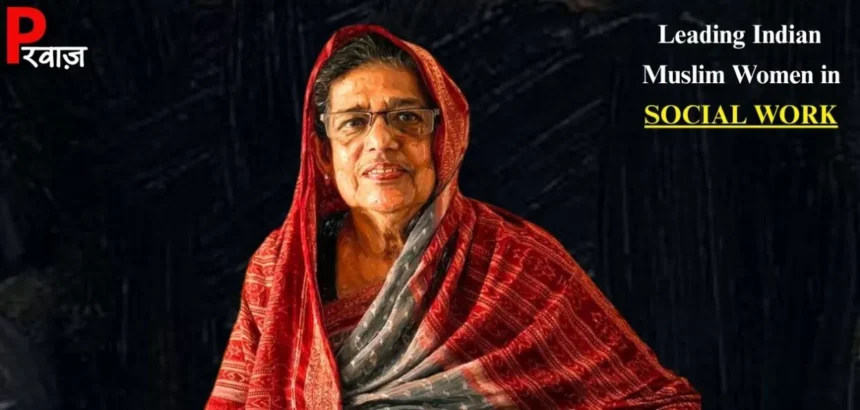
V P Suhara, an activist deeply committed to addressing the discrimination faced by Muslim women, highlights the discrepancies between the promises of justice outlined in both Islam and the Indian Constitution and the actual experiences of women in society. Through her lived experiences, she has come to recognize that the issues facing Muslim women are systemic, often rooted in flawed interpretations of personal law and outdated practices.
Systemic Issues in Personal Law
Suhara points out that the struggles of Muslim women are not solely personal but reflect broader societal issues. She first recognized these inequalities in her childhood, where property rights and family expectations often led to women’s marginalization. “It was my childhood experiences that pushed me to think this way,” she explains, emphasizing how such personal reflections can illuminate larger societal problems.
The debates surrounding the notorious Shah Bano case further reinforced her convictions. For Suhara, it was not merely about a judicial verdict but about the underlying personal laws that date back to colonial times. She argues that the Muslim Personal Law, enacted in 1937, was constructed by individuals lacking a deep understanding of Islam, resulting in flawed interpretations that still shape legal practices today.
Gender Inequality and Economic Challenges
Suhara has been vocal about the detrimental impact of personal laws on women’s rights, particularly in terms of inheritance and marriage practices. She stresses that existing laws often favor men, stating, “When a brother receives two shares and a sister only one, what does that say about equality?” This disparity leads to severe implications in family dynamics, where women frequently find themselves sidelined or excluded entirely after receiving their lawful inheritance.
The realities for widows can be even graver, with many left insecure and vulnerable after their husband’s death. “There are many women who, after their husband’s death, are left with nothing,” Suhara warns, highlighting that family pressures often force women into economic dependency and exclusion.
Fostering a Collective Feminist Voice
Suhara’s activism took a prominent turn in the late 1980s when she began to engage more with women affected by issues like triple talaq and polygamy. She recalls how, during this time, women became emboldened to express their own struggles, leading to the formation of forums where they could share their experiences. “We felt that our issues had to be voiced by us,” she asserts, underlining the importance of self-representation.
Suhara’s call to action is clear: she and her peers demand justice—not a Uniform Civil Code, which many fear could aggravate existing insecurities—but the fundamental rights guaranteed by the Constitution. Demonstrating her commitment, she has participated in protests advocating for legislative changes to inheritance laws, insisting, “We are asking for the justice that the Constitution promises.”
Why It Matters
The conversations surrounding V P Suhara’s advocacy shed light on significant issues of gender inequality that resonate beyond the Muslim community. As legal and social systems evolve, understanding the implications of personal laws is essential for policymakers, activists, and communities alike. The fight for justice highlights the intersection of religion, gender rights, and legal reforms that could potentially redefine societal norms and uplift marginalized voices. Such dialogues contribute crucially to the broader discourse on equality and human rights in India.
Frequently Asked Questions
What is V P Suhara advocating for?
V P Suhara is advocating for justice and equality for Muslim women, focusing on rectifying inequalities in personal laws that affect inheritance, marriage, and family dynamics.
How does Suhara’s activism relate to personal law?
Suhara argues that personal laws governing Muslim communities were framed during the colonial era and contain outdated and flawed interpretations of Islamic texts that disproportionately disadvantage women.
What are the specific issues Suhara highlights for Muslim women?
Suhara highlights issues such as biased interpretations of inheritance laws, practice of polygamy, and economic vulnerability for widows, which contribute to systemic inequality within the community.
Why is Suhara hesitant about a Uniform Civil Code?
Suhara expresses concern that a Uniform Civil Code could exacerbate fears of marginalization, emphasizing that her focus is on achieving justice based on existing constitutional rights rather than a one-size-fits-all legal framework.