
Summary
The demolition of the Mustafa Qadri Mosque in Sambhal, Uttar Pradesh, has reignited debates surrounding the treatment of minority communities under the current state administration. This operation, carried out by governmental authorities citing encroachment on government land, has drawn attention to broader patterns of discrimination against Muslims in India.
Context of the Demolition
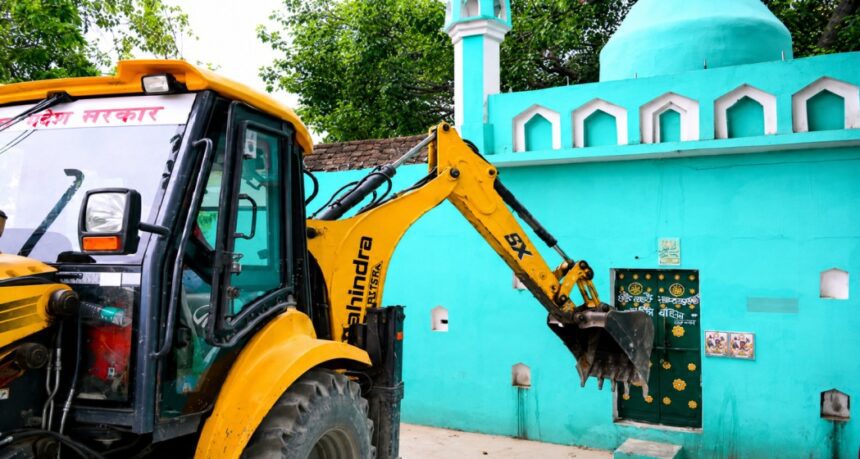
On Saturday, the Uttar Pradesh administration initiated the demolition of the Mustafa Qadri Mosque, claiming it was illegally built on government land. This action follows a series of legal challenges from the mosque committee, which were ultimately dismissed, allowing authorities to proceed. The mosque, situated on a 120-square-metre plot, was razed using four bulldozers, accompanied by a significant police presence to maintain order at the demolition site.
The disputes over the mosque’s land date back to a revenue survey conducted in January, which determined that the plot was government property according to official records. Subsequent investigations revealed discrepancies in the registration process of the property, allegedly not disclosing crucial documents that indicated state ownership during its registration with the Waqf Board.
Legal Proceedings and Community Response
The legal troubles escalated when an FIR was filed against seven members of the mosque committee over purported irregularities connected to the property registration. Following the eviction order issued by the Tehsildar’s court on April 21, the mosque committee appealed to the District Magistrate’s court but was unsuccessful. This series of legal actions illustrates the challenges faced by minority groups, particularly Muslims, regarding property rights and legal recognition.
These demolition actions are part of a broader pattern, as evidenced by a recent similar case in Gunnour, where another religious site, Khere Wale Baba Chaman Shah Baba Dargah Sharif, was also demolished for alleged encroachment on government land. While authorities claim these structures were built illegally, caretakers, like Aziz of the dargah, argue that the sites hold significant historical and cultural importance, having been established for hundreds of years.
The Broader Implications for Minority Communities
The incidents surrounding the Mustafa Qadri Mosque’s demolition are indicative of a trend in India where minority communities, particularly Muslims, face systemic marginalization. Such actions can lead to social exclusion and economic hardships for those affected, as the demolition of a place of worship is not merely an issue of property rights but strikes at the heart of community identity and social cohesion. The presence of heavy police deployment during these operations further highlights the tensions and anxieties surrounding the rights of minorities in India, fostering an atmosphere of fear and uncertainty.
Why It Matters
This situation underscores the urgent need for dialogue surrounding property rights and religious freedoms in India. As land disputes disproportionately affect minority communities, the ongoing activism and legal battles present a significant challenge to the current administration. These issues have implications beyond local governance; they affect social stability, economic opportunities for marginalized groups, and the overall health of India’s democracy.
Frequently Asked Questions
What is the reason for the demolition of the Mustafa Qadri Mosque?
The Uttar Pradesh administration claims the mosque was built on government land, as determined by a revenue survey and subsequent investigations that indicated government ownership of the plot.
What legal actions were taken by the mosque committee?
The mosque committee challenged the eviction order in the District Magistrate’s court, but their appeal was denied, allowing the demolition to proceed.
How has the government defended its actions?
The government has cited the need to remove illegal encroachments on public land as the basis for the demolition, referring to guidelines and legal standards established under the Uttar Pradesh Revenue Code.
What does this incident mean for other religious communities in India?
The demolition of the Mustafa Qadri Mosque, alongside similar actions against other religious sites, raises alarms about the treatment of minority communities under current political dynamics, potentially setting a precedent for future actions against places of worship and community centers.