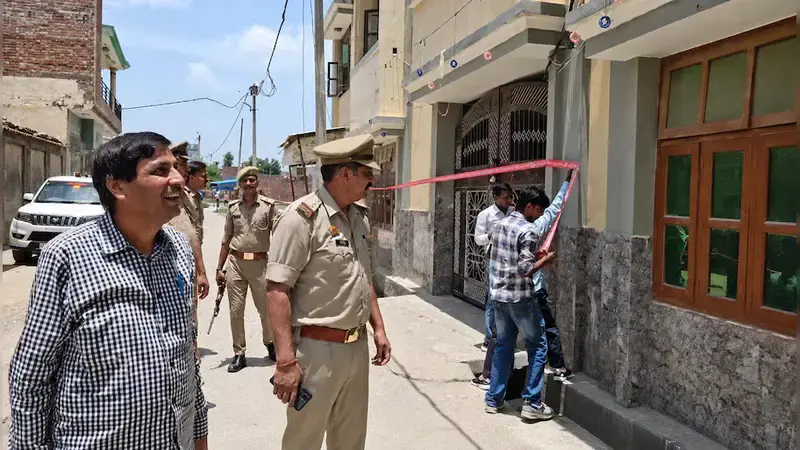

Authorities in Uttar Pradesh’s Shamli district have launched demolition proceedings against the Mughal Banquet Hall in Kairana, which was reportedly serving beef at a wedding reception. This event has highlighted broader issues regarding discrimination and marginalization within the Indian Muslim community, especially under current state policies.
Context of the Incident
The actions taken against the Mughal Banquet Hall stemmed from a police investigation following a tip-off that beef was served during a wedding reception on June 18. Jagdev Singh, a Junior Engineer from the Shamli Development Authority, confirmed that the hall was sealed after the owner failed to respond to a notice demanding an explanation for the unauthorized structure. This response underscores a proactive stance by local authorities amid rising tensions surrounding cow slaughter, which is a sensitive issue in many parts of India due to religious beliefs.
In the aftermath, the police arrested four individuals, including the groom, his uncle, the banquet hall owner, and a cook. The authorities also seized a vehicle allegedly used to transport the beef, which investigators claimed was sourced by slaughtering a stray cow. This event has not only led to legal action but has also amplified discussions about the broader political climate affecting minority communities, particularly Muslims, in Uttar Pradesh and beyond.
The Role of State Policies
The demolition of the banquet hall and subsequent arrests reflect the stringent policies enforced by the Bharatiya Janata Party (BJP) and affiliated organizations. These policies not only target illegal constructions but also crack down on practices related to cow slaughter, often seen as a symbol of Hindu identity. This has disproportionately affected Muslims, who constitute a significant portion of the population involved in the beef trade, leading to economic exclusion and social ostracism.
Local governance in Uttar Pradesh has been marked by a resurgence of Hindu nationalism that intersects with administrative measures. The state’s response to incidents like that in Kairana is indicative of larger trends where Muslim identities are increasingly marginalized, often under the guise of maintaining law and order. The authorities’ actions serve to illustrate the delicate balance between enforcing local regulations and addressing community sensitivities, raising concerns over selective enforcement that appears to target specific demographics.
Impact on Community Relations
The recent events have reignited fears among Muslim communities, revealing underlying tensions that characterize inter-religious relations in Uttar Pradesh. The swift administrative and police actions, driven by accusations tied to cultural practices unique to the Muslim community, are perceived as discriminatory. As a result, historical grievances regarding marginalization and social exclusion have been exacerbated, painting a complex picture of contemporary community relations in the region.
Public displays of discriminatory practices, like the targeting of the banquet hall, not only alienate communities but also pose a direct threat to social harmony. Such incidents can deter economic opportunities for minority groups and reinforce a cycle of poverty and disenfranchisement. Stressing the need for dialogue and inclusion is essential to prevent the escalation of tensions in sensitive regions like Shamli.
Why It Matters
The case of the Mughal Banquet Hall exemplifies the broader implications of state policies regarding minority communities in India and their impact on civic life. For global audiences, such incidents unveil the challenges faced by marginalized groups amidst rising nationalism. Moreover, they illustrate how local governance can exacerbate divisions by targeting cultural practices perceived as threats to majority interests. This situation invites an examination of biases ingrained in governance structures and cultural norms, fostering a need for advocacy around more equitable policies that recognize diverse identities.
Frequently Asked Questions
What led to the demolition of the Mughal Banquet Hall?
The hall was sealed following allegations that beef was served at a wedding reception, leading to police investigations and subsequent charges against the owner and others involved.
What are the implications of cow slaughter laws in Uttar Pradesh?
Cow slaughter laws are particularly sensitive in Uttar Pradesh, impacting the Muslim community’s economic practices and deepening social divides as enforcement often targets these demographics.
How did the authorities respond to the incident?
Authorities cracked down by sealing the banquet hall, issuing demolition notices, and arresting four individuals associated with the wedding, indicating a strong stance against both illegal constructions and cow slaughter violations.
What does this incident reveal about social relations in Uttar Pradesh?
The event underscores the tensions between communities in Uttar Pradesh, particularly between Hindus and Muslims, and highlights the state’s role in reinforcing these divisions through targeted enforcement actions.