
U.S. Forces Conduct Strikes in Response to Downed Helicopter
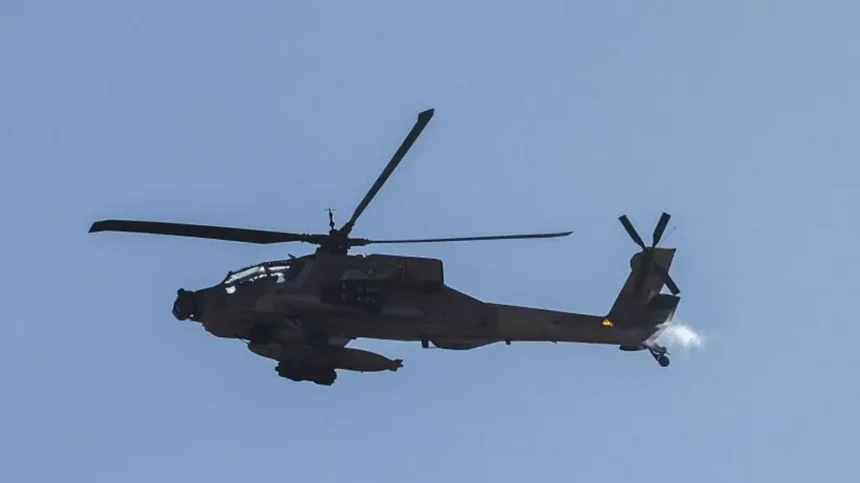
In a significant escalation of tensions in the Middle East, U.S. Central Command (CENTCOM) announced that American forces executed self-defense strikes against Iranian military targets following the downing of a U.S. Army Apache helicopter. This aggressive military response underscores the fragile security dynamics in the region and the ongoing conflict involving Iranian forces.
Details of the Military Operation
The strikes were carried out using precision munitions by U.S. Air Force and Navy fighter jets, targeting critical Iranian military infrastructure such as air defense systems, ground control stations, and surveillance radar sites situated near the strategic Strait of Hormuz. CENTCOM reported that the operation commenced around 5 p.m. Eastern Time (2100 GMT) and described it as a “proportional response” to a series of Iranian attacks on U.S. forces and commercial shipping, which have escalated tensions in recent months.
President Donald Trump verified the Apache helicopter incident via his platform, Truth Social, indicating that Iranian forces shot down the aircraft while it was on patrol. Both pilots were rescued with no injuries reported. Trump asserted the need for decisive action in response, reinforcing the idea that the U.S. was already engaged in significant retaliation.
The Political Ramifications and Reactions
House Speaker Mike Johnson characterized the military response as “proportional and limited,” with an underlying emphasis on its defensive nature. He confirmed that he had been briefed ahead of the operation, further suggesting that the U.S. aims to mitigate future Iranian aggression while maintaining regional stability.
Despite the military engagement, a senior official in the White House conveyed to Politico that President Trump sees the potential for an Iran deal as still “close,” indicating a complex interplay between military actions and diplomatic negotiations. This sentiment reflects the ongoing attempts to balance both deterrence and engagement with Iran, a country with which relations have remained historically tense.
Iran’s Response and Regional Tensions
In reaction to the U.S. strikes, Iranian Foreign Minister Abbas Araghchi took to social media platform X, asserting that Iran’s armed forces would not allow any attacks to go unanswered. He called for foreign military forces to withdraw from the region, emphasizing the heightened sensitivity and volatility surrounding U.S.-Iran relations. The incident also reflects broader concerns regarding security in the Strait of Hormuz, a critical artery for global oil transport, making the area a focal point for geopolitical tensions.
U.S. officials have reiterated their commitment to remain vigilant against what they describe as “unjustified Iranian aggression,” reflecting an enduring mandate for American forces to counter perceived threats in the region. This military posturing highlights the ongoing volatility and complexity of U.S. foreign policy in the Middle East.
Why It Matters
The recent U.S. military actions against Iranian installations reaffirm the consequential role of military strategy in diplomatic relations. The incident underscores the need for accurate assessments and responses to regional threats, particularly in volatile areas like the Strait of Hormuz. The delicate balance between military engagement and diplomatic negotiations remains crucial for stability in the region and may affect not only international relationships but also global economic conditions, particularly regarding oil prices and trade routes.
Frequently Asked Questions
What led to the U.S. military strikes against Iran?
The U.S. strikes were prompted by the downing of a U.S. Army Apache helicopter by Iranian forces, perceived as part of ongoing Iranian aggression against U.S. military operations and international shipping in the region.
What was the nature of the military response from the U.S.?
The response involved precision strikes targeting Iranian air defense systems and military infrastructure, aimed at neutralizing assets involved in hostilities against U.S. forces.
How did President Trump react to the incident?
President Trump confirmed the helicopter incident and emphasized the need for a strong military response, highlighting the United States’ commitment to addressing Iranian threats promptly.
What are the implications for U.S.-Iran relations moving forward?
This incident complicates already fraught U.S.-Iran relations, as it indicates a shift towards more aggressive military posture while simultaneously suggesting that diplomatic negotiations may still hold potential.