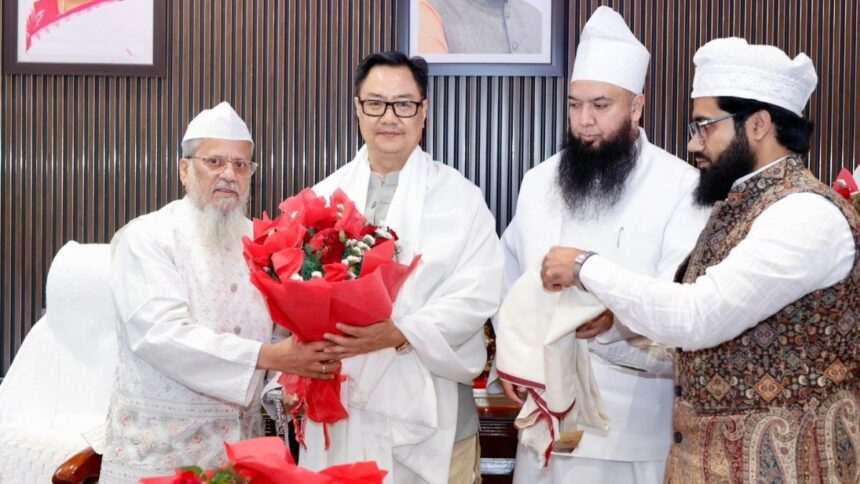

Union Minority Affairs Minister Kiren Rijiju’s recent remarks defending the perceived safety of Muslims in India have ignited a multifaceted debate about the realities of minority rights under the BJP-led central government. Critics argue that Rijiju’s comments overlook tangible threats faced by these communities, including hate crimes and discrimination, while supporters assert that such claims undermine India’s global image.
Minister’s Statements and Political Context
Rijiju made waves during an interview at The Indian Express Idea Exchange event, questioning assertions that Muslims in India feel unsafe. He suggested that claims of minority insecurity harm India’s reputation internationally. “Why are you targeting your own nation?” he asked, implying that narratives of Muslim insecurity are detrimental to the country’s character.
The minister highlighted the BJP government’s agenda over the past 12 years, claiming it has significantly improved conditions for minority communities. He emphasized that initiatives like Sabka Saath, Sabka Vikas aim for holistic development, benefitting all societal segments.
Criticism and Counterarguments
Rijiju’s defense did not go unchallenged. Critics, including journalists and activists, cited ongoing incidents of mob violence and discrimination against Muslims, which contradict his statements. Fact-checker Mohammed Zubair called attention to specific examples, such as alleged intimidation of Muslim families in Gujarat. He pointed out instances of hate speech directed at Muslim vendors and suggested that some media outlets perpetuate anti-Muslim narratives.
Suhasini Haider, a senior journalist, voiced her concern, stating, “It’s the majoritarian goons who threaten and assault minorities with full impunity from law,” highlighting that those committing acts of violence against minorities are the true maligners of national character, not the individuals reporting these issues.
Local and International Implications
The conversation surrounding Rijiju’s statements quickly spread across social media, with diverse responses from supporters and critics alike. Many users shared personal experiences of communal violence and raised awareness of hate crimes targeting Muslims. There is a clear divide in public opinion, reflecting broader societal tensions regarding religious identity and state policies.
Moreover, former bureaucrat Ashish Joshi added a layer of complexity to the debate, stating that the trust and faith minorities place in a country’s governance is a litmus test for justice. His assertion suggests that subjective feelings of safety among minority communities are essential metrics for determining the legitimacy of state actions and policies.
Why It Matters
This discussion is crucial not only for India’s domestic landscape but also for its international relations. The portrayal of minority treatment affects perceptions of India as a democratic nation committed to inclusivity and respect for human rights. For businesses and foreign investors, stability and social harmony are often seen as essential for sustainable economic growth. Given the global agenda to prioritize corporate social responsibility, India’s challenges regarding religious minorities could impact investment decisions and international partnerships.
Frequently Asked Questions
What are the main concerns about Muslims in India under the current government?
Critics cite rising incidents of mob violence, hate speech, and discriminatory practices against Muslims, raising questions about their safety and rights in society.
What initiatives has the BJP government implemented for minorities?
The BJP government claims to have improved conditions for minorities through programs focused on inclusive development, encapsulated in the slogan Sabka Saath, Sabka Vikas.
How have critics responded to Rijiju’s comments?
Critics argue that his comments dismiss real instances of violence and discrimination, emphasizing that acknowledging these issues is essential for national integrity and justice.
What role do social media discussions play in this debate?
Social media serves as a platform for both support and dissent, with users sharing firsthand accounts of communal violence and amplifying calls for government accountability regarding the safety of minorities.