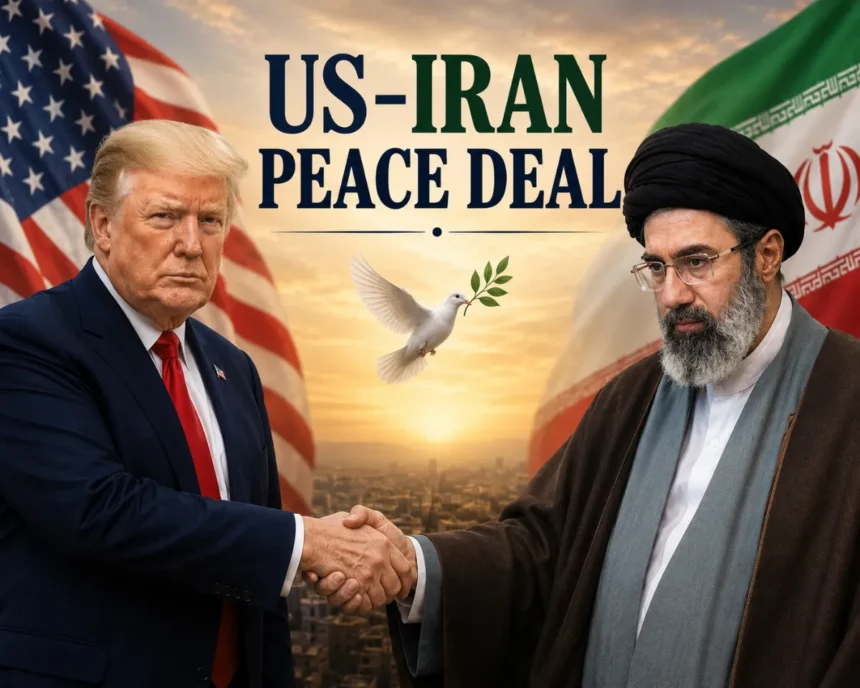

US-Iran Framework Agreement Reshapes Middle Eastern Dynamics
The historic June 2026 US-Iran framework agreement marks a significant turning point in Middle Eastern security, concluding a tumultuous 100-day conflict. This agreement not only alters the security dynamics in the region but also has profound implications for energy strategies, particularly for nations like India, which relies heavily on stable oil supplies.
Background of the Conflict and Diplomatic Shifts
The conflict began on February 28, 2026, with unexpected joint military actions by the US and Israel targeting Iranian facilities. This aggressive approach, characterized as “Maximum Pressure 2.0,” involved strict naval blockades and missile strikes aimed at crippling Iran’s military capabilities. The Trump administration initially insisted on stringent conditions, such as holding Iranian assets until a comprehensive agreement was reached.
However, as the conflict escalated into a global energy crisis—marked by damage to key infrastructure like Kuwait International Airport—the U.S. stance exhibited remarkable flexibility. By mid-June, President Trump authorized the release of $25 billion in frozen Iranian funds and lifted some sanctions, signaling a significant diplomatic shift.
The Switzerland Accord: Key Provisions and Controversies
The framework agreement, finalized during 17-hour negotiations mediated by Pakistan and Qatar, outlines critical provisions for both nations. It details a 60-day implementation roadmap that includes:
- Iran will initiate a mine-clearing operation in regional waterways without imposing transit tolls.
- The US will cease its naval blockade in exchange for Iran’s suspension of proxy operations.
- Iran commits to freezing uranium enrichment and diluting its enriched uranium stockpiles.
- The US will release $25 billion in Iranian funds while refraining from new sanctions.
Despite these measures, the deal has not been without criticism. Israeli Prime Minister Benjamin Netanyahu strongly opposed the omission of Iran’s ballistic missile program from the agreement, leading to military escalations that threatened the fragile diplomacy. Trump’s public rebukes of Netanyahu reflect the ongoing tension between American and Israeli strategies in the region.
The Indian Perspective: Energy and Strategic Implications
For India, the stabilisation of the Persian Gulf is crucial. As a major energy consumer, India faced severe repercussions from disruptions in the Strait of Hormuz, where 20% of the world’s petroleum trade passes. The restoration of maritime transit in the Gulf is anticipated to lower oil prices, subsequently easing inflation and stabilizing India’s fiscal health.
Moreover, the de-escalation of tensions offers hope for India’s Chabahar Port project, which is designed to enhance connectivity with Afghanistan and Central Asia while circumventing Pakistan. The easing of sanctions could accelerate infrastructure development, benefiting India’s broader geopolitical strategy.
Why It Matters
The outcome of the US-Iran framework agreement is significant given its implications for energy markets and geopolitical relations. A stable Middle East can aid in reducing global oil prices, impacting economies reliant on oil imports. For India, this stability is essential for economic growth and regional influence. The agreement also emphasizes the shifting security dynamics in the Middle East, reflecting the need for multilateral engagement over unilateral actions.
Frequently Asked Questions
What triggered the conflict between the US and Iran in February 2026?
The conflict erupted due to surprise joint military strikes by the US and Israel on Iranian territory, which marked the beginning of a significant military engagement.
What are the main provisions of the June 2026 accord?
The accord includes a ceasefire, a naval blockade lift by the US, Iran’s commitment to freeze uranium enrichment, and a phased release of $25 billion in Iranian funds.
How will the accord affect India’s energy security?
The deal is aimed at restoring stability in the Persian Gulf, which is crucial for India. A decrease in oil prices due to restored maritime security can alleviate inflation and improve India’s fiscal balance.
What challenges remain after the June 2026 accord?
Despite the agreement, critical issues such as nuclear inspection mechanisms, the role of Israel in regional security, and the specifics of economic implementations remain unresolved.