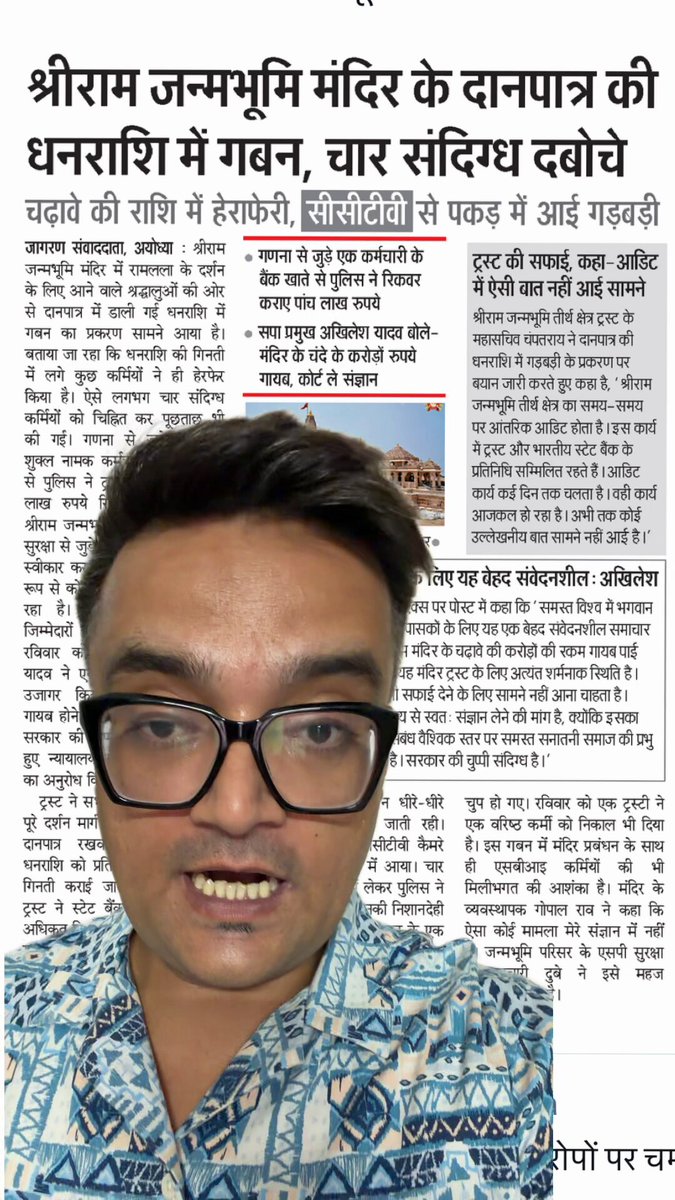

The Dainik Jagran newspaper has reported on allegations of a donation scam concerning the Ayodhya Ram Mandir. This situation has sparked controversy, as officials connected to the mandir’s trust have dismissed these accusations as false, indicating a potential clash in narratives surrounding this highly sensitive issue.
Context of the Allegations
According to Dainik Jagran, around 50 donation boxes have been placed in the Ayodhya Ram Mandir complex, and funds collected daily are deposited into a State Bank of India (SBI) account. The bank has reportedly appointed a private agency to manage the collection process. CCTV footage allegedly captured an instance of fund misappropriation, prompting inquiries into the affairs of four staff members attached to the trust. This claim has introduced serious questions about transparency and accountability regarding the funds collected for the temple.
Official Denials and Political Implications
In stark contrast, both the Ayodhya police and the Ram Mandir Trust have labeled the news of any financial discrepancies as unsubstantiated. These conflicting narratives underscore the complexities of managing political and religious sentiments surrounding the Ram Mandir, which is a pivotal symbol for many Hindus in India. The temple has long been a focal point in Hindu nationalism, making any allegations about its financing controversial and politically charged.
The Role of Media in Political Narratives
Dainik Jagran, often viewed as a government-friendly outlet, has taken an aggressive stance in reporting on this issue, which raises questions about journalistic integrity and independence. The publication’s willingness to dive deep into such a sensitive topic showcases the dynamic landscape of media in India, where various outlets often align themselves with or against prevailing political powers. The newspaper’s approach can influence public opinion, potentially affecting the broader political discourse in the country, particularly as the Ayodhya Ram Mandir occupies a central place in the narrative of Hindu identity and political mobilization.
Why This Matters
The allegations of a donation scam tied to the Ayodhya Ram Mandir are significant not only for their financial implications but also for their potential to sway public sentiment and political outcomes. In India, where religion and politics are intricately connected, any controversy surrounding a religious site like the Ram Mandir can have far-reaching consequences. It can either bolster the ruling party’s narrative or provide opposition parties with valuable ammunition against it. As discussions around transparency and accountability grow, the ramifications of this situation could profoundly affect both political alignments and voter sentiments in future elections.
Frequently Asked Questions
What are the main allegations against the Ram Mandir Trust?
The main allegations involve claims of misappropriation of funds collected from donation boxes at the temple. Reports indicate that CCTV footage captured an incident suggesting financial discrepancies, which has led to an investigation involving several staff members.
What is the response from the Ram Mandir Trust and Ayodhya officials?
Officials connected to the Ram Mandir Trust and the Ayodhya police have categorically denied the allegations, labeling the reports of financial irregularities as false and unfounded.
How does this situation reflect on India’s political climate?
This situation reflects deep-rooted tensions in India’s political climate, particularly concerning issues of Hindu nationalism and transparency. The Ram Mandir is not just a religious site; it is a symbol of political identity, and any scandal involving it can significantly impact public opinion and electoral outcomes.
Why is Dainik Jagran’s report significant?
Dainik Jagran’s aggressive reporting on this issue is significant as it could influence public sentiment and inject further scrutiny into the handling of funds at a critical religious site. As a publication often aligned with government perspectives, sudden divergence into critical reporting raises questions about media independence and the narratives shaping Indian politics.