
In a concerning development, United Nations human rights experts have called on the Indian government to address allegations that recent voter roll revisions have disproportionately disenfranchised Muslims and other minority communities. This call comes amidst claims that millions of eligible voters may have been wrongfully removed from electoral rolls across various states and union territories in India.
Disenfranchisement of Minority Communities
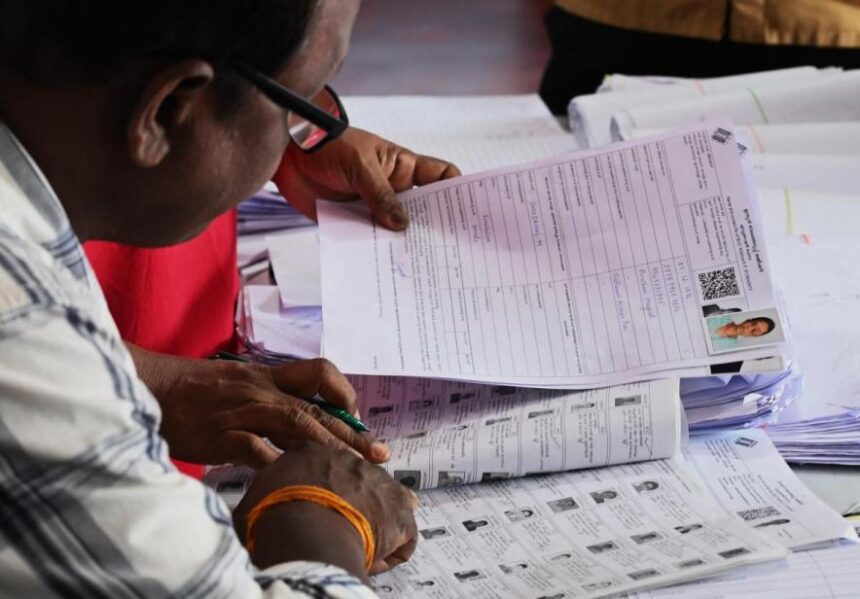
Three U.N. special rapporteurs have raised alarms regarding the Special Intensive Revision (SIR) of electoral rolls conducted by the Election Commission of India. Initiated in November 2025, this effort was reportedly aimed at ensuring that only eligible citizens remained on the rolls. However, the experts highlighted that approximately 52 million names had been removed, with West Bengal appearing particularly affected, losing around 9.1 million names.
The communication, published on May 1, 2026, points out that many individuals were reportedly deleted from the rolls despite holding valid identity documents. Alarming claims surfaced that around 95% of those deleted in specific constituencies—like Nandigram—were Muslims, even though this demographic constitutes roughly a quarter of the constituency’s electorate.
Concerns Over the Revision Process
The U.N. experts expressed concerns over the transparency and fairness of the revision process. They noted that minor discrepancies in official documentation could serve as justification for the deletion of names. Moreover, there are fears regarding the implementation of an artificial intelligence-based system that flagged voter data irregularities. This raises questions about algorithmic bias and the safeguards in place to protect legitimate voters from wrongful exclusion.
The communication stressed the potential implications of using AI within electoral processes. The lack of clear accountability could undermine democratic integrity, particularly if errors lead to disenfranchisement of eligible voters.
Political Rhetoric and Its Implications
The U.N. letter also condemned the discriminatory language employed by certain politicians, with references to “illegal Bangladeshi immigrants” and slogans like “Detect, Delete and Deport.” Such rhetoric not only stigmatizes Muslim citizens but could also violate international human rights treaties to which India is a party, including the International Covenant on Civil and Political Rights.
Furthermore, the experts emphasized the need for India to engage with the U.N. human rights mechanisms, reiterating that they are seeking clarity on the number of names removed, the reasons behind these deletions, and the measures taken to ensure that eligible citizens retain their voting rights.
Why It Matters
The situation surrounding India’s electoral roll revisions is crucial not just for the political landscape of the country, but also resonates with broader issues in the global context of technology and governance. The potential misuse of AI to manipulate voter data could have lasting implications for electoral integrity and fairness, emphasizing the need for stringent checks, transparency, and accountability in technological applications. As countries increasingly rely on AI for administrative processes, the risks of algorithmic bias and discrimination can compromise democratic principles, necessitating proactive governance to safeguard against such pitfalls.
Frequently Asked Questions
What is the Special Intensive Revision (SIR) of electoral rolls?
The Special Intensive Revision (SIR) is a process initiated by the Election Commission of India aimed at updating electoral rolls by removing ineligible voters and ensuring all eligible citizens are accurately recorded, launched in November 2025.
How many names were reportedly removed during this revision?
Reports indicate that approximately 52 million names were removed across affected states and union territories during the SIR process.
Which communities are said to have been most affected by these removals?
Muslim communities have been reported to be disproportionately affected, with allegations suggesting that up to 95% of deleted names in certain constituencies belonged to Muslims.
What role does artificial intelligence play in the voter roll revision process?
An artificial intelligence-based system was implemented to flag irregularities in voter data, raising concerns over algorithmic bias and the reliability of the data used to determine voter eligibility.