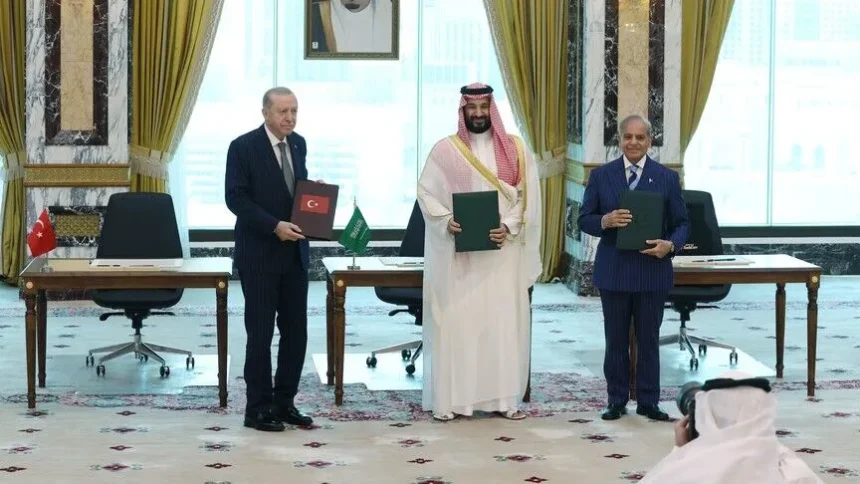

Enhancing Regional Security: The Makkah Joint Defence Agreement
The Makkah Joint Defence Agreement, recently signed by Türkiye, Pakistan, and Saudi Arabia, is a significant step toward bolstering regional security in the Middle East. Emphasizing collective peace and stability, the agreement aims to address rising security threats without targeting other nations.
Details of the Agreement
According to Turkish government sources, this defensive security partnership follows extensive consultations among the three countries. The primary goal is to create a framework for addressing escalating regional and global security challenges. Key aspects include a commitment to collective deterrence, whereby an armed attack on one of the states will be considered an attack on all three.
This aspect of the agreement aligns with Article 51 of the United Nations Charter, reaffirming the nations’ right to collective self-defense. Officials have been clear that the nature of the agreement is entirely defensive and does not intend to form an aggressive military bloc or an encirclement initiative.
Highlighting the initiative’s positive intent, sources mentioned that the agreement does not inhibit communication with other nations, suggesting it aims to bolster security through closer defense cooperation and stronger deterrence mechanisms.
Broader Implications for Defence Cooperation
The Makkah Joint Defence Agreement extends beyond mere mutual defense pacts. It establishes a platform for enhanced defense industry collaboration, military interoperability, and improved coordination among the armed forces of Türkiye, Pakistan, and Saudi Arabia.
Enhanced collaboration is expected to boost the collective capacity of these nations in responding to emerging security threats. Turkish officials stressed that this new agreement adds a layer of cooperation rather than competing with existing alliances or defense arrangements, including NATO, of which Türkiye is a member.
This cooperative atmosphere not only strengthens national defense among the signatory states but potentially opens avenues for broader regional cooperation, inviting other nations with similar security goals to join in the future.
The Framework’s Role in Current Geopolitics
Turkish government officials emphasized that the Makkah Joint Defence Agreement complements existing security frameworks while contributing actively to regional stability. It is positioned as a supportive mechanism that strengthens the ties among Türkiye, Pakistan, and Saudi Arabia and enhances their role in promoting peace and security beyond their borders.
Furthermore, the agreement is designed to be inclusive, potentially allowing other regional actors to join efforts aimed at collective security. This openness could lead to more cohesive regional and global security strategies, offering an alternative perspective on cooperative defense arrangements in the Middle East.
Why It Matters
The Makkah Joint Defence Agreement represents a strategic collaboration aimed at enhancing defense capabilities among Türkiye, Pakistan, and Saudi Arabia. This alignment could have significant implications for regional stability and security, especially given the current geopolitical climate. It signifies a potential shift towards collaborative frameworks that prioritize mutual defense without engendering antagonism against other nations, thereby supporting the broader objectives of peace and stability. Such agreements may influence future alliances and cooperative defense initiatives worldwide.
Frequently Asked Questions
What is the Makkah Joint Defence Agreement?
The Makkah Joint Defence Agreement is a security partnership among Türkiye, Pakistan, and Saudi Arabia aimed at enhancing regional peace and collective security through mutual defense commitments.
How does the agreement support collective security?
The agreement stipulates that an armed attack against one signatory state will be regarded as an attack against all three, reaffirming their commitment to collective self-defense as per international law.
Is the agreement considered aggressive?
No, Turkish officials have emphasized that the agreement is entirely defensive in nature and does not aim to target any other countries or form an aggressive military bloc.
Can other countries join this agreement?
The framework of the Makkah Joint Defence Agreement remains open for broader regional cooperation, allowing other nations to join if they share similar objectives of collective security, peace, and stability.