
Summary
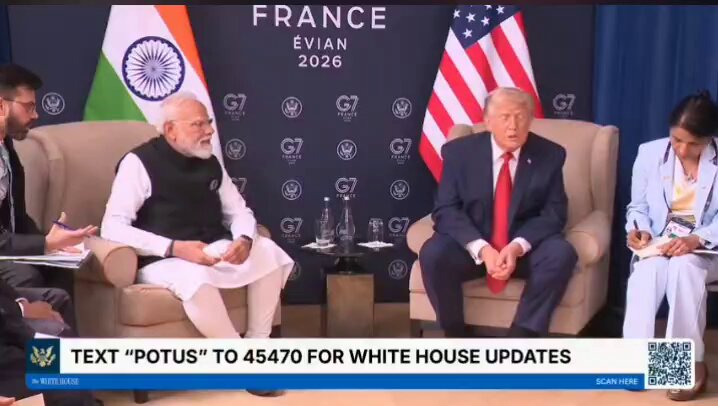
President Donald Trump highlighted the ongoing trade discussions and cooperation between the United States and India during a recent statement. He expressed satisfaction with Prime Minister Narendra Modi’s investments in the U.S., claiming that these efforts are contributing significantly to job creation and economic growth.
The Trade Relationship
In his remarks, Trump emphasized the positive trade ties between the United States and India. He indicated that negotiations are ongoing for new trade deals, suggesting an intent to deepen economic relations. The statement reflects a broader trend in U.S.-India relations, where both nations are looking to enhance trade in defense, technology, and agriculture, among other sectors.
This proactive stance is evident in various forums where both parties have engaged in discussions aimed at reducing trade deficits. India is keen on increasing its exports to the U.S., while the U.S. is interested in gaining a foothold in the Indian market through investment and partnerships.
Investments and Economic Growth
Trump specifically noted that Prime Minister Modi is significantly investing in building infrastructure and factories in the United States. This comment underscores what has been a crucial aspect of U.S.-India relations: the mutual benefits derived from foreign direct investment (FDI).
The significance of this investment cannot be underestimated. Initiatives such as “Make in India” have opened doors for U.S. companies to operate in India, providing jobs and economic stimulus. The notion that American capital is contributing to the Indian economy, as well as vice versa, highlights a reciprocal relationship that has the potential to bolster both economies in an increasingly competitive global market.
Political Context
Trump’s remarks come at a time when both leaders are under pressure to deliver results to their respective constituencies. For Trump, showcasing a strong trade relationship with a growing nation like India serves as a powerful narrative in his political messaging.
For Prime Minister Modi, aligning closely with the U.S. aids in counterbalancing China’s growing influence in the region. The mutual goal of economic expansion and enhanced geopolitical ties make this relationship particularly significant in the current global landscape.
Why This Matters
The political significance of Trump’s statement cannot be overstated for Indian readers. The emphasis on trade and investment reflects a commitment to enhancing the U.S.-India partnership, which has implications for job creation, economic stability, and regional security. As both nations face challenges globally and domestically, a strong alliance could facilitate stronger defense collaborations and economic strategies, positioning India as a critical player in the Indo-Pacific region.
Moreover, this engagement could alleviate concerns regarding geopolitical tensions and trade wars, allowing for a more stable economic environment in which both nations can thrive. As consumer needs and technological advancements evolve, the collaboration could pave the way for substantial ventures in emerging industries, making it all the more critical for India to stay aligned with U.S. policies.
Frequently Asked Questions
What are the ongoing trade deals between the United States and India?
The ongoing trade talks focus on various sectors, including technology, agriculture, and defense, with the aim of enhancing bilateral trade and investment.
How is Prime Minister Modi contributing to the U.S. economy?
Prime Minister Modi’s initiatives encourage Indian companies to invest in the U.S. market, facilitating infrastructure projects and factory setup, which contribute to job creation.
What are the implications of U.S.-India relations for regional security?
A strong U.S.-India partnership serves to counterbalance China’s influence in the region, enhancing stability and collaboration on security issues.
How might these trade discussions impact everyday Indians?
Enhanced trade agreements and investments can lead to job creation and economic growth in India, potentially improving the standard of living and fostering innovation within the country.