
Summary
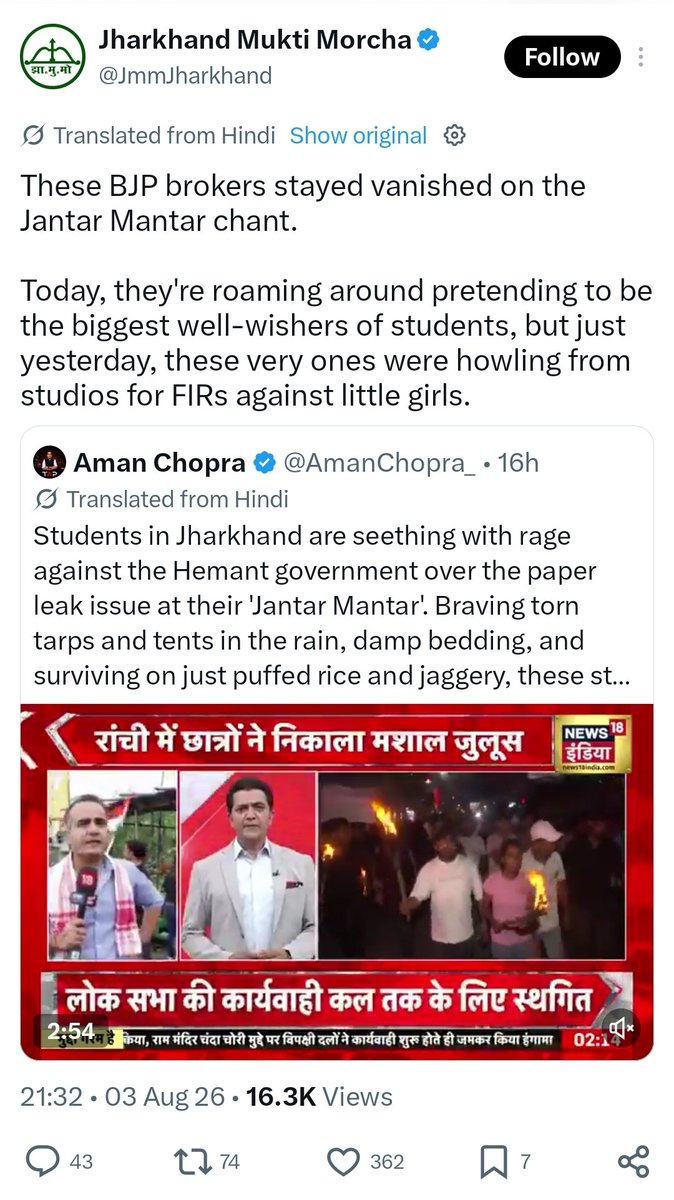
Recent remarks by political commentator Aman Chopra have sparked controversy regarding the role of journalism in student protests. He critiques the alleged hypocrisy of those in power who term student activism as “dalali” (brokerage) while remaining silent on larger issues affecting students.
Context of the Protests
The political climate surrounding student activism in India remains tense and fraught with emotion. Recently, a notable protest has gained traction among students, focusing on their rights and concerns about education policies. Activists have argued that various political forces are attempting to manipulate these movements for their own agendas. The crux of the controversy revolves around the perceived lack of genuine engagement from many journalists and politicians, as they sidestep the critical issues students are facing.
Critics, including Chopra, have articulated their frustrations with the media landscape, where journalists often prioritize sensationalism over substance. His assertion that addressing students’ fears is far more complex than attacking journalists underscores the existing disconnect between policymakers and the youth.
The Role of Media and Journalists
The function of the media is essential in shaping public discourse and holding those in power accountable. However, Chopra’s tweets highlight a growing perception of journalists becoming pawns in the political game, rather than advocates for the truth. By labelling student activism as “dalali,” certain factions aim to delegitimize their voices and ignore the pressing concerns regarding educational reforms.
Chopra challenges this view by questioning, “If raising students’ voices is termed as ‘dalali,’ what does remaining silent on their fundamental issues signify?” He urges media personnel to listen to students instead of using their platforms to stifle dissent. His critique sheds light on the pressing need for journalists to engage with civic issues meaningfully, standing up for various communities rather than dismissing them.
Analysis of Political Responses
The political reactions to these protests have revealed divisions within Indian society, often centring on communal identities. The use of charged language—such as references to Hindus and Muslims—interspersed with themes of religious feasting (prasada and biryani) in public discussions only escalates tensions. Analysts suggest that this strategy aims to fracture unity among student groups, diverting attention from the real issues at hand.
Chopra’s emphasis on the students’ demands amidst these distractions illustrates a call for a return to rational discourse. It denotes a clear rejection of communal politics seeping into educational protests. Hemen Government’s resolve, as stated, to protect students’ rights against such attempts indicates a line in the sand drawn in Indian politics.
Why This Matters
The political significance of these developments is multilayered. Understanding Chopra’s remarks requires an examination of how student movements in India have historically challenged authority. The current resistance seen among students insists on their agency, directly influencing educational policies and government accountability.
In a broader context, the discourse raises questions about free speech and the responsibility of journalists in democratic societies. The use of terms like “dalali” reveals a tactic to suppress dissenting voices that seek reparative action through legitimate pathways of protest. This dynamic resonates with a larger narrative about governance and democracy in India today.
Frequently Asked Questions
What does “dalali” mean in this context?
“Dalali” refers to brokerage or intermediary behavior. In this case, it is used derogatorily to accuse student activists of being insincere or politically motivated.
Why are students protesting now?
Students are protesting primarily due to a combination of grievances related to educational policies, lack of basic facilities, and their rights being undermined by ongoing political maneuvers.
What role does the media play in these protests?
The media serves as a crucial platform for amplifying students’ voices. However, there has been criticism regarding how effectively journalists engage with the issues, often framing activism in ways that detract from the core concerns of the student body.
How have politicians responded to the protests?
Political responses have varied, with some politicians openly supporting students and others attempting to undermine their movements by labeling them as politically motivated or communal in nature.