
The Tata Group faces significant internal strife, with urgent calls for decisive leadership amid ongoing disputes among Tata trustees threatening to destabilize the holding company, Tata Sons. The source of these tensions is linked to an absence of a formal succession planning process. This has raised concerns among individuals responsible for the fiduciary duties associated with the group.
As noted by a prominent corporate governance expert, who prefers to remain anonymous, “Tata’s succession history has been non-linear, often remaining within the Tata fold but not strictly hereditary. That flexibility was once a strength; today, it requires a more formal succession architecture.”
This example reflects a broader challenge for the Tata group: it must transition from charismatic leadership to institutional governance.
Some insiders express that the group risks undermining its legacy if it becomes overly focused on formal processes or shareholder pressures, which could include a potential listing of Tata Sons. “Tata cannot be run by process. It is run by moral authority. The moment you try to take away the moral authority, it’s over,” one source remarked.
Unlike other family-run businesses in India, the Tata group has managed to maintain its integrity primarily because there have been no direct family disputes over control or inheritance. Now, however, this long-standing stability is being challenged by individuals who possess fiduciary responsibilities.
The Role of Personality
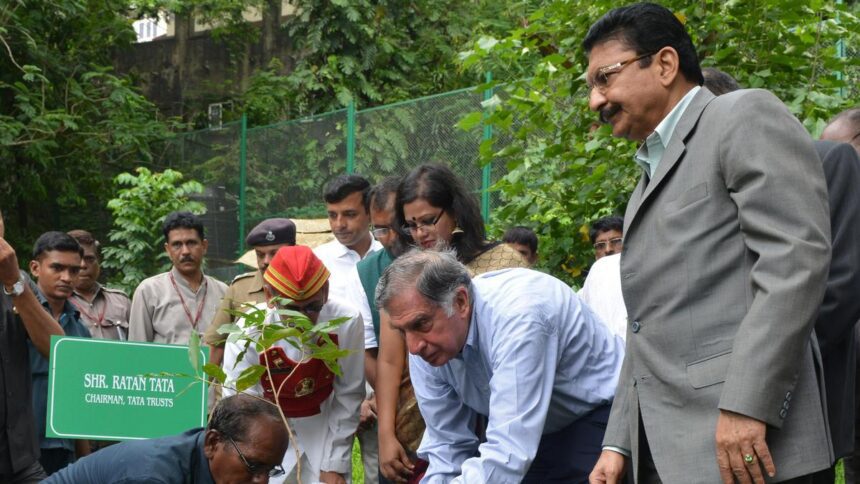
The Tata Group has thrived largely under a governance system where moral and formal authority were closely intertwined. Although structures like board arrangements and trusteeship did exist, they depended significantly on the stature and credibility of individuals, such as J.R.D. Tata and Ratan Naval Tata. Both leaders expanded the group substantially while maintaining alignment among trustees and board members.
The quoted corporate governance expert observed that resistance to leadership transitions is not a new phenomenon in the group. Ratan Naval Tata (RNT) established his legitimacy through personal stature rather than strict operational processes. His leadership comments about Cyrus Mistry’s tenure illustrate this, as RNT removed him in 2016 for governance concerns not aligning with Tata principles.
In the wake of RNT’s passing, the group’s internal cohesion appears weaker, compelling it to rely more on protocols and structured communication for conflict resolution.
Noel Tata, who has over four decades of experience with the Tata Group and is connected to the Shapoorji Pallonji family, was bypassed for the chairmanship of Tata Sons on two occasions—both in 2012 and 2016. Following extensive searches after Mistry’s exit, the group appointed N. Chandrasekaran, a veteran with 30 years in Tata Consultancy Services, including eight years as MD and CEO.
RNT remarked on Noel Tata’s lack of experience in demanding roles, emphasizing that to compete effectively for the top position, he needed greater exposure. This assessment, retained in RNT’s biography, has contributed to the ongoing discourse surrounding succession.
After Ratan Tata
Noel Tata’s formal authority is currently under scrutiny as he seeks to establish his convening power. While he brings operational experience and familial legitimacy, the central challenge rests in whether he can secure the broad-based authority necessary to unify the group’s diverse internal factions.
As Noel prepares to transition out of various board roles by November 2026, concerns grow over the group’s future governance structure. Described as a ‘fine human being and purpose-driven’ but personally reticent, he contrasts sharply with Ratan Tata, who cultivated a strong public presence.
His appointment as Chairman of Tata Trusts in October 2024 was contentious, facing opposition from some trustees. Former trustee Mehli Mistry had to advocate for the decision, positing that leadership should remain among Tata family members. Subsequent tensions led to Mistry’s ouster from the Trusts, while N. Chandrasekaran’s continued leadership appeared to stabilize the group briefly.
By early 2026, however, tensions reignited during a Trusts meeting when Noel challenged the group’s investment strategies and related performance metrics, signaling a possible repeat of past leadership conflicts. Unlike previous dismissals, Chandrasekaran was granted time to develop a growth plan for the organization amid rising internal dissent.
Notably, two of Noel’s allies, Venu Srinivasan and Vijay Singh, publicly endorsed the potential listing of Tata Sons—a significant deviation from prior consensus amongst trustees. This shift raises questions about whether their support stems from genuine concerns over governance or personal interests.
Noel has responded by attempting to exclude Srinivasan and Singh from board roles within the Tata Education and Development Trust, a related entity of the Sir Ratan Tata Trust. Meanwhile, legal issues persist, including complaints regarding compliance with the Maharashtra Public Trusts Act and the legality of past share transfers involving Tata Sons.
Corporate governance specialists highlight the contradictory roles of Tata Trusts as a philanthropic body with significant influence over Tata Sons, urging further clarity amidst perceived divisions among trustees. “When trustees appear divided over control, succession, listing, or influence, public perception inevitably questions whether charitable aims are being overshadowed by promoter power,” noted one expert.
A pivotal board meeting of Tata Sons scheduled for May 26 will address the contentious issue of its possible listing, alongside Chandrasekaran’s strategic plans for the group. Despite the gravity of these discussions, unresolved conflicts regarding Trust leadership linger.
A corporate governance expert emphasized that the solution lies not in seeking another towering leader but in establishing a comprehensive governance framework—defining clear trustee roles, creating formal conflict-resolution protocols, and outlining succession plans. Transparent communication strategies and a public stance on the potential listing of Tata Sons are also encouraged.
A loyalist sums it up concisely: “The Tata name sets them apart. It encapsulates a philosophy of giving and commitment to charitable initiatives. Removing the Tata name would equate the group with other companies.”
Published on May 25, 2026