
Summary
The Supreme Court of India is set to hear a plea from the Muslim community regarding an alternate site for Friday prayers at the contentious Bhojshala complex in Dhar, Madhya Pradesh. The Muslim representatives claim that the designated location, identified by the state government, is situated too far from the disputed site, raising concerns about accessibility and adherence to previous court orders.
Background on the Bhojshala Dispute
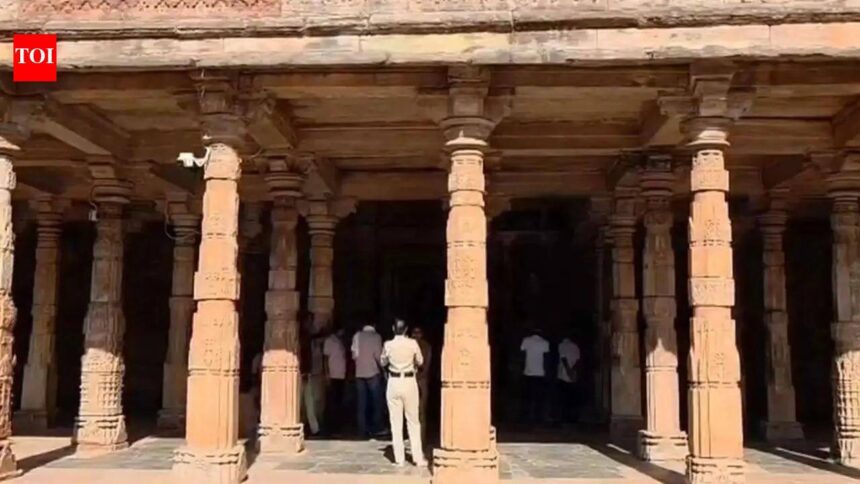
The Bhojshala complex has been a focal point of conflict, identified as a temple dedicated to Goddess Saraswati by a Madhya Pradesh High Court ruling. This designation has provoked protests and appeals from the Muslim community, who assert their right to perform prayers within proximity to the disputed area. In a July 14 interim order, the Supreme Court instructed the state government to provide a separate prayer space for Muslims nearby, specifically between 1 PM and 3 PM every Friday, until a final decision is made regarding the site’s status.
Current Court Proceedings
On an upcoming Friday, a Supreme Court bench led by Chief Justice Surya Kant will review the Muslim community’s grievance regarding the alternate site. Senior advocate Huzefa Ahmadi, representing the petitioners, contends that the reassigned area is approximately 2 kilometers away from the Bhojshala complex, which undermines the intent of the court’s prior directive. The solicitor general Tushar Mehta, who represents the Madhya Pradesh government, stated that the alternate location is 900 meters away and has pledged to verify this distance personally.
Judicial Emphasis on Compliance
Justice Joymalya Bagchi made it clear during the proceedings that all previous court orders must be followed strictly. He emphasized the importance of upholding the law in such sensitive matters. The Apex Court’s ruling underscores the balance that must be maintained, given the ongoing tensions between the communities over the Bhojshala complex. The court is poised to address these grievances against the backdrop of the larger framework of religious rights and societal harmony in India.
Why It Matters
The ongoing developments in the Bhojshala dispute serve as a microcosm of the broader issues of discrimination, social exclusion, and marginalization faced by Muslim communities in India, particularly under the governance of the BJP and associated organizations. The complexity of religious identity and communal sensitivity intertwines with legal interpretations and state actions, revealing the challenging landscape of religious freedom and rights in contemporary India. The Supreme Court’s engagement in this matter signifies an essential check on state authority while highlighting the need for fairness in addressing community grievances amidst rising communal tensions.
Frequently Asked Questions
What is the Bhojshala dispute about?
The Bhojshala dispute centers around the Bhojshala complex in Dhar, Madhya Pradesh, where the Muslim community has claimed rights to offer prayers amidst ongoing declarations that the site be designated a temple for Goddess Saraswati.
What did the Supreme Court order regarding the prayer site?
The Supreme Court ordered the Madhya Pradesh government to provide Muslims with a separate open space near the Bhojshala for Friday prayers, to remain in effect until the case is conclusively resolved.
How far is the alternate prayer site from Bhojshala?
The Muslim community alleges that the designated alternate site is about 2 kilometers from the Bhojshala complex, while the state government claims it is 900 meters away.
Why is this case significant?
This case is significant as it reflects broader tensions and issues concerning religious rights and communal harmony in India, indicating the precarious balance between state governance and religious freedoms, particularly for marginalized communities like Muslims.